
The Philippines EV battery market is moving from an early-stage import-led market toward a more strategic role in Southeast Asia’s electric mobility and battery supply chain. Demand is being pulled by rising EV registrations, fleet electrification, charging infrastructure growth, and the country’s strong nickel resource base. As of November 2024, newly registered BEVs and HEVs had reached 45,733, up from only 145 EV registrations in 2014, indicating a rapidly expanding addressable market for battery packs, battery management systems, charging-linked storage, and replacement batteries.
Key Growth Drivers Shaping EV Battery Demand in the Philippines
Rising EV adoption and fleet electrification
EV demand is the most direct driver of battery consumption. The Philippines’ EV ecosystem is still small compared with Thailand, Indonesia, or China, but adoption is accelerating from a low base. The market is supported by consumer interest in lower operating costs, expanding model availability, and fleet use cases such as e-jeepneys, e-tricycles, delivery vehicles, and corporate fleets. Climate Action Tracker notes that EVs accounted for about 4% of new vehicle sales in 2024, while the country’s clean-energy pathway targets a 50% EV fleet share by 2040 and 50% electrification of two- and three-wheeler fleets by 2030. This creates a long runway for lithium-ion batteries, especially for two-wheelers, three-wheelers, buses, and light commercial vehicles.
Charging and battery-swapping infrastructure
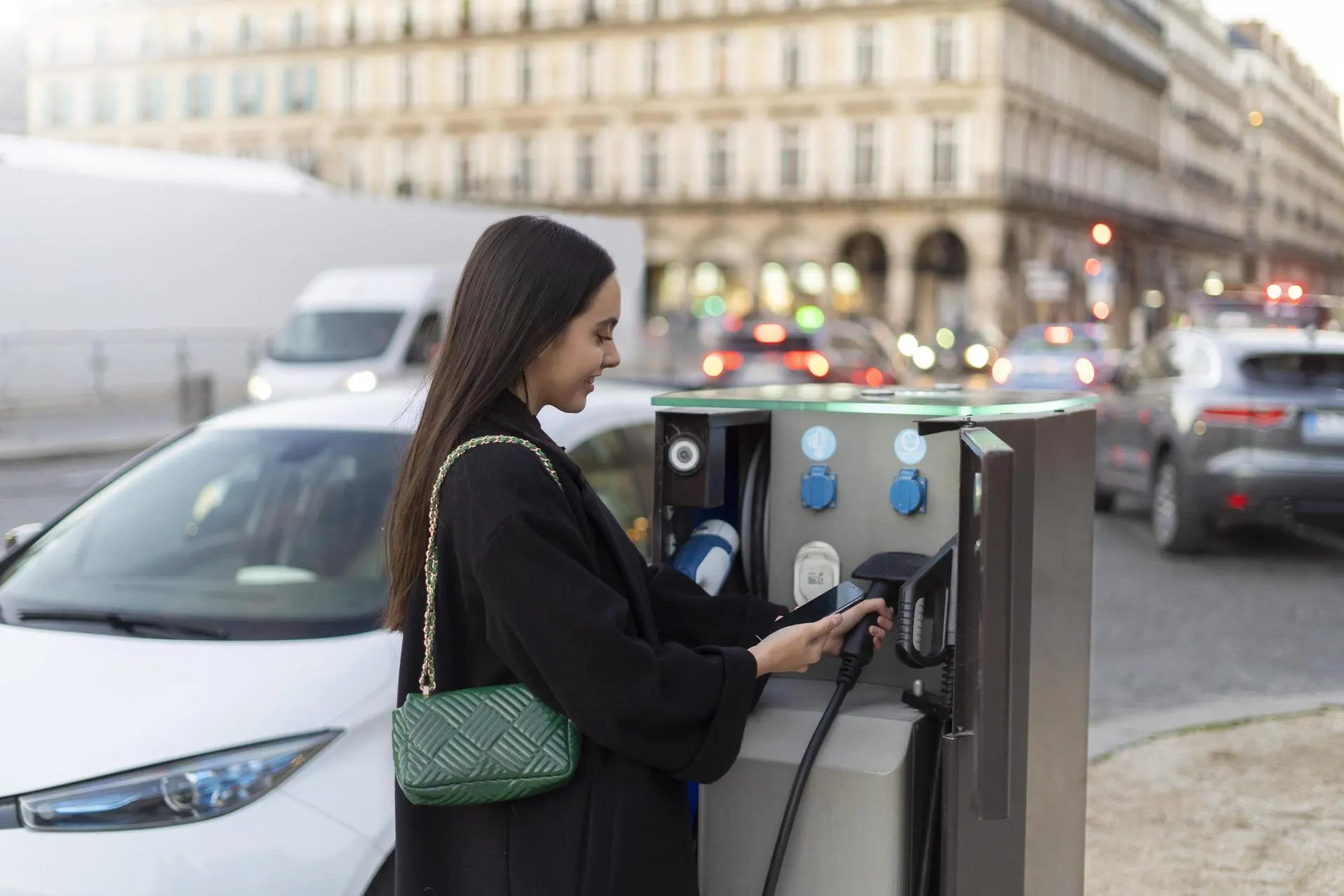
Battery demand depends not only on vehicle sales but also on charging convenience. As of April 2025, the Philippines had 962 charging stations, including 421 AC charging points, 59 DC charging points, and 482 battery-swapping stations, plus 132 DOE-accredited EV charging station providers. Battery swapping is particularly relevant for two- and three-wheelers because it reduces downtime and can support standardized battery formats. Over time, this could create a secondary market for removable battery packs, battery leasing, diagnostics, and end-of-life battery management.
Nickel advantage and battery supply-chain potential
The Philippines is already a major nickel ore producer, giving it a structural advantage in EV battery materials. Nickel is a key input for high-energy-density battery chemistries such as NMC and NCA. Reuters reported that the Philippines produced 35.14 million dry metric tons of nickel ore in the latest cited government figures, up 19% year on year, and that the government aims to add three more nickel processing plants to move further into the EV battery value chain. If refining and precursor processing capacity expands, the country could capture more value than raw ore exports alone.
Policy Support and Government Initiatives Accelerating EV Adoption
Policy support is a major enabler. The Electric Vehicle Industry Development Act, or EVIDA, requires a 5% EV share in government and corporate fleets and supports charging infrastructure rollout. The Philippines has also extended its zero-tariff policy on EVs and parts through 2028; import duties on EVs previously ranged from 5% to 30%. These measures reduce vehicle and component costs, indirectly supporting battery demand.
Emerging Players Across Batteries, Charging, and Nickel Supply
The market remains fragmented and import-dependent, with participation from vehicle importers, charging providers, electronics firms, utilities, battery-swapping operators, and mining companies. Local capability is emerging in chargers, battery management systems, testing, and EV charging station design. CHRG EV Technologies, for example, has developed fast-charging solutions, battery chargers, battery management systems, and testing services. Upstream, Nickel Asia and other mining players remain important because battery-grade nickel processing could reshape the country’s long-term competitive position.
Major Barriers to EV Battery Adoption in the Philippines
Infrastructure concentration and adoption barriers
Charging infrastructure is still concentrated in urban centers, mainly Luzon, limiting nationwide EV confidence. High upfront EV costs, cheaper diesel alternatives, limited repair networks, and low familiarity with financing options also slow battery demand growth.
Limited downstream battery manufacturing
The Philippines has strong nickel resources but limited refining and battery-cell manufacturing capacity. Reuters noted that the country currently has only two nickel processing plants, despite its ambition to move beyond raw material supply. Without downstream investment, much of the battery value chain may remain offshore.
Future Outlook
By 2035, the Philippines EV battery market is likely to expand strongly, led first by imported EV batteries, two- and three-wheeler electrification, e-bus programs, and battery swapping. The larger upside lies in materials processing, pack assembly, recycling, and energy storage integration. If the country converts its nickel advantage into refining and precursor capacity, it could become a more relevant regional battery supply chain hub. However, the pace will depend on charging rollout, grid readiness, vehicle affordability, and the ability to attract responsible mining and battery-processing investments.
Consultants at Nexdigm, in their latest publication “Philippines EV Battery Market Outlook to 2035,” analyze the sector by System Type (Lithium-Ion Batteries, Lead-Acid Batteries, Solid-State Batteries, Nickel-Metal Hydride (NiMH) Batteries), By Platform Type (Passenger Electric Vehicles, Commercial Electric Vehicles, Two-Wheelers), and By Fitment Type (Original Equipment Manufacturer (OEM) Batteries Aftermarket Batteries, Battery Leasing Models). Nexdigm suggests that businesses should prioritize localized EV battery strategies that align with the Philippines’ evolving policy framework, charging infrastructure rollout, and nickel-based supply-chain potential. Companies entering the market should focus on partnerships across battery pack assembly, charging networks, battery swapping, recycling, and responsible mineral processing to capture long-term growth opportunities through 2035.
To take the next step, simply visit our Request a Consultation page and share your requirements with us.
Harsh Mittal
+91-8422857704