
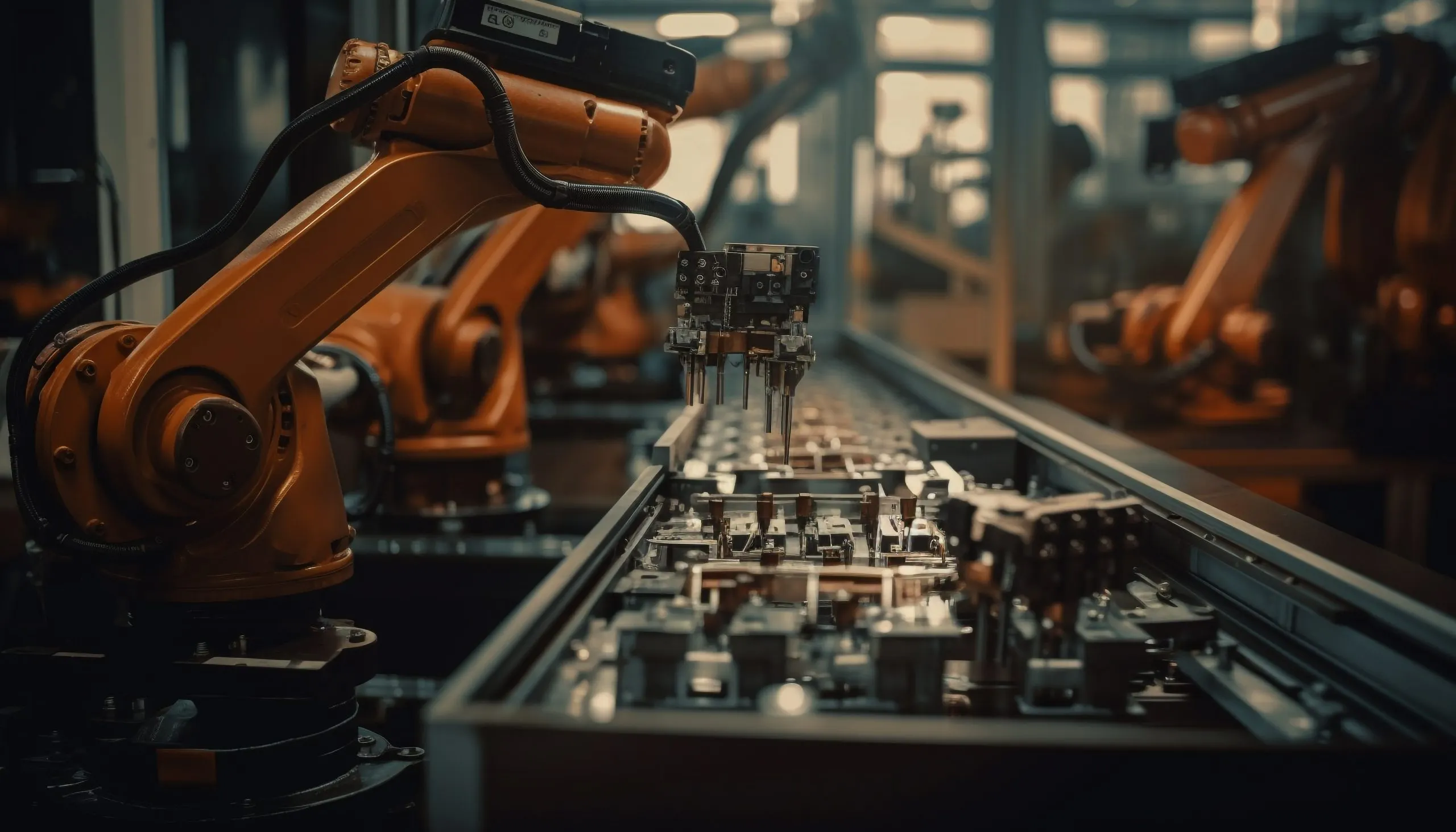
The Philippines industrial automation market is gradually expanding as the country strengthens its position as a manufacturing hub in Southeast Asia. Sectors such as electronics, automotive, and food processing are increasingly using automation to improve efficiency, product quality, and overall productivity. The market is expected to grow rapidly showing steady adoption of smart manufacturing technologies. As competition increases and labor costs gradually rise, companies are turning to automation to stay efficient and globally competitive. This shift is moving the country away from traditional production methods toward more technology-driven manufacturing systems. Over time, automation is becoming a core part of how industries operate and scale.
Market Growth Factors driving Automation Industry of the Philippines
Growing Adoption of Smart Manufacturing Technologies
One of the biggest drivers of automation is the shift toward Industry practices. Manufacturers are increasingly using robotics, IoT, and AI-based systems to monitor production in real time and improve decision-making. Predictive maintenance alone can reduce downtime, helping companies operate more smoothly. With better connectivity between machines and systems, businesses can track performance more effectively and reduce inefficiencies. This is improving both product quality and operational consistency. As more factories modernize, smart manufacturing is becoming a standard approach.
Strong Electronics Manufacturing Base
The Philippines already has a strong electronics manufacturing industry, which plays a major role in driving automation. Electronics account for more than half of the country’s total exports, making it a key part of the economy. To meet global demand and maintain consistent quality, manufacturers are increasingly automating production lines. This is especially important in sectors like semiconductors and electronics assembly, where precision and speed are critical.
Need for Efficiency and Cost Optimization
Rising operational costs and global competition are also pushing companies toward automation. Automated systems help reduce errors, increase speed, and make better use of resources. By improving efficiency, businesses can stay competitive in international markets. This is encouraging wider adoption of automation across both large companies and smaller manufacturers.
Government Support for Automation Industrial Modernization in Philippines
The Philippine government is actively encouraging automation through digital transformation policies and industrial development programs. Incentives such as tax benefits and support in special economic zones are helping attract investment in advanced manufacturing. Organizations are playing a key role in bringing foreign companies into the manufacturing sector. At the same time, training programs are helping build skills in robotics, AI, and industrial technologies, strengthening the future workforce.
Competitors and Leaders of the Automation Market in the Philippines
The market includes global automation companies, system integrators, and local solution providers. International players like Siemens, ABB, and Mitsubishi Electric bring advanced technologies and systems to the country. Local companies mainly focus on integration, maintenance, and customized solutions for specific industries. Collaboration between global and local players is helping improve adoption and making automation more accessible across sectors.
Major Barriers observed for Automation Adoption in Philippines
High Costs and Integration Issues
One of the main challenges is the high cost of implementing automation systems. For many small and medium businesses, the investment required can be a barrier.
Integrating new systems with older infrastructure can also be complex, which slows down adoption in some industries. Careful planning is needed to manage costs and ensure smooth implementation.
Skills Shortage and Workforce Transition
Another challenge is the lack of skilled professionals in automation technologies. While training efforts are increasing, there is still a gap in expertise related to robotics, AI, and industrial systems. As automation grows, workers will need to shift toward more technical roles. Continuous learning and upskilling will be important to support this transition.
Future Outlook
The Philippines industrial automation market is expected to grow steadily as more industries adopt digital and connected technologies. Automation will become more common in manufacturing, logistics, energy, and other sectors. Technologies and Emerging Trends and Innovations will continue to improve efficiency, reduce costs, and enhance decision-making. With ongoing government support, foreign investment, and workforce development, the country is well-positioned to become a strong automation hub in the region. In the long run, automation will play a key role in improving productivity, strengthening global competitiveness, and supporting sustainable industrial growth.
Consultants at Nexdigm, in their latest publication Philippines Industrial Automation Market Outlook to 2035, analyze the sector by System Type (PLC Type, SCADA System, DCS System, Industrial Robots, Safety Instrumented Systems), by End User segment (Automotive Industry, Electronics and Semi-Conductors, Oil and Gas, Food and Beverage, Pharmaceuticals).
Nexdigm suggests that businesses in Philippines should stay ahead by accelerating digital transformation, adopting advanced automation technologies, and strengthening operational resilience. Focusing on innovation, workforce upskilling, and strategic partnerships can help companies improve efficiency, reduce costs, and remain competitive in a rapidly evolving industrial landscape.
To take the next step, simply visit our Request a Consultation page and share your requirements with us.
Harsh Mittal
+91-8422857704