
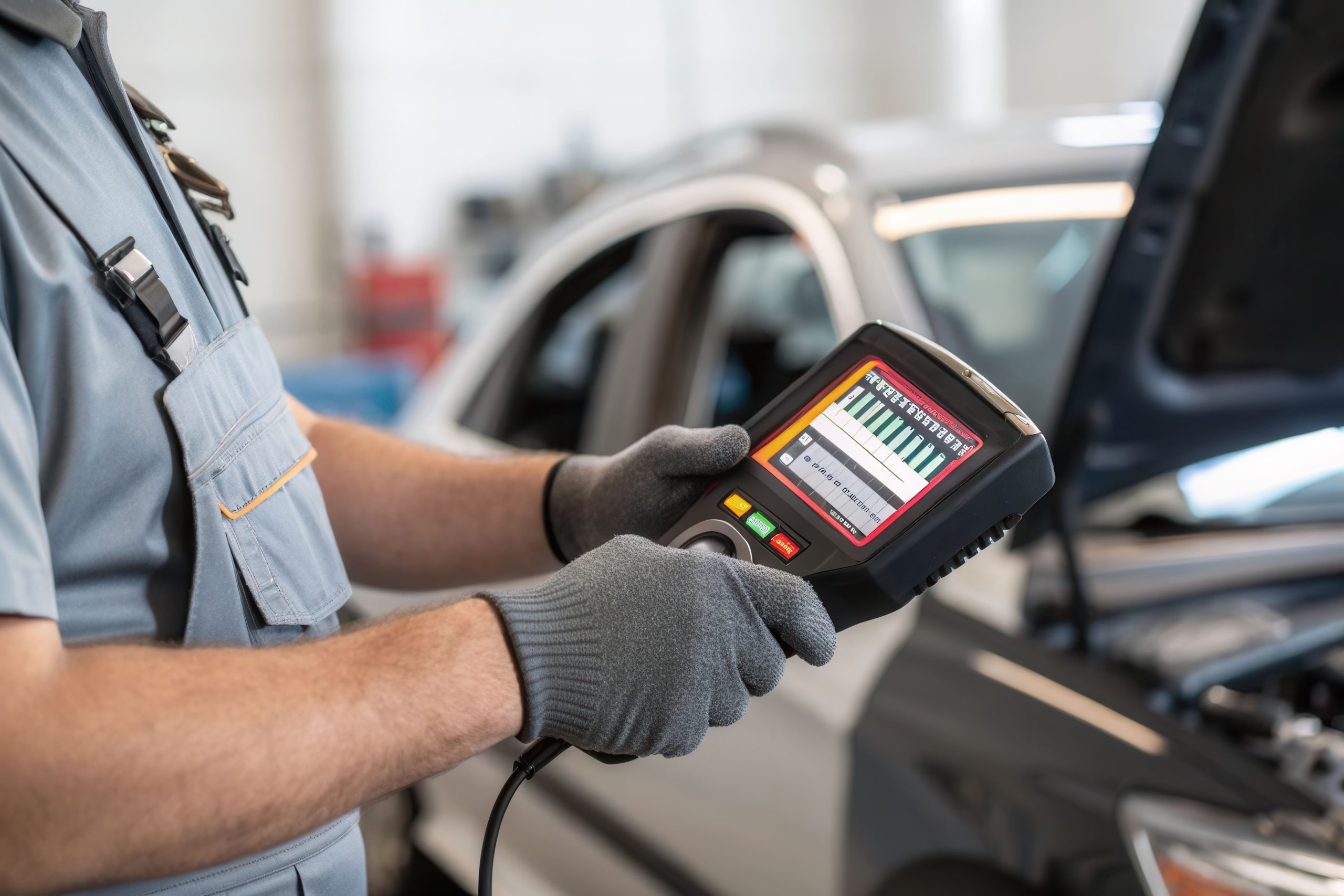
The Philippines automotive aftermarket is gradually becoming more diagnostics-led, and that shift is creating a meaningful opportunity for OBD-II scanners. What was once seen as a specialist garage tool is now turning into a practical necessity for workshops, fleet operators, used-car dealers, and even everyday vehicle owners. As of 2026, the country continues to see a steady rise in vehicle ownership, alongside a growing used-car market and longer vehicle replacement cycles. That matters because older cars usually need more troubleshooting, and modern vehicles are no longer easy to inspect without electronic diagnostics. In many cases, a warning light on the dashboard is no longer something a mechanic can resolve by instinct alone. In the Philippines, where affordability and repair efficiency both matter, OBD-II scanners are quietly becoming one of the most useful tools in the aftermarket.
What’s Driving the OBD-II Scanners Market in the Philippines?
A Larger and Older Vehicle Base
One of the clearest demand drivers is the sheer number of vehicles staying on the road for longer. In the Philippines, many consumers hold onto their cars well beyond the first ownership cycle, and that naturally creates more demand for fault detection and maintenance tools. Used cars also continue to change hands at a healthy pace, especially in urban areas where first-time buyers often enter the market through pre-owned vehicles. In practice, this makes OBD-II scanners useful not just for repair, but also for resale inspections and condition checks before purchase.
More Cost-Conscious Vehicle Maintenance
There is also a practical consumer angle behind this market. Car owners are becoming more cautious with service spending, especially when dealership repairs can quickly become expensive. A scanner helps narrow down the issue before parts are replaced unnecessarily. For small garages, this can save time and improve credibility with customers. For individual users, low-cost Bluetooth scanners paired with mobile apps are making diagnostics feel less intimidating. That shift matters because it broadens the market far beyond professional mechanics.
Vehicles Are Becoming Harder to Repair Without Diagnostics
Cars sold in the Philippines today come with more sensors, modules, and software-linked systems than they did even five or six years ago. That changes the nature of repair work. A technician may still know engines well, but without scan-based diagnostics, identifying the root cause of a fault has become much harder. This is especially true for newer Japanese, Korean, and Chinese vehicle models that rely heavily on onboard electronics. As a result, workshops are gradually moving from basic code readers to more capable devices that offer live data, system resets, and broader vehicle compatibility.
Government-Led and Regulatory Support
Regulation is not the most visible market trigger, but it plays an important supporting role. In the Philippines, vehicle compliance checks, emissions-related inspections, and registration-linked roadworthiness requirements all reinforce the need for better diagnostics. That does not mean every workshop is operating at a high technical standard yet – far from it – but the direction is clear. As inspection processes become more digital and accountability improves, scan-based diagnostics are likely to become more routine rather than optional. For many garages, that transition has already started.
Market Competition
The market remains fairly fragmented, which is typical for an automotive tools category at this stage. Imported brands dominate, particularly those coming from China and other Asian suppliers, while global names continue to hold stronger appeal in the professional workshop segment. Brands such as Autel, Launch, Bosch, XTOOL, and Thinkcar are increasingly visible across e-commerce platforms and tool distributors. The competition is no longer just about price. Buyers are paying closer attention to update support, language interface, ease of use, and whether the device actually works reliably across multiple brands. On the ground, that last point matters more than flashy specifications.
Low-Cost Imports and Trust Deficit
A common challenge in this market is the flood of cheap, low-support scanners that look attractive at first purchase but often fail in actual workshop conditions. Many small repair shops still opt for low-priced tools with limited software support or poor protocol coverage. That creates frustration and, in some cases, mistrust toward diagnostics tools altogether. The irony is that a bad scanner can slow down repair work more than having no scanner at all. Until product reliability and after-sales support improve across the lower end of the market, premium adoption may remain uneven.
Future Outlook
The Philippines OBD-II scanners market is likely to become broader and more practical by 2030 rather than simply more high-tech. Bluetooth-based consumer scanners should continue gaining traction, while independent garages will likely move toward more advanced multi-system diagnostic devices as vehicle complexity rises. There is also a strong case for growth in the used-car inspection and fleet servicing segments, where diagnostics save both time and money. The market may not evolve overnight, but the direction is fairly clear: scan-based maintenance is becoming part of standard automotive repair in the Philippines, not just an optional extra.
Consultants at Nexdigm, in their latest publication “Philippines OBD-II Scanners Market Outlook to 2030”, analyze the market by Product Type (Handheld Scanners, Bluetooth/Wi-Fi Scanners, Professional Diagnostic Tablets), By Vehicle Type (Passenger Vehicles, Light Commercial Vehicles, Heavy Commercial Vehicles), By End User (Workshops & Garages, Dealership Service Centers, Fleet Operators, Individual Consumers), and By Distribution Channel (Online Marketplaces, Authorized Distributors, Automotive Tool Retailers). Nexdigm believes that businesses should focus on affordable multi-brand compatibility, dependable software updates, and stronger local technical support to build long-term relevance in this market.
To take the next step, simply visit our Request a Consultation page and share your requirements with us.
Harsh Mittal
+91-8422857704