
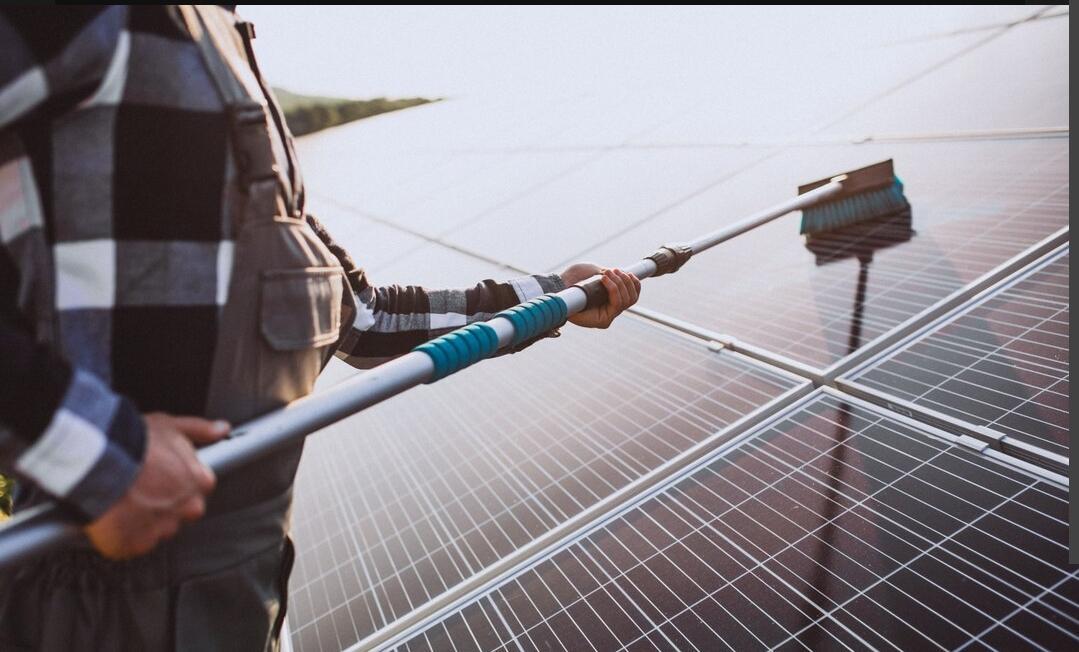
The Philippines solar panel cleaning industry is gaining importance as renewable energy adoption accelerates across residential, commercial, and utility-scale installations. Increasing solar capacity, tropical weather conditions, airborne dust, and volcanic ash create a growing need for efficient panel maintenance solutions. According to the provided market overview, the Philippine solar panel cleaning systems and services sector was valued at USD 184.2 million in 2025, with an expected 8.4% CAGR from 2025 to 2035. Growing interest in automated cleaning, robotic technologies, and preventive maintenance is creating new opportunities for industry participants.
Market Drivers Advancing Solar Panel Cleaning Industry Growth
Expansion of Utility-Scale Solar Installations
The growing deployment of utility-scale solar farms is creating substantial demand for specialized cleaning equipment and maintenance services. According to the Philippine Information Agency, the country added 794.34 MW of renewable energy capacity in 2024, exceeding the combined additions recorded during 2021–2023. As more large-scale solar projects become operational, operators require regular cleaning to maintain electricity generation and protect long-term asset performance. Solar installations across Central Luzon, Batangas, and Negros Occidental are creating opportunities for professional maintenance providers.
Increasing Adoption of Robotic and Automated Cleaning Technologies
Solar farm operators are increasingly adopting automated robotic cleaning systems to reduce manual labor, improve operational efficiency, and maintain consistent panel performance. Robotic solutions are particularly useful for large installations where manual cleaning requires considerable time and workforce coordination. The provided industry report indicates that automated robotic cleaning accounted for approximately 42% of the technology segment in 2026. Waterless robotic systems are also gaining attention because they minimize water consumption while supporting frequent cleaning schedules. Integration of sensors and remote monitoring further improves maintenance planning and operational productivity.
Rising Focus on Energy Efficiency and Preventive Maintenance
Dust, bird droppings, industrial pollutants, and volcanic ash can accumulate photovoltaic modules, reducing sunlight absorption and electricity generation. The Philippines’ tropical climate and geographically varied environmental conditions make regular panel maintenance essential. Solar asset owners are therefore prioritizing preventive maintenance contracts, performance monitoring, and scheduled cleaning programs. Additionally, artificial intelligence and predictive maintenance technologies help operators identify soiling conditions and determine suitable cleaning intervals. These solutions can reduce unnecessary maintenance activities, control operating expenses, and improve the long-term reliability of solar installations.
Government Initiatives Supporting the Philippines Solar Panel Cleaning Sector
The Philippine government is encouraging renewable energy deployment through the Renewable Energy Act of 2008, which supports investments in clean power generation. The Department of Energy is also advancing its Green Energy Auction Program, targeting at least 25 GW of additional renewable energy capacity between 2027 and 2035. National objectives include achieving a 35% renewable energy share by 2030 and 50% by 2040. These initiatives are expected to encourage solar project development and indirectly increase demand for cleaning equipment, maintenance services, and performance optimization solutions.
Competitive Landscape of the Philippines Solar Panel Cleaning Industry
The competitive landscape includes international robotic equipment manufacturers, specialized cleaning technology suppliers, and local solar operation and maintenance providers. Companies identified in the industry report include Ecopipam Scientific, Sun Brush Mobil, Helio Pass, Solabot, Blade Ranger, and Ter abase Energy. Competition increasingly focuses on automation capabilities, cleaning efficiency, water consumption, equipment durability, and after-sales support. Local service providers can strengthen their positions through partnerships with solar developers and long-term maintenance agreements. Companies offering integrated robotic cleaning and monitoring solutions are well-positioned to address the requirements of large-scale solar installations.
Challenges Impacting the Philippines Solar Panel Cleaning Industry
Water Availability and Geographical Constraints
Water scarcity in certain regions, combined with remote island locations and limited transportation infrastructure, creates operational challenges for cleaning service providers. Transporting equipment and water to distant solar installations can increase maintenance expenses. These conditions encourage the adoption of waterless robotic cleaning systems and resource-efficient technologies.
Skilled Workforce and Equipment Costs
The availability of trained technicians remains a concern, particularly for handling automated and high-voltage photovoltaic cleaning equipment. The industry report indicates that only 15% of the local workforce has formal accreditation for this specialized work. Additionally, high initial investment costs for robotic systems can discourage smaller solar operators from adopting advanced solutions.
Future Outlook
Growing Adoption of Intelligent Cleaning Solutions
The Philippines solar panel cleaning industry is expected to experience sustained expansion as renewable energy investments increase. The sector’s projected growth of 8.4% CAGR through 2035 reflects rising demand for automated equipment, water-efficient technologies, and professional maintenance services. AI-powered monitoring and robotic cleaning systems are likely to become increasingly important for utility-scale installations.
Emerging Opportunities for Industry Participants
Manufacturers and service providers can benefit from partnerships with solar developers, technology integration, and long-term maintenance contracts. Advancements in predictive analytics, autonomous robotics, and environmentally friendly cleaning methods will create additional business opportunities. Companies investing in localized technical support, workforce training, and cost-effective solutions are expected to strengthen their competitive positions as solar infrastructure expands across the Philippines.
Consultants at Nexdigm, in their latest publication “Philippines Solar Panel Cleaning Systems and Services Market Outlook to 2035,” analyze the sector By (Define Philippines Solar Infrastructure Scope, Identify Grid-Connected Megawatt Capacity, Apply Top-Down Revenue Estimation, Execute Supply-Side Capacity Survey).
Nexdigm suggests that businesses in the Philippines Solar Panel Cleaning Systems and Services Industry focus on adopting AI-powered robotic cleaning technologies, water-efficient maintenance solutions, and environmentally compliant practices. Companies that enhance operational efficiency, reduce maintenance costs, and support expanding utility-scale solar installations can strengthen their competitive position and capitalize on the industry’s strong growth potential.
To take the next step, simply visit our Request a Consultation page and share your requirements with us.
Harsh Mittal
+91-8422857704