

Port operations benchmarking services provide a structured approach to evaluating efficiency, throughput, and resource utilization in major global trade hubs. By integrating competitive intelligence, ports can compare their operational metrics such as cargo handling speed, berth occupancy, and turnaround times against leading international peers.
These insights enable port authorities and operators to identify bottlenecks, adopt best practices, optimize workforce and equipment deployment, and improve overall throughput, ensuring higher competitiveness and service quality in handling the vast majority of global trade efficiently.
According to the World Bank’s Container Port Performance Index, over 80 % of merchandise trade by volume is carried by sea, making port efficiency crucial to supply chains. In the 2025 index, efficiency rankings covered more than 400 container ports, using vessel time‑in‑port as a key performance metric to identify productivity and improvement opportunities. Top Asian ports dominate the rankings, highlighting significant operational performance differences across regions.
Impact of Port Efficiency on Global Trade and Supply Chains in Competitive Benchmarking
The impact of port efficiency on global trade and supply chains is significant, as faster cargo handling, optimized operations, and competitive benchmarking reduce delays, lower costs, and enhance supply chain reliability.
- Cargo Handling Speed and Throughput – Efficient loading and unloading reduce vessel turnaround times, directly improving global trade flow and supply chain reliability.
- Berth Occupancy and Vessel Scheduling – Optimized berth allocation and docking schedules minimize waiting times and enhance port capacity utilization.
- Operational Benchmarking Against Leading Ports – Comparing performance with top international ports identifies best practices to improve efficiency and competitiveness.
- Supply Chain Cost Reduction – Higher port efficiency lowers transportation and inventory holding costs, benefiting downstream supply chain operations.
Nexdigm Cargo Handling and Workflow Optimization Advisory
Nexdigm’s Cargo Handling and Workflow Optimization Advisory evaluates port operations to enhance efficiency in high-volume facilities. By analyzing container movement, labor deployment, and equipment usage, and leveraging competitive intelligence, Nexdigm identifies operational bottlenecks and improvement opportunities.
The advisory provides actionable recommendations to streamline workflows, reduce vessel turnaround times, maximize throughput, and improve overall port productivity, enabling faster, more cost-effective handling of global trade volumes.
Using Nexdigm Insights to Compare Global Port Performance and Identify Best Practices
Nexdigm leverages competitive intelligence and operational data to compare global port performance, identify best practices, uncover efficiency gaps, and provide actionable recommendations for optimizing workflows, throughput, and overall productivity:
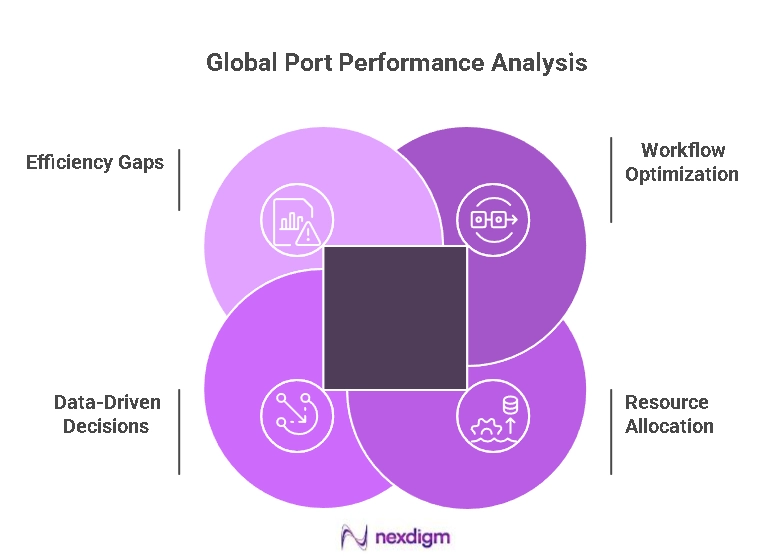
- Workflow and Process Optimization – Analyze container movement, labor deployment, and equipment utilization to streamline operations and reduce delays.
- Resource Allocation and Scheduling Insights – Optimize berth assignments, staffing, and equipment deployment based on competitor benchmarks and operational data.
- Data-Driven Decision Making – Use dashboards and analytics to monitor port performance, support strategic planning, and improve operational effectiveness.
- Identifying Efficiency Gaps – Highlight underperforming areas compared to top ports and develop targeted recommendations for process and workflow improvements.
Nexdigm’s case:
In a recent engagement with a major container terminal operator, Nexdigm applied competitive benchmarking and operational analytics to assess port performance against top global hubs. Within eight months, average vessel turnaround time improved from 48 hours to 34 hours 29 % reduction, berth utilization increased by 22 %, and container throughput rose by 15 %. These improvements enhanced service reliability and positioned the port more competitively in handling high trade volumes.
To take the next step, simply visit our Request a Consultation page and share your requirements with us.
Harsh Mittal
+91-8422857704