

Ports are critical links in international supply chains, coordinating vessel operations, cargo handling, storage, security, and documentation across multiple service providers. In 2025, global container port throughput reached approximately 994 million TEUs, increasing 6.5% year on year, according to Drewry’s Global Container Terminal Operators Annual Review & Forecast 2026/27.
This expansion increases the importance of consistent supplier oversight as port authorities, terminal operators, stevedores, security firms, equipment contractors, and maintenance providers contribute to port operations. Gaps in safety practices, statutory records, subcontractor controls, or service accountability can expose port users to delays, regulatory scrutiny, and operational disruption.
Port supplier compliance evaluation consulting can help businesses assess these risks through structured vendor reviews, evidence-based benchmarking, and supplier governance through regular monitoring.
Why Port Supplier Compliance Requires More Than Document Verification
Port supplier compliance extends beyond checking licenses and certificates. Suppliers operate within safety-critical environments where equipment condition, workforce training, environmental practices, emergency readiness, and subcontractor oversight can affect terminal operations. Businesses therefore need to evaluate whether vendors follow documented procedures consistently, maintain auditable records, and respond effectively to incidents across shifts, sites, and changing operating conditions. A supplier’s compliance position should be considered alongside service criticality and operational exposure.
What to Examine in Port Supplier Compliance Evaluation
A structured review can help businesses assess whether port service providers meet operational, regulatory, and governance expectations. Three areas deserve particular attention:
- Safety and Workforce Practices: Review safety training, personal protective equipment, incident reporting, emergency procedures, and contractor supervision to identify gaps that could affect workers or port operations.
- Operational and Equipment Controls: Examine equipment maintenance records, inspection schedules, operating procedures, and service continuity arrangements to assess supplier reliability and control discipline.
- Regulatory Documentation and Governance: Verify relevant licences, permits, insurance, environmental records, subcontractor agreements, and corrective action documentation to evaluate accountability and compliance readiness.
Together, these areas provide a more complete view of supplier suitability than certificate checks alone. They can also help procurement teams identify vendors requiring additional due diligence or closer performance monitoring.
Why Consistent Supplier Oversight Matters Across Port Operations
Port operations rely on multiple service providers, making consistent compliance oversight essential. Differences in safety practices, documentation, equipment maintenance, and subcontractor management can create operational vulnerabilities across locations. Nexdigm can help businesses identify these inconsistencies through port supplier compliance evaluation consulting approach to recognize recurring control gaps, strengthen accountability, and establish more consistent compliance expectations across port service networks.
Nexdigm’s Industry-Led Expertise in Port Supplier Evaluation
Nexdigm combines industry understanding with procurement research and supplier intelligence to help businesses evaluate port service providers. Our approach considers the operational and compliance requirements of different port supplier categories through three key areas:
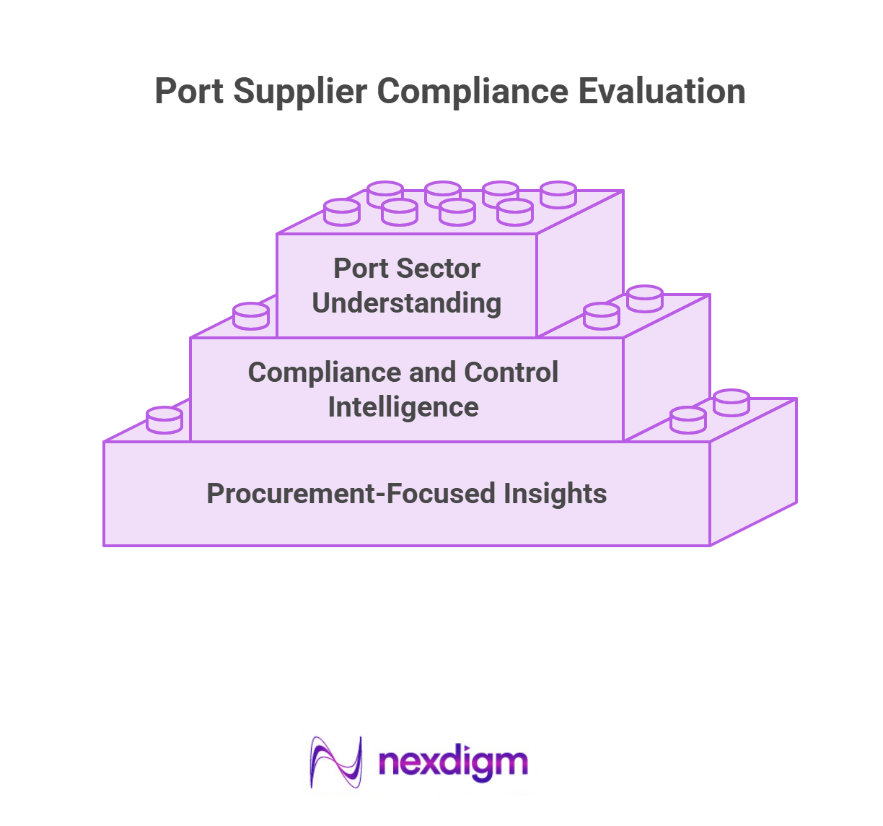
- Port Sector Understanding: Examine supplier roles, service arrangements, and operational requirements across terminal operations, cargo handling, stevedoring, and port support services.
- Compliance and Control Intelligence: Evaluate available information on safety standards, regulatory credentials, equipment controls, and supplier governance practices.
- Procurement-Focused Insights: Translate vendor findings into comparative intelligence to support supplier shortlisting, due diligence, and risk-based procurement decisions.
Such industry-led expertise supports more accountable supplier relationships and consistent governance across port operations.
What Sets Nexdigm’s Port Supplier Assessment Approach Apart?
Nexdigm brings together industry understanding, procurement intelligence, and structured supplier research rather than relying solely on checklist-based compliance reviews. Our approach can help businesses with:
- Multi-Tier Supplier Visibility: Examine direct vendors and their subcontracting arrangements to identify dependencies and potential accountability gaps across port service networks.
- Location-Wise Compliance Benchmarking: Compare supplier practices across different ports to identify variations in safety standards, documentation quality, and control implementation.
- Evidence-Led Risk Prioritisation: Use available certifications, inspection records, incident documentation, and corrective action evidence to identify areas requiring closer scrutiny.
This integrated perspective can help businesses make more informed supplier decisions while strengthening compliance oversight across port operations.
Nexdigm’s Case
A logistics company sought to evaluate the compliance and operational readiness of service providers supporting its port operations across multiple locations. In this scenario, Nexdigm’s research assessed 19 suppliers across 8 port locations. The assessment found that approximately 37% of suppliers qualified for further consideration, while 32% showed gaps in safety documentation, 26% had maintenance record inconsistencies, and 21% required closer review of contractor accountability.
To take the next step, simply visit our Request a Consultation page and share your requirements with us.
Harsh Mittal
+91-8422857704