

Point-of-sale (POS) infrastructure is central to how banks, payment service providers, and merchants facilitate digital transactions. As acceptance networks expand, institutions must make procurement decisions that balance terminal costs, transaction reliability, service coverage, and technology requirements. The Reserve Bank of India’s Annual Report 2024–25 recorded a 24.7% increase in POS terminals during the year, taking deployment to approximately 1.1 crore.
UPI QR codes also grew by 91.5% to 65.8 crore, highlighting the expanding range of merchant payment acceptance options. This changing landscape makes POS procurement research and benchmarking services important for comparing device suppliers, managed service providers, pricing structures, and operating models.
Understanding the Commercial Choices in POS Procurement
POS procurement can involve outright terminal purchases, leasing, managed services, or bundled payment acceptance arrangements. Each model distributes hardware costs, maintenance responsibilities, software expenses, and transaction-related charges differently. Financial institutions must assess these elements together to understand the overall cost of deployment and determine which arrangement delivers reliable performance without creating unnecessary supplier dependencies or long-term commercial commitments.
Considerations That Shape POS Procurement Decisions
Selecting a procurement model requires evaluating more than the upfront price of a terminal. Three factors deserve particular attention:
- Cost and Commercial Structure: Compare device prices, rental charges, transaction fees, software costs, and maintenance expenses to assess total procurement expenditure.
- Performance and Technology: Evaluate transaction processing speed, connectivity, security features, device compatibility, and system integration capabilities across suppliers.
- Service and Support Coverage: Assess installation, device replacement, technical assistance, uptime commitments, and maintenance response times to understand service reliability.
Together, these considerations help organizations compare procurement models on both financial and operational performance.
Nexdigm’s Intelligence Service Offerings for POS Procurement Planning
POS procurement decisions are influenced by a diverse supplier ecosystem, changing payment technologies, and varying commercial arrangements. Nexdigm can support BFSI organizations through market research and supplier intelligence that examine these developments. By evaluating market participants, pricing practices, and service offerings, Nexdigm helps procurement teams develop a clearer understanding of available sourcing alternatives and identify areas for more informed procurement planning.
Understanding the POS Supplier Ecosystem With Nexdigm
A fragmented supplier landscape can make it difficult to compare providers on a consistent basis. Nexdigm can help organizations map relevant suppliers through POS procurement research and benchmarking services, across the POS value chain, including:
- POS Hardware Manufacturers: Research providers offering traditional, wireless, Android-based, and contactless-enabled terminals.
- Payment Technology Providers: Assess companies delivering payment gateways, transaction processing platforms, software, and integration solutions.
- Managed Service Providers: Identify suppliers offering terminal deployment, monitoring, maintenance, replacement, and merchant support services.
- Connectivity Providers: Examine companies supporting SIM-based, broadband, and other connectivity requirements for POS operations.
This mapping gives procurement teams a structured view of supplier capabilities and potential sourcing options.
How Nexdigm Compares POS Procurement and Commercial Models
The choice between purchasing, leasing, and outsourcing POS infrastructure depends on deployment scale, operating requirements, and cost allocation. Nexdigm can help organizations benchmark these arrangements across:
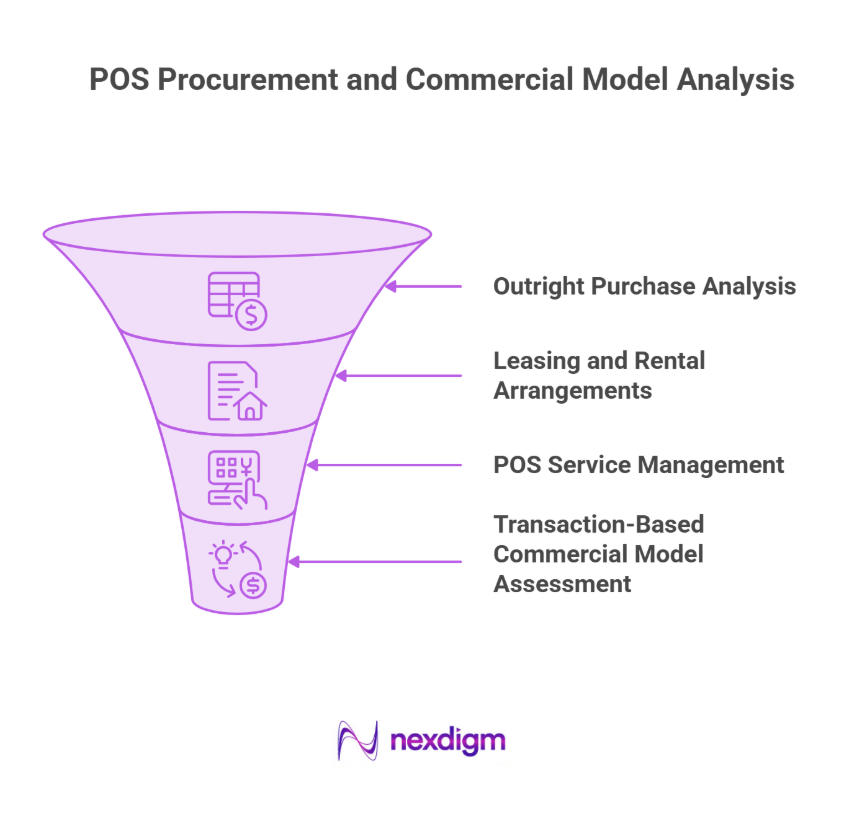
- Outright Purchase Models: Compare upfront device costs, ownership responsibilities, maintenance expenses, and replacement requirements.
- Leasing and Rental Arrangements: Assess recurring charges, contract duration, upgrade provisions, and equipment replacement terms.
- Managed POS Services: Evaluate bundled pricing, service responsibilities, technical support, and operational coverage.
- Transaction-Based Commercial Models: Examine per-transaction fees, minimum commitments, settlement charges, and other usage-linked costs.
These comparisons help organizations understand the commercial implications of different procurement structures and identify suitable alternatives.
Nexdigm’s Benchmarking Findings Supporting Stronger Sourcing Decisions
Market comparisons become more useful when translated into procurement priorities. Nexdigm can support organizations in identifying pricing differences, evaluating supplier service capabilities, and assessing the commercial implications of alternative sourcing arrangements. This can help procurement teams shortlist suitable providers, identify contractual areas for review, and prepare for more informed vendor negotiations.
Building Long-Term Value From Nexdigm’s POS Procurement
The effectiveness of a POS procurement model depends on its ability to deliver competitive costs, dependable transaction performance, and consistent service support. Through supplier research, market intelligence, and POS procurement research and benchmarking services, Nexdigm’s experts help BFSI organizations evaluate procurement alternatives and strengthen sourcing decisions. This supports a more structured approach to managing POS infrastructure investments as payment acceptance requirements evolve.
Nexdigm’s Case
A financial institution engaged Nexdigm to assess POS procurement across hardware, managed services, and connectivity. The study identified 16% potential reduction in total ownership costs, 21% improvement in vendor service response, and 12% potential for reducing recurring maintenance expenditure. These insights supported more efficient sourcing and stronger supplier negotiations.
To take the next step, simply visit our Request a Consultation page and share your requirements with us.
Harsh Mittal
+91-8422857704