

POS procurement expenditure is spread across devices, software, connectivity, transaction processing, and ongoing support. A bank or payment services provider may source terminals from one manufacturer, use a separate platform for transaction management, and depend on third-party suppliers for deployment and maintenance.
This arrangement can make the cost of operating a POS network difficult to establish. The purchase price of a terminal may appear modest, but software subscriptions, connectivity charges, replacement costs, and field support continue throughout its operating life.
Understanding where expenditure accumulates requires a view of the entire merchant acceptance environment. It also requires distinguishing between different device categories, since a basic card terminal and an Android-based smart POS system do not offer the same capabilities or cost structure.
Hardware Is the Starting Point, Not the Total Cost
POS hardware includes countertop terminals, wireless devices, Android-based systems, smart terminals, and associated peripherals. Their prices depend on processing capabilities, operating systems, connectivity options, security features, display specifications, and manufacturer positioning.
The choice of device also depends on the merchant segment. A small retailer may need a basic payment terminal, while a large merchant may require integrated billing, inventory connectivity, customer management, and reporting capabilities.
These requirements affect both acquisition and replacement costs. Procurement teams should compare devices with similar specifications and functions rather than relying on broad product categories. Warranty coverage, availability of spare parts, product support, and expected replacement cycles should also be considered.
Software and Connectivity Add Recurring Costs
POS devices rely on software for transaction processing, device management, application updates, reporting, and merchant support. More advanced platforms may provide inventory integration, loyalty functions, analytics, and links with enterprise systems.
Providers may charge through annual licences, monthly subscriptions, per-device fees, or transaction-linked models. Some include platform access within the device price, while others bill software and additional modules separately.
Connectivity is another recurring expense. Devices may rely on mobile networks, Wi-Fi, or other communication arrangements. Costs can vary according to data plans, network coverage, and the number of active terminals.
These components become particularly important when a payment provider operates a large network across different merchant segments and regions. A low-cost device may become expensive to maintain if it requires separate software, connectivity, and support contracts.
Deployment and Support Shape the Operating Economics
POS deployment can involve merchant onboarding, device configuration, installation, training, and integration with existing billing or payment systems. Recurring services may include troubleshooting, repairs, replacement devices, software updates, and field visits.
The cost of these activities depends on network size and geographic spread. A provider serving merchants across multiple states may require a different service structure from one operating in a concentrated urban market.
Contract scope also matters. Some suppliers include replacement and maintenance within a monthly fee, while others charge for individual visits or repairs. Comparing headline service charges without understanding these inclusions can lead to inaccurate conclusions about the cost of competing arrangements.
The Supplier Landscape Is Becoming More Diverse
India’s POS infrastructure has expanded alongside digital payment acceptance. The growth of card acceptance and merchant payment infrastructure has created demand across hardware, software, connectivity, and managed services.
The supplier landscape includes terminal manufacturers, payment technology companies, software providers, processors, connectivity partners, and field service organisations. Some offer integrated solutions, while others specialise in a particular part of the acceptance chain.
POS system procurement spend research can help institutions understand this supplier structure and compare product portfolios, commercial models, regional presence, and technology capabilities. This is particularly useful when procurement teams need to assess whether existing supplier arrangements remain competitive across different device and merchant categories.
POS Procurement Spend Framework
A structured assessment should examine:
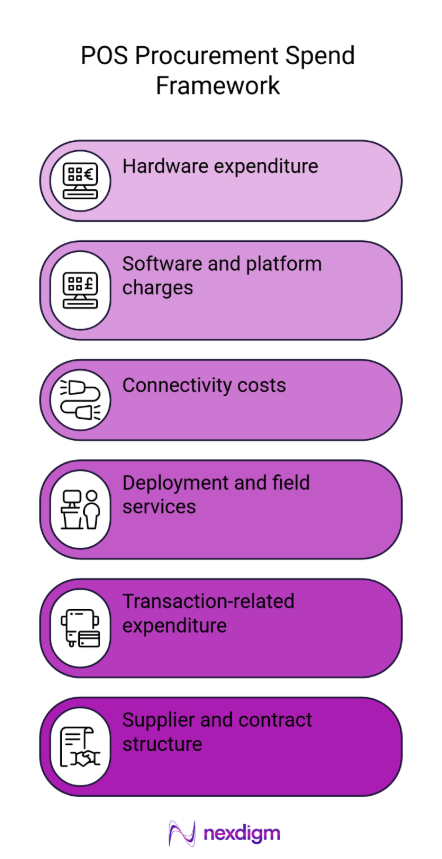
- Hardware expenditure: Compare device acquisition costs by terminal type, specifications, functionality, warranty, and expected replacement cycle.
- Software and platform charges: Assess licence structures, subscription fees, application modules, device management, and integration costs.
- Connectivity costs: Examine SIM and data charges, network coverage, communication requirements, and regional differences.
- Deployment and field services: Compare installation, onboarding, maintenance, repair, replacement, and field support arrangements.
- Transaction-related expenditure: Identify processing, gateway, routing, and other payment service charges associated with the POS environment.
- Supplier and contract structure: Map manufacturers, platform providers, processors, and service partners to identify bundled charges and overlapping capabilities.
Nexdigm’s research capabilities can support this through supplier profiling, product benchmarking, market mapping, and pricing analysis. The output helps institutions understand which cost components deserve further review and where alternative sourcing arrangements may be worth considering.
Case Study: When a Terminal Review Exposed Differences in Service Costs
A payment services provider reviewing a 10,000-terminal network separated expenditure across hardware, software, connectivity, and field support. Comparing supplier arrangements across merchant categories highlighted differences in replacement coverage, platform subscriptions, and regional service costs that were obscured by bundled pricing.
To take the next step, simply visit our Request a Consultation page and share your requirements with us.
Harsh Mittal
+91-8422857704