

Pre-launch product testing and validation helps companies improve market fit before committing to full-scale commercialization. It allows businesses to test customer response, product usability, pricing acceptance, feature relevance, packaging, messaging, and purchase intent in a controlled way. By using pre-launch product testing and validation, companies can identify adoption barriers early, avoid costly rollout mistakes, improve customer acceptance, and create a more practical path for successful commercialization and sustainable revenue growth.
Strong market entry strategy uses these insights to reduce launch uncertainty, refine the product, and confirm whether the target market is ready.
Pre-launch product testing and validation gives companies measurable insight before they invest in full commercialization. Studies indicate that around 80% of new products fail to meet expected performance targets, while nearly 45% of launches face delays due to weak planning, unclear customer fit, or execution gaps. Testing concepts, pricing, usability, and messaging before launch helps businesses correct issues early, improve adoption potential, and build a stronger market entry strategy.
Using Pre-Launch Product Testing to Reduce Market Entry Risk
Using Pre-Launch Product Testing to Reduce Market Entry Risk means testing demand, usability, pricing, messaging, and customer acceptance before commercialization to fix issues early and improve launch success.
-
Customer Demand Testing
Test purchase intent, product need, and customer interest before launch to reduce weak adoption risk.
-
Usability and Experience Review
Assess product ease of use, features, design, and customer experience to identify improvement areas before commercialization.
-
Pricing Acceptance Testing
Evaluate willingness to pay, affordability, and perceived value to reduce pricing-related market entry risks.
-
Messaging and Positioning Validation
Test product claims, benefits, packaging, and communication to ensure customers understand the value proposition clearly.
-
Target Segment Feedback
Gather responses from priority customer groups to confirm whether the product fits their needs and expectations.
Nexdigm’s Insights Research for Reducing Product Launch Uncertainty
Nexdigm’s Insights Research for Reducing Product Launch Uncertainty helps companies understand customer needs, purchase intent, pricing expectations, competitor offerings, adoption barriers, and channel preferences before launch. These insights support better product positioning, demand validation, and go-to-market planning. By reducing assumption-led decisions, Nexdigm helps businesses improve launch readiness and strengthen their market entry strategy.
Effective Strategies to Improve Product Market Fit Before Full-Scale Commercialization
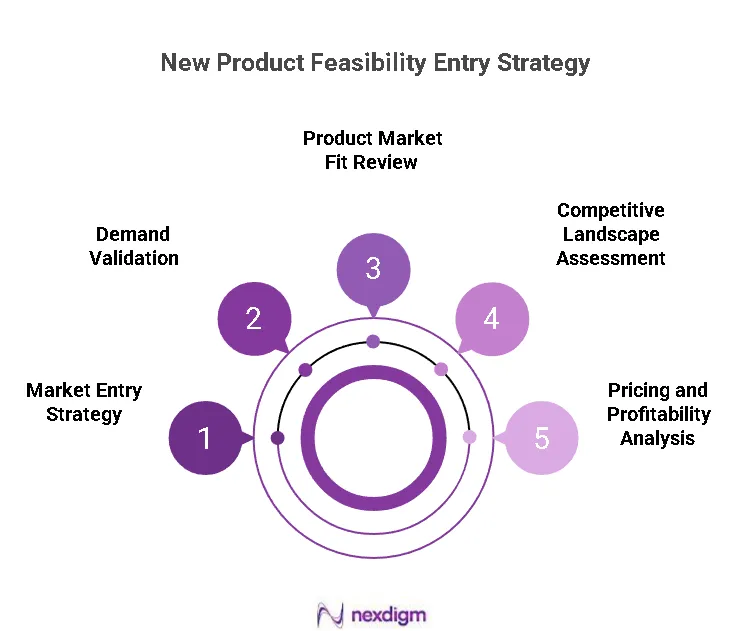
Effective Strategies to Improve Product Market Fit Before Full-Scale Commercialization include testing customer demand, validating pricing, refining features, reviewing usability, improving messaging, and addressing adoption barriers before full market rollout:
-
Feature Relevance Testing
Review whether product features solve customer problems and match expectations in the target market.
-
Pricing Acceptance Review
Assess willingness to pay, affordability, competitor pricing, and perceived value to refine pricing before launch.
-
Usability Experience Assessment
Test ease of use, design, functionality, and customer experience to identify improvements before commercialization.
-
Target Segment Feedback
Gather feedback from priority customer groups to refine product fit, positioning, and adoption strategy.
-
Adoption Barrier Analysis
Identify purchase hesitations, switching concerns, usage issues, and trust gaps that may slow product acceptance.
-
Launch Readiness Improvement
Use validation insights to adjust product, pricing, channels, and market entry strategy before full rollout.
Nexdigm’s case:
Nexdigm assisted a global pet care brand improve product-market fit before launching a premium nutrition range in India. Nexdigm tested customer demand, pricing acceptance, product claims, channel fit, and adoption barriers across metro and Tier-1 markets.
The study found that 49% of surveyed pet owners prioritized vet-recommended products, 36% were willing to pay a premium for ingredient transparency, and 28% preferred online subscription-based purchases. Nexdigm helped refine positioning, pricing, and launch channels before commercialization.
To take the next step, simply visit our Request a Consultation page and share your requirements with us.
Harsh Mittal
+91-8422857704