

Procurement efficiency can vary significantly even when organizations operate with similar purchasing volumes and supplier requirements. APQC’s 2026 benchmarking data shows that the cost of processing a single purchase order can range from approximately $14 to more than $54, illustrating how process design can influence operating costs.
Across 1,181 organizations, the median purchase-order issuance cycle is two days, while supplier lead time has a 10-day median across 3,077 companies. Supplier setup takes a median of three days, whereas establishing a supplier contract takes 40 days, highlighting how different procurement stages can carry very different efficiency profiles.
These differences make procurement process benchmarking valuable for identifying process gaps, comparing performance against relevant peers, and determining where operational improvements can create measurable impact.
Where Procurement Processes Lose Efficiency
Procurement inefficiencies can emerge across requisitioning, approvals, sourcing, supplier onboarding, contracting, purchasing, and invoice processing. Excessive approval layers, manual data entry, fragmented systems, inconsistent policies, and limited supplier visibility can extend cycle times and increase transaction costs. Examining these stages individually helps organizations identify where resources are being consumed unnecessarily and where process changes could improve speed, compliance, and overall procurement performance.
What Benchmarking Reveals About Process Performance
Benchmarking provides context for understanding whether a procurement process is performing efficiently or simply operating within established internal norms. Comparing cycle times, transaction costs, automation levels, supplier onboarding, contract turnaround, and compliance indicators against relevant benchmarks can highlight performance gaps. These comparisons help procurement leaders distinguish isolated operational issues from broader process weaknesses and identify areas where redesign, technology, or governance changes may create measurable improvements.
Nexdigm’s Expertise in Procurement Process Benchmarking
Nexdigm examines procurement performance beyond individual metrics, helping businesses in:
- Identifying Performance Gaps: Comparing cycle times, transaction costs, compliance, automation, and service levels to pinpoint where procurement performance falls below relevant benchmarks.
- Uncovering Process Complexity: Examining approval layers, manual interventions, fragmented workflows, system gaps, and handoffs to identify activities creating unnecessary delays or operational effort.
- Strengthening Process Performance: Identifying opportunities for process redesign, automation, governance improvements, and standardization to improve efficiency while strengthening procurement control and scalability.
This approach helps procurement teams move beyond benchmark comparisons to understand the operational changes required to improve performance sustainably.
Nexdigm’s Assessment Supporting Procurement Improvement
Benchmarking becomes valuable when identified gaps can be translated into clear improvement priorities. Nexdigm’s procurement process benchmarking helps teams:
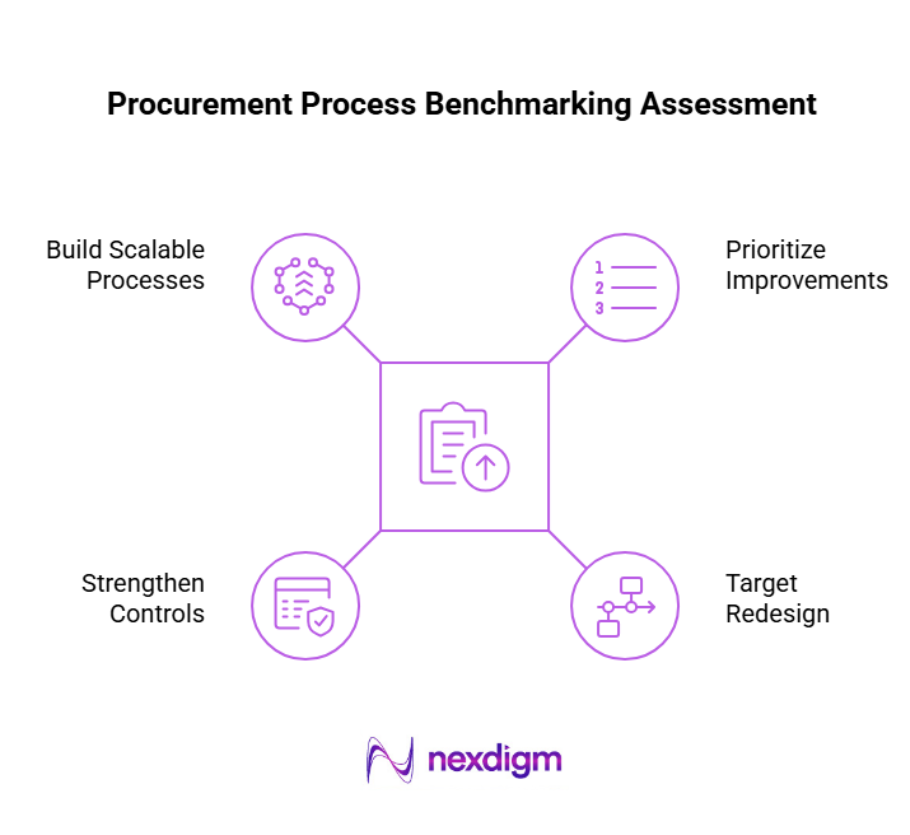
- Prioritize Improvement Areas: Rank process gaps according to efficiency impact, transaction volumes, cost implications, compliance concerns, and ease of implementation.
- Target Process Redesign: Identify workflows where automation, standardization, simplified approvals, or clearer ownership can reduce unnecessary effort and cycle times.
- Strengthen Procurement Controls: Highlight governance and compliance gaps that may affect purchasing discipline, supplier management, or adherence to established procurement policies.
- Build Scalable Processes: Identify opportunities to create standardized, technology-enabled workflows that can support increasing procurement volumes without proportionately increasing operational effort.
This enables businesses to move from benchmarking performance to building a focused improvement roadmap for a more efficient and scalable procurement function.
What Nexdigm’s Benchmarking Helps Procurement Leaders See
Benchmarking can reveal performance differences that are difficult to identify through internal reporting alone. Nexdigm helps procurement leaders interpret these differences and understand the operational implications behind them:
- Where Time Is Lost: Identify process stages where approvals, manual interventions, or handoffs are extending procurement cycle times.
- Where Resources Are Consumed: Highlight activities requiring disproportionate personnel effort relative to their transaction volumes or business value.
- Where Controls Are Weak: Identify inconsistencies in policies, approvals, compliance, supplier processes, or purchasing practices that may create operational exposure.
- Where Digitalization Can Help: Determine processes where automation, workflow tools, or better data integration could reduce repetitive work and improve visibility.
- Where Leading Practices Differ: Compare operating approaches to identify practices that could strengthen procurement efficiency, governance, and scalability.
These insights give procurement leaders a clearer view of where performance gaps originate and which areas offer the strongest potential for improvement.
Nexdigm’s Case
Nexdigm benchmarked procurement processes across key operational areas, identifying 15% potential reduction in process effort, 12% improvement potential in cycle-time performance, and 9% opportunity to strengthen process compliance. The assessment also highlighted 14% scope for greater automation, helping the client prioritize process redesign, technology adoption, and governance improvements.
To take the next step, simply visit our Request a Consultation page and share your requirements with us.
Harsh Mittal
+91-8422857704