
A psychological pricing strategy uses consumer perception and behavioral insights to influence purchasing decisions beyond the actual price of a product or service. Through effective pricing analysis, businesses can determine how pricing techniques such as charm pricing, prestige pricing, and price anchoring affect customer behavior across different markets.
Studies suggest that psychological pricing influences buying decisions in over 60% of consumer categories, making it an essential component of modern pricing strategies. By combining psychological pricing strategy with data-driven pricing analysis, organizations can improve perceived value, increase conversion rates, strengthen customer engagement, and maximize revenue without relying solely on price reductions.
Research indicates that psychological pricing can influence purchase behavior in over 60% of consumer categories, especially in retail, FMCG, e-commerce, and lifestyle products. Pricing analysis shows that techniques such as charm pricing, price anchoring, and bundle pricing can improve conversion rates by 5% to 20%.
Businesses using psychological pricing strategy can strengthen perceived affordability, increase average order value, and improve customer response without depending heavily on discounts.
Analyzing Customer Response to Prestige and Premium Pricing
Analyzing customer response to prestige and premium pricing helps businesses understand value perception, purchasing behavior, and willingness to pay, enabling data-driven pricing analysis that maximizes revenue and brand positioning.
-
Value Perception Analysis
Assesses how customers associate premium prices with quality, exclusivity, trust, and stronger brand value.
-
Willingness-to-Pay Evaluation
Measures how much customers are ready to pay for premium features, positioning, or perceived benefits.
-
Prestige Pricing Impact
Analyzes whether higher prices improve desirability, brand status, and customer confidence in product quality.
-
Customer Segment Comparison
Compares premium pricing response across income groups, purchase behavior, lifestyle preferences, and product categories.
Nexdigm’s Price Anchoring Strategy for Improved Conversion Rates
Nexdigm’s price anchoring strategy helps businesses influence customer value perception by strategically positioning reference prices and premium options. Through pricing analysis, customer behavior insights, and competitive benchmarking, Nexdigm improves conversion rates, strengthens product positioning, enhances purchase confidence, and supports sustainable revenue growth without excessive discounting.
Nexdigm’s Psychological Pricing Analysis for Consumer Decision-Making
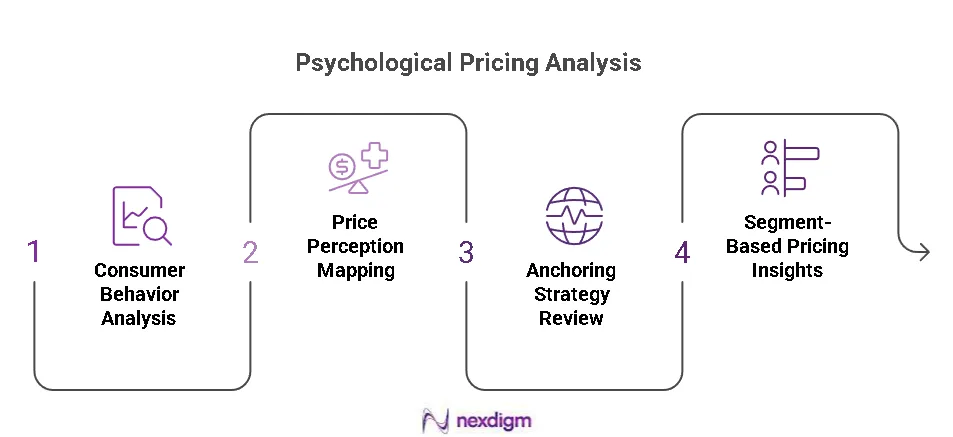
Nexdigm’s psychological pricing analysis helps businesses understand consumer behavior, optimize pricing strategies, strengthen value perception, improve purchase decisions, and increase revenue through data-driven pricing insights:
-
Consumer Behavior Analysis
Nexdigm evaluates how customers respond to price cues, perceived value, affordability, and premium positioning.
-
Price Perception Mapping
Nexdigm studies how different price points influence product attractiveness, trust, and customer purchase confidence.
-
Anchoring Strategy Review
Nexdigm assesses reference prices and premium options to improve comparison-based purchase decisions.
-
Segment-Based Pricing Insights
Nexdigm analyzes customer groups to identify which segments respond best to psychological pricing techniques.
Nexdigm’s case:
Nexdigm assisted a consumer goods company improve purchase decisions through psychological pricing analysis. By testing price anchoring, charm pricing, and premium positioning across key product categories, Nexdigm increased conversion rates by 16%, improved average order value by 11%, and enhanced premium product adoption by 14% within three months.
To take the next step, simply visit our Request a Consultation page and share your requirements with us.
Harsh Mittal
+91-8422857704