
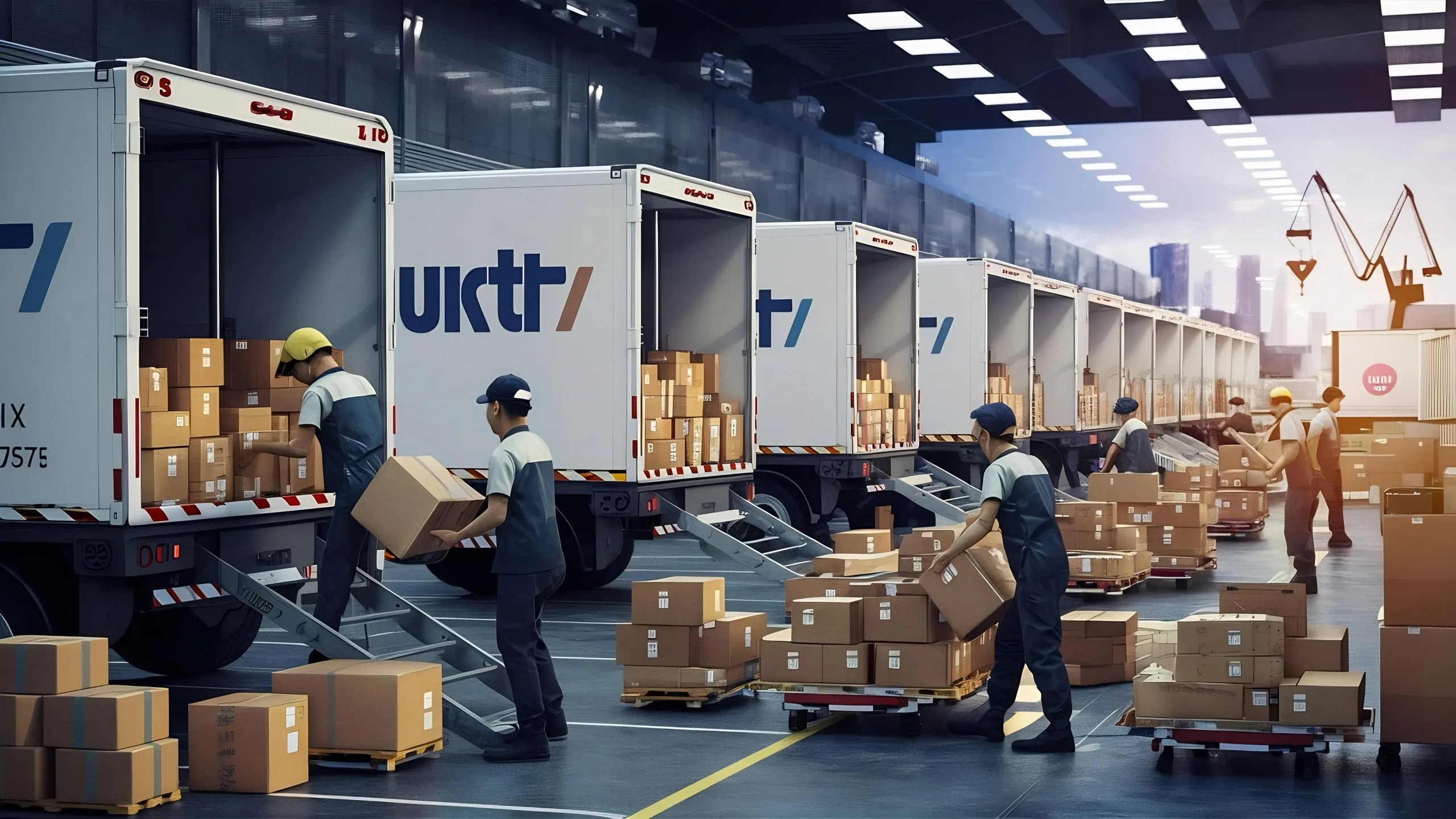
Qatar’s logistics industry has changed noticeably over the last few years. What was once a market heavily tied to import handling and project cargo now includes modern warehousing, e-commerce fulfillment, cold storage, and outsourced transport management. As businesses focus more on cost control and service speed, third-party logistics providers are taking on work that companies previously managed in-house. By 2026, Qatar already has a strong physical base through Hamad Port, Hamad International Airport, and a well-developed road network linking industrial and commercial zones. The shift is not only about infrastructure. Retailers want faster deliveries, hospitals need reliable cold chains, and manufacturers prefer leaner inventory models. In practice, this makes outsourced logistics far more attractive than it was a decade ago. The market is becoming more service-led, where reliability and visibility matter as much as warehouse space.
What’s Driving the 3PL Market in Qatar?
Trade Flows and Gateway Advantage
Qatar sits in a useful location between Asia, Africa, and Europe, and that matters more today than ever. Businesses moving goods across the Gulf often use Qatar as an entry or redistribution point, particularly for higher-value cargo and time-sensitive shipments. Hamad Port has given the country more control over direct shipping routes, reducing reliance on neighboring transit hubs.For importers, that means fewer handoffs and better scheduling. For logistics firms, it creates room to sell bundled services such as customs handling, bonded storage, and inland transport rather than just freight movement.
E-commerce and Retail Fulfillment
Online shopping in Qatar has become part of everyday consumer behavior, especially in electronics, groceries, fashion, and beauty products. That sounds straightforward, but the logistics behind it can be demanding. Customers now expect same-day or next-day delivery, accurate tracking, and easy returns. Many retailers are not built to manage that complexity themselves. They are handing fulfillment, parcel sorting, and last-mile delivery to specialists. On the ground, smaller merchants benefit the most because outsourcing gives them access to warehouse systems and delivery networks that would otherwise be too expensive to build.
Industrial Expansion and Specialized Demand
Qatar’s diversification efforts have created fresh demand beyond retail. Food processing plants, pharmaceuticals, chemicals, and light manufacturing all need dependable storage and transport. These sectors often require more than standard trucking. They need temperature control, batch traceability, secure handling, or timed deliveries. This is where 3PL providers can command better margins. Basic transport is competitive, but specialized logistics remains harder to replicate. Companies that invest early in cold chain or regulated warehousing may have a clear edge over generic operators.
Government-Led Initiatives Supporting Logistics Growth
The government has treated logistics as a practical pillar of economic development under Qatar National Vision 2030. Investment in ports, highways, industrial zones, and customs digitization has reduced friction for cargo movement. Those upgrades may sound administrative, yet they matter enormously to operators trying to cut turnaround time. Free zones supported by Qatar Free Zones Authority have also helped attract regional distribution centers. In many cases, global firms prefer a location where warehousing, licensing, and cross-border movement can be handled with less bureaucracy. Qatar has become more competitive on that front.
Market Competition and Service Landscape
Competition is fairly balanced between international names and domestic players. DHL Supply Chain, Kuehne+Nagel, Agility Logistics, and Qatar Navigation (Milaha) all have visible roles in the market. Global firms usually win large multinational contracts because they offer integrated systems across countries. Local companies often move faster in domestic transport, project cargo, and relationship-led business. A common challenge for mid-sized operators is technology spending. Clients now ask for shipment visibility dashboards and real-time reporting, not just trucks and warehouse racks.
Limited Scale and Cost Pressure
Qatar is wealthy, but it is still a relatively small domestic market. That limits shipment volumes compared with Saudi Arabia or the UAE. Lower scale can push up unit economics for warehousing, fleet operations, and labor. Storage operators especially feel this pressure when occupancy softens. In practice, some providers expand capacity too quickly and then compete aggressively on price. That may help customers in the short term, but it can squeeze service quality later.
Future Outlook
By 2035, Qatar’s 3PL market should be larger, more specialized, and more technology-led than it is today. Growth will likely come from healthcare logistics, e-commerce fulfillment, food supply chains, and regional re-export activity rather than sheer domestic consumption. Automation inside warehouses, smarter route planning, and AI-led inventory forecasting will become common tools rather than premium extras. The bigger winners may not be the largest fleets, but the firms that combine reliability with niche expertise. In a market like Qatar, precision often matters more than scale.
Consultants at Nexdigm, in their latest publication “Qatar 3PL Market Outlook to 2035”, analyzed the market by Service Type (Transportation, Warehousing, Freight Forwarding, Value-Added Services), By End User (Retail, Healthcare, Manufacturing, Oil & Gas, E-commerce), and By Mode of Transport (Road, Air, Sea, Multimodal). Nexdigm believes that businesses should prioritize digital supply chain visibility, cold chain expansion, and strategic partnerships within free zones while leveraging Qatar’s connectivity advantages as key growth levers in the 3PL market.
To take the next step, simply visit our Request a Consultation page and share your requirements with us.
Harsh Mittal
+91-8422857704