
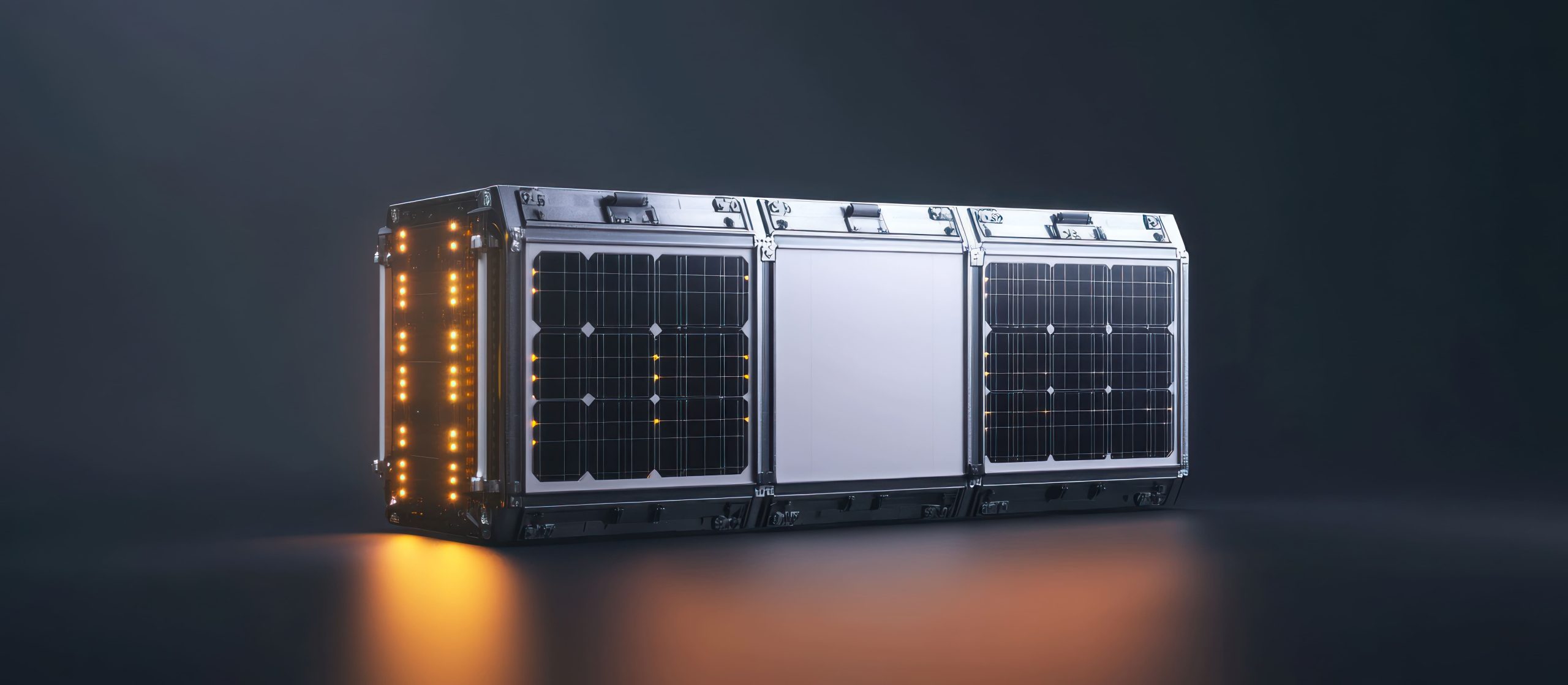
Qatar’s power sector is entering a new phase. For decades, the country has relied on abundant natural gas to meet domestic electricity demand, and that model has worked well. But with solar capacity gradually coming online and sustainability now tied more closely to long-term economic planning, energy storage is starting to matter in a way it did not a few years ago. Battery Energy Storage Systems, or BESS, are becoming increasingly relevant as Qatar looks to balance renewable power with a grid that has traditionally been built around stable gas-based generation. The need is not just environmental. It is also practical. In a market where electricity demand can swing sharply during summer due to air conditioning loads, storing power for later use can make the system far more efficient. Qatar is still at an early stage compared to larger storage markets, but the fundamentals are beginning to line up.
What’s Driving the BESS Market in Qatar?
Expansion of Solar Energy Projects
The biggest push is coming from solar. Projects such as the Al Kharsaah Solar PV Plant have already shown that Qatar is serious about adding renewable energy to the grid. The issue, of course, is that solar only produces when the sun is available, while power demand often stretches well into the evening. That is where storage starts to make commercial sense. Instead of curtailing excess daytime generation or relying entirely on gas plants after sunset, utilities can store electricity and release it when needed. In practice, this improves utilization of solar assets and reduces wasted generation.
Rising Demand for Grid Stability and Peak Load Management
Qatar’s electricity demand profile is unusually sharp during hot months. Cooling demand can place enormous pressure on the grid in a relatively short window, especially in dense urban and commercial zones such as Doha. Building new peaking plants for just a few high-demand hours each year is expensive and, frankly, inefficient. BESS offers a cleaner workaround. Batteries can discharge during those peak periods and help smooth out stress on the network. This does not replace conventional generation overnight, but it can reduce how hard the system needs to work during its most demanding hours.
Growth in Smart Grid and Digital Infrastructure
Another reason storage is gaining attention is the modernization of grid infrastructure itself. Qatar has been investing in smarter utility operations, digital monitoring, and energy management tools. Storage fits naturally into that shift. On the ground, this matters because batteries are not just backup boxes sitting in a corner. They can respond in seconds, support frequency regulation, and work alongside digital systems to improve overall grid performance. That kind of flexibility is becoming more valuable as power systems get more complex.
Government-Led Initiatives
Much of the momentum still depends on public sector direction. Qatar National Vision 2030 has created a broader framework around sustainability, energy efficiency, and infrastructure modernization. While BESS has not always been the headline, it sits squarely within that agenda. State-backed renewable projects, cleaner urban developments, and long-term utility planning all create room for storage deployment. There is also a practical angle here: if Qatar wants renewables to contribute meaningfully rather than symbolically, storage will eventually have to move from pilot scale to utility scale.
Market Competition
The competitive landscape is still taking shape. At this stage, most activity comes from international battery suppliers, EPC firms, and power technology companies looking to enter through tenders or partnerships. Lithium ion remains the dominant technology for obvious reasons: it is proven, scalable, and costs have come down enough to make serious projects feasible. That said, the market is not crowded yet. Early movers with strong utility relationships or local execution capabilities are likely to have an edge. In smaller but high-value markets like Qatar, trust and project delivery often matter just as much as technical specs.
Regulatory Uncertainty Remains a Key Bottleneck
One of the biggest hurdles in Qatar’s BESS market is the lack of a clearly defined regulatory structure for standalone storage projects. Developers may see strong technical potential, but investment decisions often get delayed when revenue models are unclear. A battery can support peak shaving, backup supply, and grid balancing, yet without proper rules on compensation and grid participation, project economics remain difficult to justify. In practice, this slows private sector participation and keeps many storage opportunities stuck at the feasibility stage.
Future Outlook
By 2035, BESS is likely to become a much more visible part of Qatar’s electricity infrastructure, particularly as solar additions continue and grid flexibility becomes harder to ignore. The market will not explode overnight, but it does not need to. Even moderate deployment can have a meaningful impact in a power system like Qatar’s. Over time, battery costs should become more manageable, use cases will broaden, and regulation will likely catch up. Beyond utility applications, there is also room in commercial sites, industrial facilities, and eventually EV charging support. The real story is not just about adding batteries. It is about making the power system more responsive, less wasteful, and better suited to how electricity is actually consumed today.
Consultants at Nexdigm, in their latest publication “Qatar Battery Energy Storage System (BESS) Market Outlook to 2035,” analyzed the market by Battery Type (Lithium-ion, Lead-acid, Flow Batteries, Others), By Application (Grid-Scale, Commercial & Industrial, Residential, EV Integration), and By End-User (Utilities, Commercial Enterprises, Industrial Facilities, Government Projects). Nexdigm believes that businesses should focus on practical deployment models, utility partnerships, and cost competitiveness as the market gradually matures.
To take the next step, simply visit our Request a Consultation page and share your requirements with us.
Harsh Mittal
+91-8422857704