
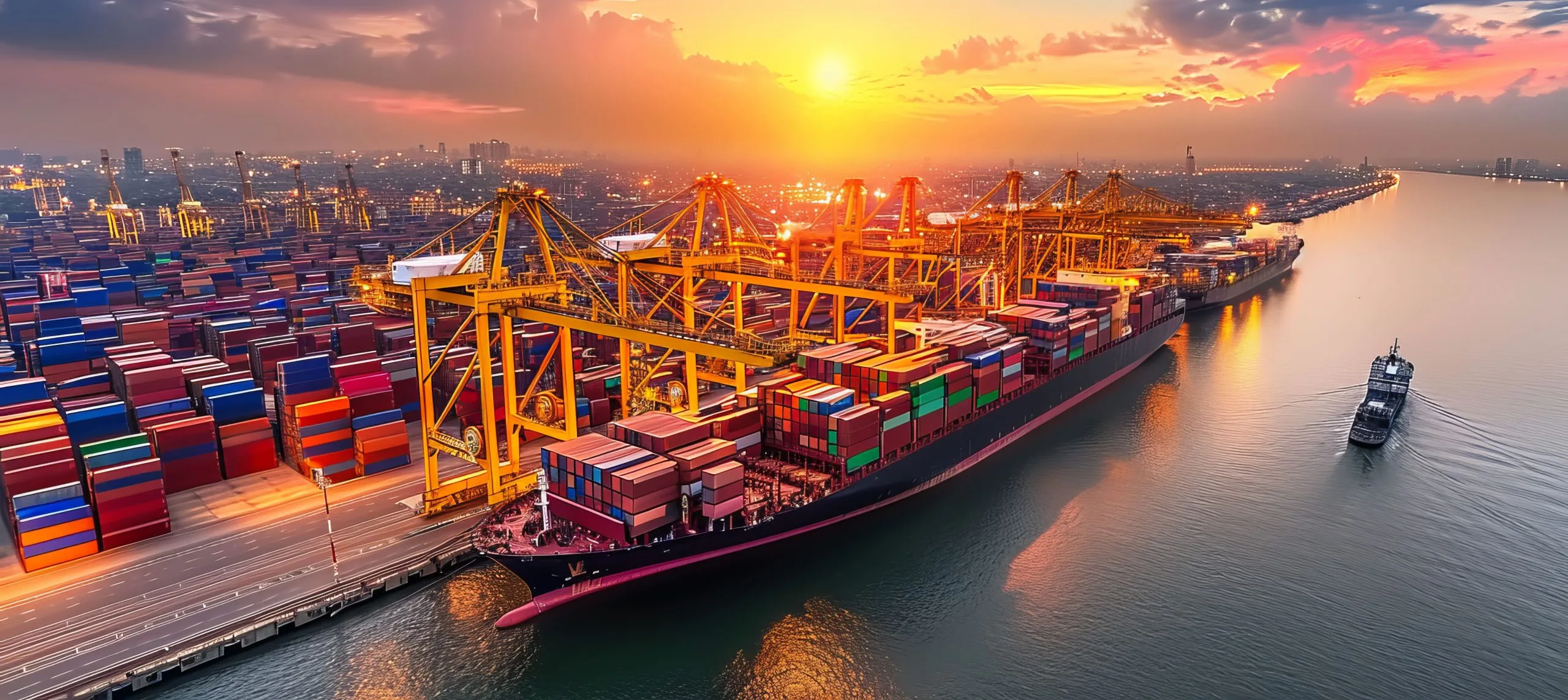
Qatar’s freight forwarding sector has moved beyond its earlier, relatively straightforward role of handling imports and exports. Over the past few years, it has taken on a more central function in keeping supply chains reliable, especially after the country experienced trade disruptions earlier in the decade. By 2025, Hamad Port and Hamad International Airport had become well-established gateways, handling everything from construction materials to high-value air cargo. What stands out now is the shift toward more coordinated logistics services, where clients expect visibility, speed, and flexibility rather than just transportation. Trade volumes remain closely tied to imports, particularly for food, machinery, and consumer goods. Yet the conversation is slowly changing. There is more focus on efficiency, cost control, and reducing dependency on indirect routes. In practice, this is pushing freight forwarders to rethink how they manage routes, partnerships, and technology.
What’s Driving the Freight Forwarding Market in Qatar?
Strategic Location and Trade Connectivity
Qatar’s location gives it a natural advantage, but geography alone does not guarantee efficiency. The real shift came with investments in direct shipping routes that bypass traditional transshipment hubs like Jebel Ali. This has shortened delivery timelines and reduced uncertainty for importers. For businesses moving goods between Asia and Europe, even a small reduction in transit time can translate into meaningful cost savings. On the ground, freight operators are increasingly prioritizing route optimization rather than simply relying on established trade lanes.
Growth in Non-Hydrocarbon Sectors
Diversification efforts are starting to show tangible effects in logistics demand. Construction projects, particularly those linked to urban development and industrial zones, continue to require steady inflows of materials. Retail has also evolved, with a broader mix of imported goods entering the market. Freight forwarders now deal with a wider range of cargo types, from heavy equipment to temperature-sensitive products. This variety adds complexity, but it also creates room for specialized services that were not as common a decade ago.
E-commerce and Digital Logistics Adoption
E-commerce has quietly reshaped expectations. Customers now want precise delivery timelines and real-time updates, even for cross-border shipments. Freight companies that once focused mainly on bulk cargo are now investing in tracking systems and warehouse automation. While digital tools promise efficiency, implementation is uneven. Some firms have embraced advanced platforms, while others still rely on manual processes, creating a noticeable gap in service quality across the market.
Government-Led Initiatives Supporting Logistics Growth
Public investment has played a significant role in shaping the sector. Free zones such as Ras Bufontas and Umm Alhoul have attracted logistics firms by offering tax incentives and streamlined regulations. More importantly, customs procedures have become faster and more transparent through digitalization. This might sound incremental, but for freight operators, even a few hours saved at clearance can improve turnaround times considerably. There is also a broader push under Qatar National Vision 2030 to strengthen trade infrastructure. While the vision is ambitious, execution on the ground has been fairly pragmatic. Projects tend to focus on practical improvements rather than headline-grabbing expansions, which arguably benefits logistics operators more in the long run.
Market Competition and Key Players
Competition in Qatar’s freight forwarding market feels balanced rather than crowded. Global firms such as DHL Group, Kuehne+Nagel, and DB Schenker bring scale and advanced systems, while regional players like Agility Logistics and Milaha offer local expertise and integrated services. Milaha, in particular, has an edge due to its involvement across shipping, port operations, and inland transport. That level of integration is not easy to replicate. At the same time, multinational firms tend to lead in specialized segments such as cold chain logistics and high-value cargo handling. The result is a market where differentiation matters more than sheer size.
High Dependence on Imports and External Factors
A persistent challenge lies in Qatar’s reliance on imports. This leaves the freight sector exposed to global disruptions, whether due to geopolitical tensions, shipping bottlenecks, or sudden rate fluctuations. For example, when global freight rates spike, local businesses have limited alternatives, and costs quickly pass through the supply chain. Another issue is demand variability. Large infrastructure projects can create short bursts of high cargo volume, followed by quieter periods. Managing capacity during these cycles is not straightforward. Freight forwarders often struggle to balance fleet utilization and operational costs, especially when margins are already tight.
Future Outlook
Looking ahead, the market will likely become more sophisticated rather than simply larger. Multimodal transport solutions combining sea, air, and land are expected to become more common, particularly for time-sensitive shipments. Efficiency will matter as much as scale. Technology will play a bigger role, though not always in a uniform way. Some companies will move toward AI-driven planning and blockchain-based documentation, while others may adopt only basic digital tools. This uneven adoption could shape competition in unexpected ways. By 2035, Qatar may not rival the largest global logistics hubs in volume, but it will likely strengthen its role as a reliable and efficient node within regional trade networks. For freight forwarders, the real opportunity lies in offering tailored solutions rather than standardized services.
Consultants at Nexdigm, in their latest publication “Qatar Freight Forwarding Market Outlook to 2035,” analyze the market by Mode of Transport (Air Freight, Sea Freight, Road Freight, Multimodal), By End User (Oil & Gas, Manufacturing, Retail & E-commerce, Healthcare, Construction), and By Service Type (Freight Transport, Warehousing, Value-Added Services, Customs Brokerage). Nexdigm suggests that companies focus on practical digital adoption, stronger regional partnerships, and service specialization to remain competitive in a market that is steadily becoming more demanding.
To take the next step, simply visit our Request a Consultation page and share your requirements with us.
Harsh Mittal
+91-8422857704