
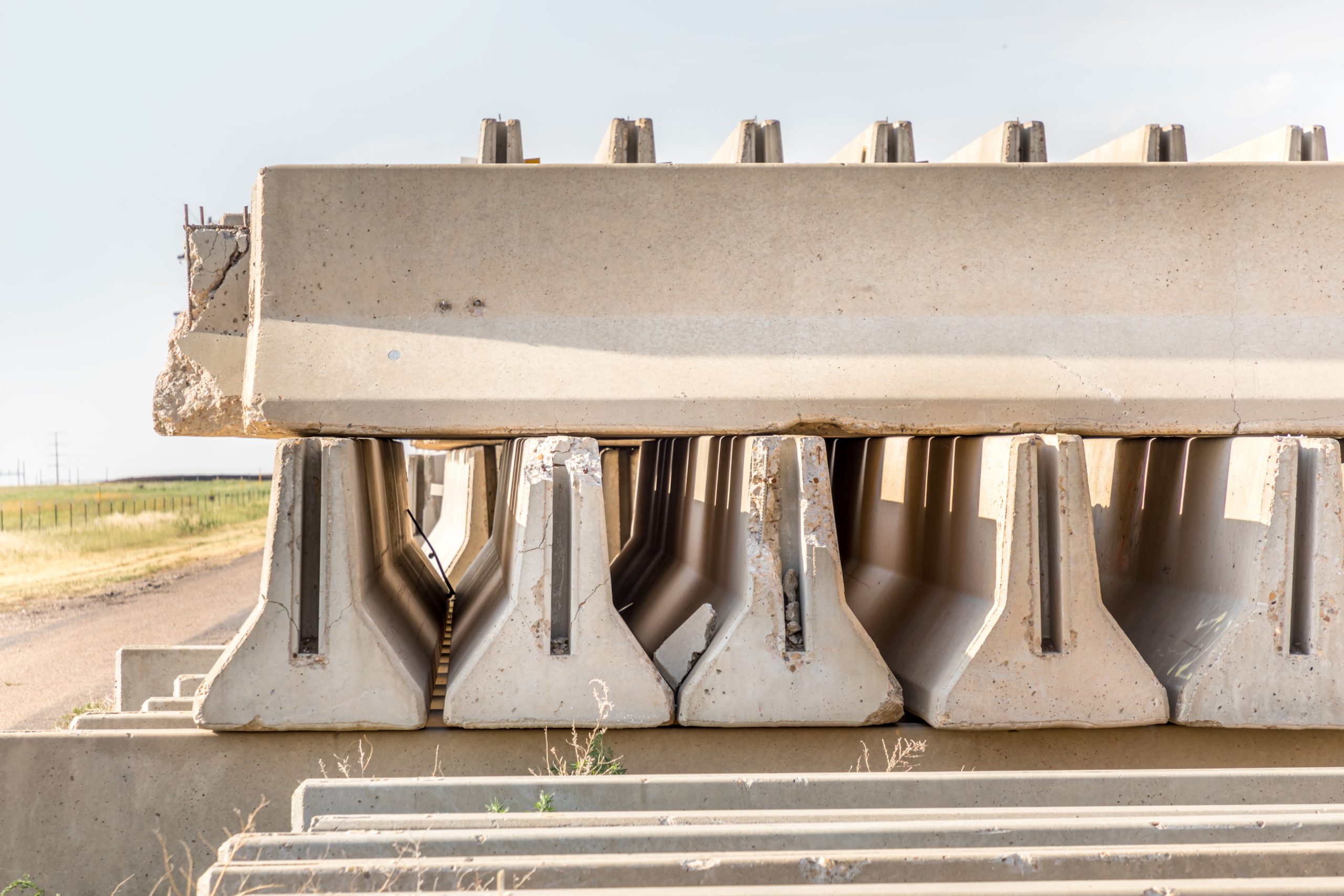
Qatar’s hollow concrete blocks market is gradually evolving alongside the country’s construction and infrastructure development. Rising investments in residential communities, commercial properties, industrial facilities, and public infrastructure are supporting demand for durable and cost-effective building materials. Hollow concrete blocks remain an important choice for construction companies because of their strength, relatively lightweight structure, thermal insulation properties, and ease of installation. As Qatar advances its National Vision 2030 and plans further economic diversification, the market is expected to witness steady opportunities through 2035, with growing attention to quality, efficiency, and sustainable construction practices.
Key Market Drivers Supporting the Growth of Qatar’s Hollow Concrete Blocks Industry
Expanding Infrastructure and Construction Activities
Infrastructure development remains one of the strongest contributors to hollow concrete block demand in Qatar. Investments in roads, drainage networks, public facilities, commercial buildings, and urban development projects are creating consistent requirements for construction materials. According to Oxford Business Group, Qatar’s construction sector contributed QR19.2 billion (approximately USD 5.3 billion) to GDP in Q1 2025, reflecting year-on-year growth of 4.4%. Continued investments in infrastructure and energy-related projects are expected to generate additional opportunities for local block manufacturers.
Growing Residential and Commercial Construction
The development of residential communities, mixed-use properties, retail spaces, hotels, and office buildings is another important demand driver. Urban development in locations such as Doha and Lusail is encouraging construction companies to use materials that balance affordability, durability, and installation efficiency. Hollow concrete blocks are widely used for internal partitions, external walls, and other masonry applications. Their availability in different thicknesses and strength grades also allows contractors to select products according to project specifications. As Qatar continues to strengthen its tourism and real estate sectors, demand from residential and commercial construction is likely to remain an important market contributor.
Increasing Preference for Energy-Efficient Building Materials
Qatar’s hot climatic conditions are encouraging developers to pay greater attention to building insulation and indoor thermal comfort. Hollow concrete blocks offer air cavities that can help reduce heat transfer when incorporated into appropriately designed wall systems. This makes them a practical option for projects seeking improved building energy performance. Additionally, manufacturers are exploring lightweight blocks, improved concrete formulations, and more efficient production technologies. The gradual shift towards sustainable construction is expected to encourage product innovation and create opportunities for manufacturers offering higher-performance concrete block solutions.
Government Support and Infrastructure Initiatives Strengthening Industry Development
Government-led development programmes are providing an important foundation for Qatar’s construction materials industry. Qatar National Vision 2030 emphasizes economic diversification, infrastructure development, and environmental sustainability. Additionally, the Third National Development Strategy 2024–2030 supports continued investment in key economic sectors. The Public Works Authority (Ashghal) has also introduced a major five-year development programme for 2025–2029, involving approximately USD 22.2 billion in planned investments. These initiatives are expected to support construction activity and create indirect demand for hollow concrete blocks across residential, commercial, and infrastructure projects.
Competitive Landscape of Qatar’s Hollow Concrete Blocks Industry
The competitive environment includes established local manufacturers and specialized concrete products suppliers competing on product quality, pricing, production capacity, and delivery reliability. Companies are increasingly focusing on manufacturing efficiency and expanding their product portfolios to serve different construction requirements. For example, Aamal Cement Industries reported an annual production capacity of approximately 25 million concrete blocks in its 2023 annual report. Qatar Clay Bricks Company (QCBC) also offers hollow blocks in 100 mm, 150 mm, and 200 mm sizes, with compressive strength options of 5N, 7N, and 10.5N. Such product diversity highlights the importance of technical specifications and reliable local supply in maintaining competitiveness.
Market Challenges Affecting Qatar’s Hollow Concrete Blocks Industry
Raw Material and Production Cost Fluctuations
Hollow concrete block manufacturing depends on the availability and pricing of cement, aggregates, sand, water, and electricity. Changes in energy prices, transportation expenses, and raw material procurement costs can affect production margins. Manufacturers must also maintain consistent product quality while managing operational expenditure, particularly when competing for large construction contracts.
Intense Price Competition and Demand Normalization
Following the construction boom associated with the 2022 FIFA World Cup, the market has entered a more normalized phase. This has increased competitive pressure among manufacturers, particularly in standard hollow block categories. Companies must therefore focus on operational efficiency, timely deliveries, and product differentiation rather than relying exclusively on production volume. Fluctuations in project timelines can also create challenges in capacity utilization and inventory management.
Future Outlook
Looking towards 2035, Qatar’s hollow concrete blocks market is expected to benefit from continued infrastructure investment, residential development, and the expansion of commercial and industrial facilities. Demand is likely to become increasingly influenced by construction quality standards, energy efficiency requirements, and sustainable manufacturing practices. Manufacturers investing in automated production lines, lightweight concrete solutions, and improved resource management may gain a competitive advantage. Furthermore, the development of energy infrastructure and economic diversification projects could provide additional demand opportunities. Although growth may remain more moderate than during the pre-2022 construction boom, the market is positioned for steady, project-driven development over the long term.
Consultants at Nexdigm, in their latest publication “Qatar Hollow Concrete Blocks Market Outlook to 2035,” analyze the sector by Hollow Block Specification (Standard Hollow Blocks, Specialty Hollow Shapes, Lightweight Aggregate Blocks, High-Compressive Strength Units), By End User Application (Residential Construction, Commercial Infrastructure, Industrial Facility Development), and By Manufacturing Process (Vibratory Press Technology, Steam Curing Technology, Hydraulic Compression Forming).
Nexdigm suggests that businesses should capitalize on Qatar’s ongoing infrastructure and real estate development by strengthening local supply networks, investing in automated manufacturing technologies, and diversifying product portfolios. Focusing on energy-efficient, high-quality hollow concrete blocks can help manufacturers improve competitiveness and capture emerging construction opportunities through 2035.
To take the next step, simply visit our Request a Consultation page and share your requirements with us.
Harsh Mittal
+91-8422857704