

Retail procurement costs are shaped by several markets at once. Product prices may reflect manufacturing inputs, supplier margins, import exposure, freight, packaging, and order size. Service costs follow different drivers, including wages, staffing models, fuel, and contract scope. Treating all increases as supplier price inflation can lead retailers to negotiate the wrong problem.
A useful cost assessment separates changes in market prices from changes in purchasing behaviour and supplier economics.
Trace the Cost Drivers
Start by segmenting expenditure into comparable product and service categories. For merchandise and consumables, track unit prices, pack sizes, order volumes, supplier origins, freight, and duties where applicable. For store services, examine staffing assumptions, service frequency, call-out charges, and contract escalations.
Official producer price indices can help indicate movements in prices received by domestic producers, while freight indices provide a separate view of transport-market conditions. These measures are useful signals, but they do not directly represent a retailer’s final purchase price. Contract terms, distribution costs, currency exposure, and supplier margins can create differences between market indices and actual invoices.
Identify Exposure by Category
Not every procurement category responds to market changes in the same way. Imported fixtures may be exposed to exchange rates and shipping costs, while cleaning services are more directly affected by labour and service-delivery requirements. Packaging may depend on material prices, conversion costs, printing, and minimum production runs.
For retail procurement cost analysis services, the key is to link each expenditure category to the variables that plausibly drive its price. This helps distinguish external cost pressure from supplier-specific pricing, inefficient ordering, or specification differences.
Examine Supplier Economics
Supplier quotations should be reviewed alongside order volumes, payment terms, rebates, lead times, and service obligations. A lower unit price may require larger orders, increasing inventory and storage costs. A supplier offering a fixed price may also impose shorter validity periods or stricter minimum quantities.
Retailers should compare equivalent products and services, investigate unexplained price variances, and identify categories where alternative suppliers or specification changes are commercially feasible.
Retail Procurement Cost Analysis Framework
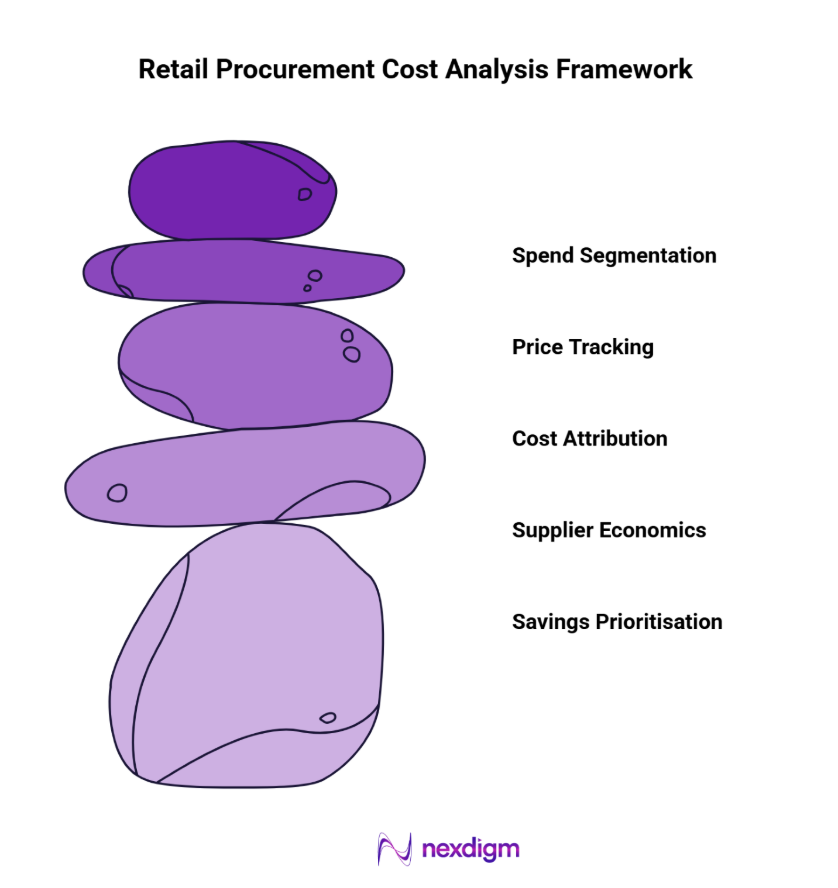
- Spend Segmentation: Organise expenditure by category, supplier, product, location, and contract, separating goods from services to establish a reliable cost baseline.
- Price Tracking: Compare historical purchase prices with relevant official input-price and freight indicators, while accounting for timing, geography, currency, and differences between market prices and contracted rates.
- Cost Attribution: Separate changes caused by volume, product mix, specifications, supplier pricing, logistics, duties, and contract terms to identify the actual sources of expenditure growth.
- Supplier Economics: Review minimum order quantities, rebates, payment terms, price-validity periods, lead times, and additional charges to understand how commercial conditions affect total cost.
- Savings Prioritisation: Rank opportunities by addressable spend, supplier alternatives, operational impact, implementation cost, and supply risk, then track results against a documented baseline.
Turn Analysis Into Negotiation Priorities
Cost intelligence should identify where action is possible. External input-price increases may justify a contract review, but they do not automatically validate every supplier price revision. Retailers can request supporting cost breakdowns, compare competing quotations, consolidate orders, or revise specifications where service and quality requirements permit.
Nexdigm’s Case Study
A retailer reviewed ₹24 crore in annual procurement expenditure across five categories. Separating volume changes from price movements identified freight charges and fragmented ordering as key cost drivers. A targeted sourcing and negotiation plan identified potential annual savings of ₹72 lakh, equivalent to 3% of the reviewed spend, subject to implementation and validation.
To take the next step, simply visit our Request a Consultation page and share your requirements with us.
Harsh Mittal
+91-8422857704