
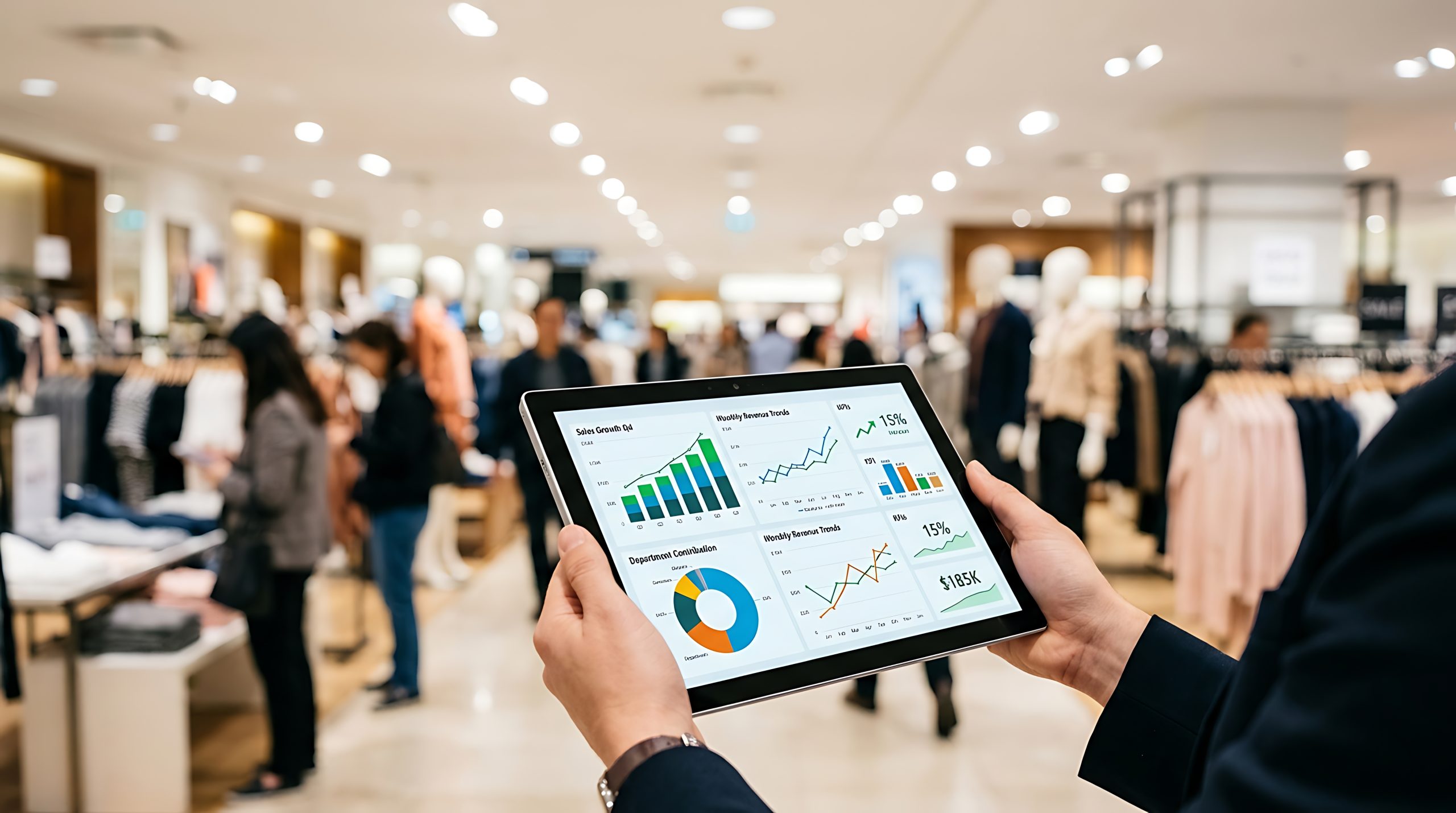
Retail trade is being reshaped by changing consumer demand, sourcing strategies, tariffs, and evolving global supply networks. Global merchandise trade reached a record US$26.3 trillion in 2025, increasing 7.2% year-on-year, while global trade in goods and services surpassed US$35 trillion. UN Trade and Development also notes that processed goods and consumer goods reached record levels in 2025.
The momentum has continued into 2026. UN Trade and Development estimated that global goods trade increased by 12.5% year-on-year in Q1 2026, reaching approximately US$13.7 trillion, although growth remains increasingly uneven across regions and sectors.
For retailers, consumer brands, manufacturers, and investors, these movements provide a wider evidence base for understanding category demand, supplier competition, pricing, sourcing concentration, and market opportunities. However, aggregate trade growth rarely explains what is happening within a particular retail category.
This is where retail trade analysis becomes useful, connecting product-level trade movements with the companies, suppliers, markets, and commercial conditions shaping them.
What Changing Trade Flows Say About Retail Demand
Retail demand can influence international sourcing well before its effects become visible across broader market statistics. Changes in imports can reflect new consumer preferences, product launches, category expansion, inventory rebuilding, or limited domestic production.
Examining trade at the product and subcategory level helps businesses determine which segments are gaining momentum and whether growth is broad-based or concentrated in specific products.
Where Retail Supply Is Being Reconfigured
Retail supply networks are rarely static. Brands and retailers may shift sourcing between countries in response to production costs, tariffs, capacity, lead times, quality requirements, or geopolitical conditions.
A rising share for a particular origin can therefore signal more than export growth. It may indicate manufacturing relocation, supplier diversification, procurement optimization, or a structural change in the retail supply base.
Nexdigm’s Retail Trade Intelligence Service Offering
As retail supply chains become more geographically fluid, businesses need to understand not only where products are sourced, but why sourcing patterns are changing and what those changes mean for cost, competition, resilience, and market access.
Nexdigm combines retail and consumer-sector expertise with trade intelligence, market research, competitive analysis, and supply-chain assessment to interpret these shifts at product, company, country, and trade-route levels.
Our retail trade analysis can connect supplier movements with pricing, buyer activity, sourcing concentration, manufacturing locations, and market conditions. This helps businesses distinguish between a temporary change in sourcing and a structural reconfiguration of the retail supply base.
Why Nexdigm’s Trade Intelligence Service Offering Is Different
Nexdigm goes beyond presenting trade statistics by connecting trade data with commercial, industry, and supply-chain context. Its integrated approach helps businesses understand the implications behind changing retail trade patterns through:
- Trade Data and Industry Expertise: Nexdigm combines granular trade movements with retail-sector knowledge to explain demand shifts, supplier changes, category developments, and competitive dynamics.
- Intelligence and Market Validation: Nexdigm supplements quantitative trade analysis with market research and primary inputs to validate buyer behaviour, pricing, sourcing decisions, distribution structures, and market conditions.
- Data and Strategic Action: Nexdigm translates findings into practical recommendations covering sourcing diversification, supplier selection, market entry, category expansion, competitive positioning, and supply-chain resilience.
By connecting what is moving with why it is moving and what businesses can do about it, Nexdigm turns trade intelligence into actionable retail strategy.
Nexdigm’s Retail Trade Analysis Assessment
Nexdigm’s assessment goes beyond identifying where retail products are being traded. It examines the underlying demand, supply, competitive, pricing, and sourcing signals that explain why trade patterns are changing through:
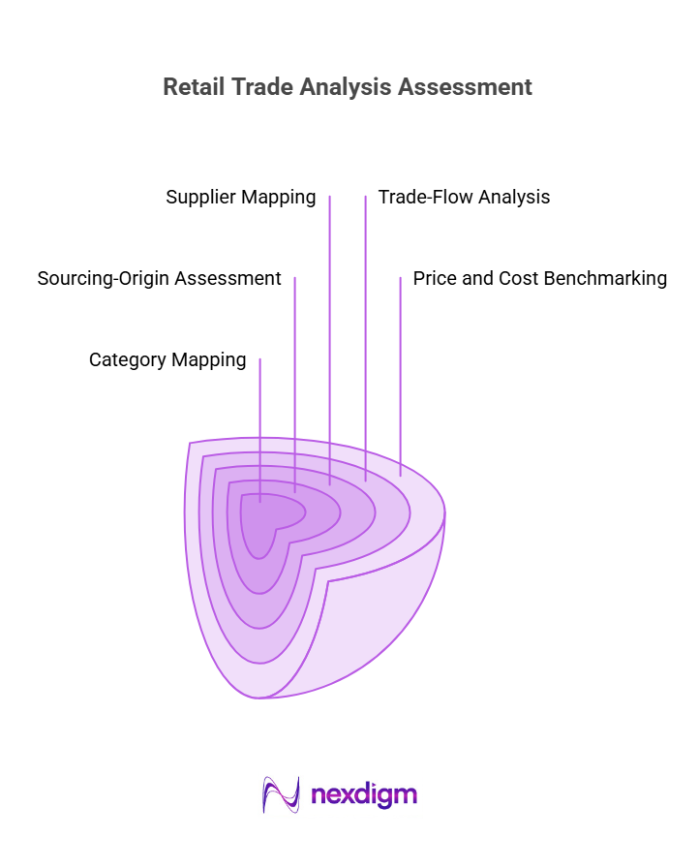
- Category and Product Mapping: Nexdigm identifies relevant categories, products, SKUs, HS codes, and product segments to establish a precise view of the retail trade landscape.
- Sourcing-Origin Assessment: Comparing supplier countries and origins to identify geographic concentration, emerging sourcing locations, and changes in procurement patterns.
- Supplier and Manufacturer Mapping: Nexdigm identifies manufacturers, exporters, importers, and trading companies to understand who participates in the supply network and their relative positions.
- Trade-Flow Analysis: Analyzing historical and current import-export movements to identify changing origins, destinations, shipment activity, and trade relationships.
- Price and Cost Benchmarking: Comparing indicative trade values across suppliers and origins to identify pricing differences and potential cost advantages.
Together, these areas help businesses move from trade observation to commercial interpretation, identifying not only what has changed but also the implications for sourcing and retail strategy.
Nexdigm’s Retail Trade Intelligence Helping with Business Decisions
The value of retail trade analysis becomes clearer when translated into specific business applications. Experts at Nexdigm use trade and market intelligence to support decisions across the retail value chain, the following ways:
- Sourcing Diversification: When a retailer relies heavily on one country or supplier base, Nexdigm can identify alternative origins and suppliers with relevant trade activity, pricing, product capabilities, and market access.
- Supplier Selection: Businesses evaluating new suppliers can use trade intelligence to benchmark export activity, customer markets, shipment frequency, pricing, and competitive participation, creating a stronger starting point for supplier due diligence.
- Category Expansion: Product-level trade analysis can reveal adjacent categories or subcategories experiencing stronger demand, helping retailers identify new products, formats, and market combinations for expansion.
Nexdigm’s case
Nexdigm supported a grocery retailer facing supplier price increases by benchmarking packaging and private-label costs and mapping alternative EU suppliers. The analysis identified 8–12% pricing gaps, enabling contract renegotiation and dual sourcing that stabilized procurement costs and protected category margins.
To take the next step, simply visit our Request a Consultation page and share your requirements with us.
Harsh Mittal
+91-8422857704