
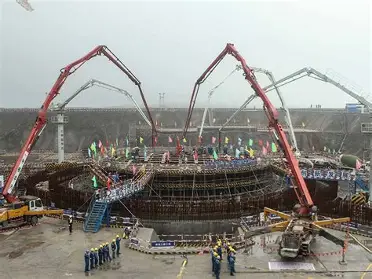
Russia’s Nuclear Reactor Construction Market remains one of the most developed globally, supported by extensive nuclear expertise, a mature supply chain, and long-term government commitment to expanding low-carbon baseload power generation. Russia operates more than 29 GW of installed nuclear power capacity across over 35 commercial reactors, with nuclear energy contributing approximately 19–20% of the country’s total electricity generation. Rising electricity demand, industrial modernization, Arctic development projects, and strategic energy security objectives are supporting continued investment in reactor construction. In addition, Russia is actively advancing next-generation reactors, fast-neutron technologies, and small modular reactor (SMR) programs, creating significant opportunities across the nuclear construction value chain.
Key Market Drivers for Russia’s Nuclear Reactor Construction Market
Expanding Nuclear Capacity Targets Drive New Reactor Construction
Russia continues to strengthen its position as one of the world’s leading nuclear energy producers, operating more than 35 commercial reactors with over 29 GW of installed nuclear capacity. Nuclear energy contributes approximately 19–20% of the country’s total electricity generation, providing reliable baseload power for industrial and residential consumers. To enhance energy security and support long-term decarbonization efforts, Russia is pursuing additional reactor construction projects and modernization initiatives. The country’s long-term plans to increase nuclear generation capacity are creating substantial demand for reactor engineering, construction services, nuclear-grade equipment, and infrastructure development.
Advanced Fast-Reactor Technologies Create Significant Market Opportunities
Russia remains a global leader in advanced nuclear technologies, particularly in the development of fast-neutron reactors and closed nuclear fuel-cycle systems. The successful operation of the BN-800 fast reactor, one of the world’s most advanced commercial fast reactors, demonstrates Russia’s commitment to next-generation nuclear technologies. Continued investments in Generation III+ and Generation IV reactor designs, advanced fuel technologies, and innovative reactor systems are generating opportunities for new construction projects while strengthening the country’s technological leadership in the global nuclear sector.
Industrial Growth, Hydrogen Production, and Arctic Development Support Demand
Russia’s energy-intensive industries, including metallurgy, mining, petrochemicals, chemicals, and manufacturing, remain major consumers of reliable electricity. Additionally, growing investments in low-carbon hydrogen production, Arctic infrastructure projects, and remote industrial developments are increasing demand for stable power generation solutions. Nuclear plants typically operate with capacity factors exceeding 85–90%, making them highly suitable for supporting industrial activities and future energy-intensive applications. The increasing focus on Small Modular Reactors (SMRs) for remote regions and industrial sites is expected to further stimulate reactor construction activity and diversify market opportunities across the nuclear value chain.
Government Initiatives Supporting Russia’s Nuclear Reactor Construction Market
The Russian government continues to support nuclear development through long-term energy planning, infrastructure investment programs, and advanced technology initiatives. Nuclear energy remains a strategic sector within Russia’s energy policy, supported by substantial public investment in reactor construction, research facilities, fuel-cycle technologies, and workforce development. Additionally, national programs promoting energy security, industrial competitiveness, and low-carbon electricity generation are encouraging continued deployment of conventional and advanced nuclear reactors across the country.
Competitive Landscape of Russia’s Nuclear Reactor Construction Market
Russia’s Nuclear Reactor Construction Market benefits from an integrated domestic nuclear ecosystem encompassing reactor design, engineering services, equipment manufacturing, fuel production, and plant construction capabilities. Competition is increasingly driven by technological innovation, construction efficiency, reactor safety performance, digital plant management systems, and advanced fuel technologies. Market participants are investing in modular construction techniques, automation solutions, and next-generation nuclear technologies to improve project execution and operational efficiency. Growing emphasis on reactor modernization and advanced nuclear systems continues to shape market dynamics.
Major Challenges Facing Russia’s Nuclear Reactor Construction Market
High Capital Intensity and Extended Development Timelines
Nuclear reactor construction requires significant financial resources, long planning horizons, and complex project execution capabilities. Managing construction schedules, financing requirements, and technological complexity remains essential for maintaining project viability.
Supply Chain Modernization and Workforce Development Requirements
As nuclear technologies become increasingly sophisticated, maintaining highly skilled engineering talent and modernizing specialized manufacturing capabilities remain critical priorities. Continued investment in technical education, research facilities, and domestic industrial capacity will be necessary to support future reactor deployment programs.
Future Outlook
Russia’s Nuclear Reactor Construction Market is expected to witness steady growth through 2035, supported by its 29 GW+ operational nuclear capacity, continued expansion of advanced reactor technologies, and long-term plans to increase the contribution of nuclear power within the national electricity mix. Rising electricity demand from industrial facilities, hydrogen production projects, and remote regional developments will continue to support new reactor investments. Furthermore, growing focus on fast-neutron reactors, small modular reactors, and fuel-cycle innovation is expected to strengthen future construction activity. Companies investing in advanced reactor engineering, modular construction technologies, and nuclear supply chain modernization will be well-positioned to benefit from Russia’s evolving nuclear energy landscape.
Consultants at Nexdigm, in their latest publication “Russia Nuclear Reactor Construction Market Outlook to 2035,” analyse the sector By Reactor Technology Design (VVER-1200, VVER-TOI and VVER-440), By Project Application Type (Base Load Grid Power and Remote Arctic Mining Operations) and By Construction Phase (Site Preparation and Licensing, Primary Equipment Installation and Commissioning and Fuel Loading).
Nexdigm suggests that businesses in Russia’s Nuclear Reactor Construction Industry prioritize advanced reactor engineering, fast-neutron reactor technologies, modular construction capabilities, and nuclear fuel-cycle innovation strategies to capitalize on the country’s 29 GW+ nuclear capacity, expanding advanced reactor programs, rising industrial electricity demand, and increasing need for reliable low-carbon baseload power generation.
To take the next step, simply visit our Request a Consultation page and share your requirements with us.
Harsh Mittal
+91-8422857704