
Shipping performance cannot be understood through cargo volume alone. A port may handle more containers while experiencing longer vessel waits, and a route may carry increasing volumes while becoming less reliable or more expensive. Effective analysis combines cargo movement, port activity, freight costs and available capacity to explain how the shipping network is performing.
Measure Cargo Movement Consistently
Begin by separating cargo types and transport measures. Container volumes, bulk tonnage, vessel calls and cargo value describe different aspects of shipping activity. They should not be combined into one measure without a clear reason.
Compare current activity with historical periods and account for seasonality. A rise in vessel calls may reflect changes in service frequency rather than a comparable increase in cargo demand. Similarly, cargo value can increase because of prices or product mix, even when physical volumes remain stable.
UN Trade and Development’s 2025 maritime review found differences in activity across vessel categories, reinforcing the need to analyse port movements by vessel and cargo type rather than relying on a single traffic total.
Assess Port Performance and Capacity
Port performance affects both transport time and effective network capacity. Vessel turnaround, waiting time, cargo handling and container dwell time can reveal where throughput is constrained.
The World Bank’s Container Port Performance Index uses observed vessel time in port to compare container-port efficiency. Comparisons should account for differences in port operations and the types of vessels and cargo handled.
A useful shipping dashboard should track:
- Cargo Throughput: Containers, tonnes or units handled, using consistent definitions.
- Vessel Activity: Port calls, vessel types and changes in service frequency.
- Time Performance: Waiting time, turnaround time and cargo dwell time.
- Cost Movement: Freight rates, fuel-related charges, port fees and handling expenses.
- Capacity Utilisation: Available vessel space, terminal capacity and signs of congestion.
Connect Shipping Costs with Operational Conditions
Freight rates are affected by supply and demand, fuel, route length, vessel availability, port disruption and regulatory costs. A rise in rates may therefore reflect capacity constraints or a longer journey rather than stronger demand for cargo.
Companies should compare freight prices with shipment volumes, service frequency and schedule reliability. Where a rate increase coincides with longer transit times, the effect on inventory and customer commitments should also be assessed.
Effective shipping analysis brings these indicators together to distinguish a temporary fluctuation from a sustained change in route performance. It can help shippers renegotiate contracts, reconsider port choices, revise shipment schedules or reserve capacity before a disruption affects deliveries.
Nexdigm’s Shipping Performance Assessment Framework
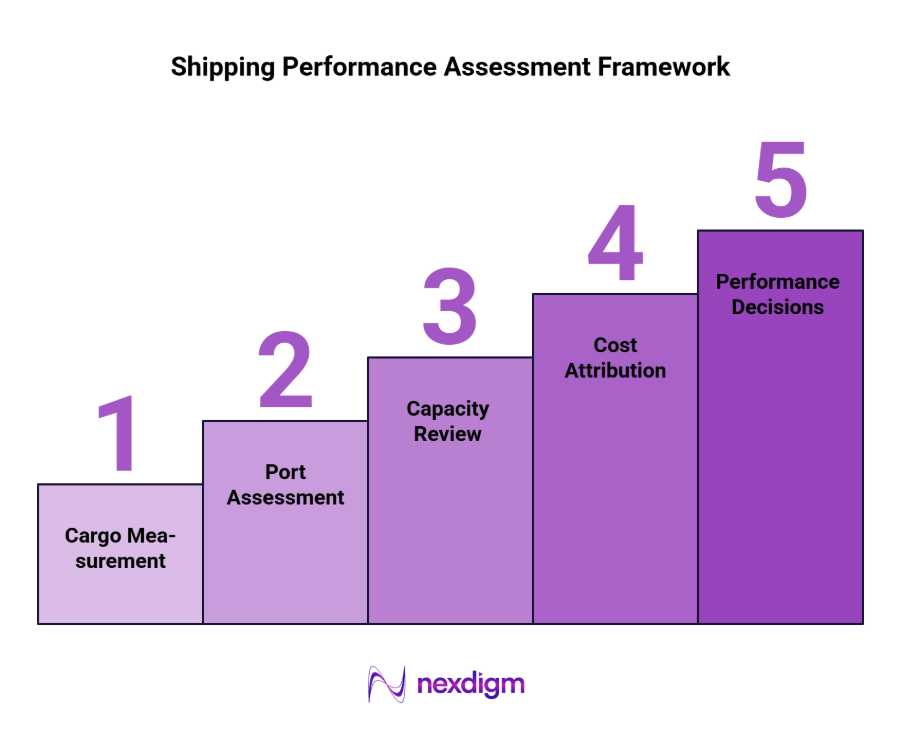
- Cargo Measurement: Establish consistent volume, value and vessel-activity baselines.
- Port Assessment: Compare waiting, turnaround, dwell time and throughput.
- Capacity Review: Examine vessel space, service frequency and terminal constraints.
- Cost Attribution: Relate freight and handling costs to route conditions and capacity changes.
- Performance Decisions: Prioritise service, routing or contracting changes using cost and reliability together.
Nexdigm’s Case Study: Comparing Port Performance
A freight buyer reviewed six months of shipment data across two ports. One port showed lower average handling charges but more variable dwell time, increasing the risk of missed delivery windows. The buyer revised its scorecard to evaluate cost, vessel waiting and inland delivery reliability together.
To take the next step, simply visit our Request a Consultation page and share your requirements with us.
Harsh Mittal
+91-8422857704