

Shipping line pricing competitiveness depends on how global carriers manage volatile freight rates, vessel capacity, route demand, service reliability, and asset utilization. This container shipping rate benchmarking study applies pricing analysis to compare contract rates, spot prices, surcharges, transit performance, and network coverage across major operators.
By examining market signals, cost structures, and utilization patterns, carriers can identify pricing gaps, strengthen yield management, protect margins, and respond faster to disruptions. The analysis also supports disciplined capacity deployment, customer segmentation, and sustainable commercial positioning across international container shipping markets and trade corridors.
UNCTAD reported that maritime trade grew 2.2% in 2024, while ton-mile demand increased 5.9%, reflecting longer routes and stronger vessel requirements. These trends create opportunities for carriers to improve utilization, refine pricing benchmarks, and strengthen revenue performance through data-driven decisions.
Shipping Pricing Analysis for Capacity and Yield Management
Container shipping pricing analysis integrates demand, capacity, route economics, and market signals to improve yield management, rate competitiveness, asset utilization, and commercial resilience across global carrier networks and trade lanes. Some important advantages of the same are:
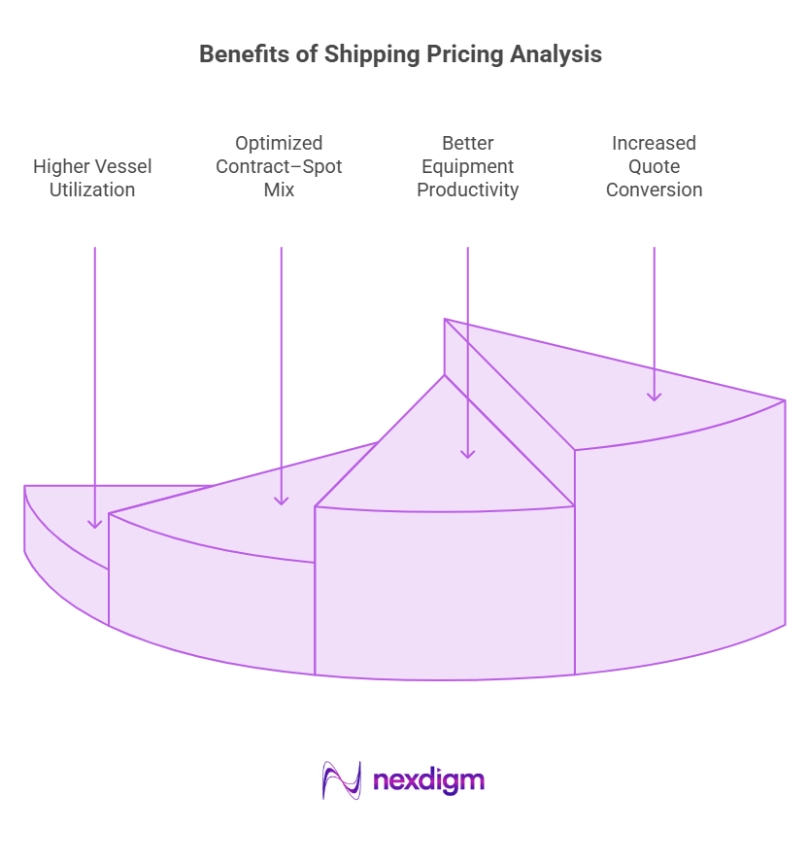
- Higher Vessel Utilization: Pricing analysis supports better space allocation, reduces unused slots, improves load factors, and directs bookings toward underutilized sailings and trade lanes.
- Optimized Contract–Spot Mix: Balancing contracted volumes with spot-market opportunities improves income stability while allowing carriers to capture higher price rates during periods of constrained capacity.
- Better Equipment Productivity: Pricing by container type, direction, and availability encourages efficient equipment movement, reduces empty repositioning, and improves returns from specialized assets.
- Increased Quote Conversion: Customer-specific pricing analysis, faster quotations, and clearer value differentiation improve booking acceptance while maintaining required yield and profitability thresholds.
Nexdigm’s Strategic Support for Shipping Capacity and Pricing Analysis
Nexdigm supports shipping capacity and rate optimization through pricing analysis, container shipping rate benchmarking, yield management, and market intelligence, helping businesses with:
- Pricing Competitiveness
- Optimized Revenue Realization
- Strong Procurement Decisions
- Freight rate benchmarking
- Route profitability assessment
- Capacity allocation planning
These capabilities help businesses improve pricing effectiveness, maximize capacity utilization, strengthen commercial decision-making, and enhance profitability across global shipping networks.
Nexdigm’s Pricing Intelligence Model for Shipping Network Efficiency
Nexdigm’s pricing intelligence model integrates market data, route economics, capacity signals, and customer insights to improve rate quality, network utilization, profitability, and commercial responsiveness across global shipping operations. Characteristics of the model are:
- Real-Time Market Visibility: Tracks spot rates, contract movements, competitor actions, congestion, and demand changes to support timely pricing decisions across volatile maritime trade lanes.
- Commercial Decision Automation: Uses pricing rules, alerts, thresholds, and approval workflows to accelerate decisions, reduce inconsistency, and strengthen governance across regional sales teams.
- Continuous Margin Recalibration: Updates pricing assumptions using realized rates, operating costs, customer behavior, and service performance to maintain sustainable margins across changing market conditions.
- Customer Profitability Analytics: Measures revenue, service cost, volume consistency, and operational complexity by account to support more profitable and differentiated commercial pricing decisions.
Nexdigm’s Case
Nexdigm helped a global shipping company strengthen capacity planning, rate benchmarking, and yield management. Within seven months, the initiative improved vessel utilization by 11%, increased rate realization by 13%, reduced pricing leakage and enhanced route profitability by 8% across priority international trade lanes.
To take the next step, simply visit our Request a Consultation page and share your requirements with us.
Harsh Mittal
+91-8422857704