
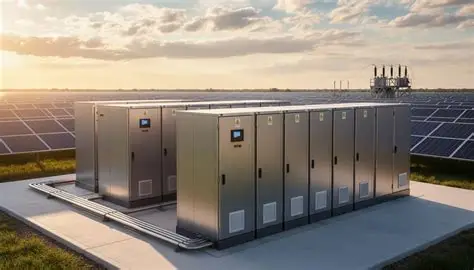
Singapore’s Battery Energy Storage for Microgrids Market is witnessing strong growth, driven by energy security priorities, increasing renewable energy integration, and the country’s Smart Nation initiatives. Battery Energy Storage Systems (BESS) play a critical role in microgrids by improving grid stability, enabling renewable energy integration, providing backup power, and enhancing energy resilience. With a population exceeding 6 million, electricity demand supported by a highly urbanized economy, and natural gas accounting for approximately 95% of electricity generation, Singapore is increasingly investing in battery storage technologies to diversify its energy mix and strengthen grid flexibility. Growing deployment of solar energy, data centers, industrial facilities, and critical infrastructure is further accelerating demand for battery-backed microgrids.
Key Market Drivers for Singapore’s Battery Energy Storage for Microgrids Market
Solar Energy Expansion and Grid Flexibility Requirements Accelerate Battery Storage Adoption
Singapore has installed more than 1 GWp of solar photovoltaic capacity and is targeting at least 2 GWp of solar deployment by 2030, enough to power approximately 350,000 households annually. Due to limited land availability and the intermittent nature of solar generation, battery energy storage systems are becoming increasingly important for balancing supply and demand. Solar-plus-storage microgrids are being adopted across commercial buildings, industrial facilities, and public infrastructure to improve energy resilience, manage peak demand, and maximize renewable energy utilization.
Data Center Expansion and Critical Infrastructure Drive Microgrid Investments
Singapore hosts more than 70 operational data centers and remains one of Asia-Pacific’s leading digital infrastructure hubs. As cloud computing, artificial intelligence, and digital services expand, electricity demand from data centers continues to rise significantly. Critical facilities such as Changi Airport, seaports, hospitals, semiconductor plants, and telecommunications networks increasingly require uninterrupted power supply. Battery-backed microgrids provide backup power, frequency regulation, and energy optimization capabilities, making them essential for mission-critical operations and energy-resilience strategies.
Smart Nation Initiatives and Utility-Scale Energy Storage Strengthen Market Growth
Under the Smart Nation and Singapore Green Plan 2030 initiatives, the country continues to invest heavily in digital energy infrastructure and grid modernization. Singapore has already deployed one of Southeast Asia’s largest battery storage projects, the 285 MWh utility-scale Battery Energy Storage System (BESS), demonstrating the government’s commitment to grid flexibility and energy resilience. Growing adoption of AI-enabled energy management systems, virtual power plants, smart buildings, and distributed energy resources is creating strong demand for advanced battery storage solutions capable of supporting next-generation microgrid applications across commercial, industrial, and public-sector facilities.
Government Initiatives Supporting Singapore’s Battery Energy Storage for Microgrids Market
The Singapore government actively supports the deployment of battery energy storage systems through the Singapore Green Plan 2030, the Energy Market Authority (EMA), and various energy resilience initiatives. Singapore commissioned one of Southeast Asia’s largest energy storage projects, the 285 MWh utility-scale battery energy storage system, to strengthen grid stability and support future renewable energy integration. Additionally, the government continues to invest in energy-storage technologies, distributed power systems, smart-grid infrastructure, and low-carbon electricity imports, creating favorable conditions for microgrid-based battery deployment across industrial, commercial, and public-sector applications.
Competitive Landscape of Singapore’s Battery Energy Storage for Microgrids Market
Singapore’s Battery Energy Storage for Microgrids Market is highly competitive and technology-driven. Competition is increasingly focused on battery performance, storage duration, lifecycle efficiency, energy-management software, grid-integration capabilities, and digital monitoring platforms. Major participants including Tesla Energy, BYD, Fluence, Huawei Digital Power, Schneider Electric, Siemens, Hitachi Energy, ABB, and regional system integrators continue to expand their presence across Singapore’s energy storage ecosystem. Growing investments in solar-plus-storage systems, data centers, industrial facilities, ports, and smart-city infrastructure are accelerating competition and technological innovation.
Major Challenges Facing Singapore’s Battery Energy Storage for Microgrids Market
High Capital Costs and Space Constraints
Battery energy storage systems require significant upfront investment and must operate efficiently within Singapore’s limited land availability. Developers increasingly focus on high-energy-density technologies and optimized system designs to maximize performance while minimizing space requirements.
Grid Integration and Operational Complexity
Integrating battery storage with existing power infrastructure requires advanced energy-management systems, cybersecurity protections, and intelligent control platforms. Ensuring seamless operation across distributed energy resources remains a key challenge for operators.
Future Outlook
Singapore’s Battery Energy Storage for Microgrids Market is expected to witness strong growth through 2035, supported by solar deployment targets exceeding 2 GWp, operation of the 285 MWh utility-scale battery storage system, and the continued expansion of 70+ data centers. Increasing investments under the Singapore Green Plan 2030, rising demand for resilient energy infrastructure, and the integration of distributed renewable energy resources will strengthen market adoption. Additionally, growth in AI-enabled energy-management systems, virtual power plants, smart buildings, industrial microgrids, and battery-backed critical infrastructure is expected to create significant opportunities for energy-storage developers, battery manufacturers, and technology providers across Singapore’s highly digitalized economy.
Consultants at Nexdigm, in their latest publication “Singapore Battery Energy Storage for Microgrids Market Outlook to 2035” analyse the sector By Energy Storage Technology (Lithium Iron Phosphate (LFP), Nickel Manganese Cobalt (NMC) and Lithium Titanate (LTO)), By Power Capacity Rating (Below 100 kW and 100 kW to 500 kW) and By Ownership Model (Utility-Owned Asset, Third-Party Energy-As-A-Service and Private Captive Generation).
Nexdigm suggests that businesses in Singapore’s Battery Energy Storage for Microgrids Industry prioritize lithium-ion battery systems, AI-enabled energy-management platforms, solar-plus-storage microgrids, and resilient power solutions to capitalize on the country’s 2 GWp+ solar target, 285 MWh utility-scale storage deployment, expanding data center ecosystem, and growing demand for reliable, low-carbon, and intelligent distributed energy systems across commercial, industrial, and critical infrastructure applications.
To take the next step, simply visit our Request a Consultation page and share your requirements with us.
Harsh Mittal
+91-8422857704