
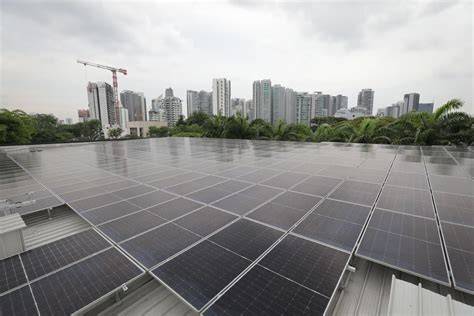
Singapore’s Building Energy Retrofit Market is witnessing strong growth, driven by the national goal of greening 80% of buildings by gross floor area, rising energy-efficiency requirements, and expanding digital infrastructure. The country hosts 70+ operational data centers, while buildings account for more than 20% of national carbon emissions, creating substantial demand for HVAC upgrades, smart controls, and energy-management systems. Backed by the Singapore Green Plan 2030 and widespread adoption of the BCA Green Mark Scheme, commercial offices, hotels, hospitals, airports, and mixed-use developments are increasingly investing in AI-driven building management systems, high-efficiency chillers, smart lighting, and digital twin technologies to reduce energy consumption, improve sustainability performance, and lower long-term operating costs.
Key Market Drivers for Singapore Building Energy Retrofit Market
Green Building Targets and Aging Commercial Assets Accelerate Retrofits
Singapore’s commercial and institutional building stock includes thousands of office towers, shopping malls, hotels, hospitals, and mixed-use developments that require energy-efficiency upgrades. Under national sustainability goals, property owners are increasingly investing in high-efficiency chillers, building automation systems, LED lighting, smart sensors, and energy-management platforms. HVAC systems often account for 40–50% of energy consumption in commercial buildings, making cooling optimization a major retrofit opportunity.
Data Center Expansion Creates Significant Energy Optimization Demand
Singapore remains one of Asia-Pacific’s leading data center hubs, hosting more than 70 data centers and attracting billions of dollars in digital infrastructure investment. Data centers require highly efficient cooling and energy-management systems to control operational costs and meet sustainability requirements. This is creating substantial opportunities for energy retrofits involving advanced cooling systems, AI-powered building controls, and energy-monitoring technologies.
Smart Nation Initiatives Drive Adoption of Intelligent Building Technologies
Singapore’s Smart Nation strategy is accelerating deployment of IoT-enabled building technologies, smart meters, occupancy-based controls, digital twins, and AI-powered energy analytics. Building owners are increasingly adopting integrated energy-management systems that optimize electricity consumption, improve occupant comfort, and support sustainability reporting requirements.
Government Initiatives Supporting Singapore Building Energy Retrofit Market
The Singapore government actively promotes building efficiency through the Singapore Green Plan 2030 and the BCA Green Mark Scheme. One of the key national goals is to green 80% of buildings by gross floor area by 2030, while improving the energy efficiency of existing buildings by approximately 80% compared to 2005 levels. Public-sector agencies continue to invest billions of dollars in upgrading government facilities, healthcare infrastructure, educational campuses, and transportation assets with energy-efficient technologies. These initiatives are creating favorable conditions for building retrofit providers and energy-service companies across the country.
Competitive Landscape of Singapore Building Energy Retrofit Market
Singapore’s Building Energy Retrofit Market is highly competitive and technology-driven. Competition is increasingly focused on high-efficiency chillers, building management systems (BMS), AI-powered energy analytics, occupancy sensors, smart lighting controls, and digital twin technologies. Major participants including Johnson Controls, Schneider Electric, Siemens, Honeywell, Carrier, Daikin, ENGIE Solutions, and local Energy Service Companies (ESCOs) continue expanding their retrofit offerings. The market is benefiting from growing demand across office buildings, hotels, airports, healthcare facilities, educational institutions, and data centers, where energy savings, sustainability compliance, and operational efficiency remain key purchasing criteria.
Major Challenges Facing Singapore Building Energy Retrofit Market
High Upfront Capital Investment Requirements
Although retrofit projects often deliver significant long-term operational savings, initial costs associated with HVAC replacement, automation upgrades, smart sensors, and building-management systems can create budget challenges for some building owners.
Integration Complexity in Existing Buildings
Retrofitting older buildings often requires careful integration with existing infrastructure while minimizing operational disruption. Compatibility between legacy systems and new technologies remains a common challenge during modernization projects.
Future Outlook
Singapore’s Building Energy Retrofit Market is expected to witness strong growth through 2035, supported by the national target of greening 80% of buildings, a data center ecosystem comprising 70+ facilities, and continued investments under the Singapore Green Plan 2030. Increasing adoption of AI-powered energy-management systems, digital twins, smart building controls, and high-efficiency cooling technologies is expected to accelerate retrofit activity across commercial and institutional properties. Additionally, growing electricity demand from data centers, healthcare facilities, airports, and mixed-use developments will strengthen the business case for energy-efficiency upgrades, creating substantial opportunities for retrofit solution providers and ESCOs.
Consultants at Nexdigm, in their latest publication “Singapore Building Energy Retrofit Market Outlook to 2035” analyse the sector By Retrofit Technology Category (Magnetic Bearing Centrifugal Chillers, Variable Refrigerant Flow Systems and High-Efficiency Cooling Tower Retrofitting), By Building Ownership Model (Commercial Office Buildings and Healthcare Facility Assets) and By Retrofit Depth Tier (Shallow Retrofit (<10% Energy Reduction), Medium Retrofit (10-30% Energy Reduction) and Deep Retrofit (>30% Energy Reduction)).
Nexdigm suggests that businesses in Singapore’s Building Energy Retrofit Industry prioritize high-efficiency chiller retrofits, AI-enabled building management systems, smart lighting upgrades, digital twin technologies, and ESCO-based performance contracting models to capitalize on the country’s 80% green-building target, expanding data center sector, Smart Nation initiatives, and increasing demand for energy-efficient commercial and institutional infrastructure.
To take the next step, simply visit our Request a Consultation page and share your requirements with us.
Harsh Mittal
+91-8422857704