
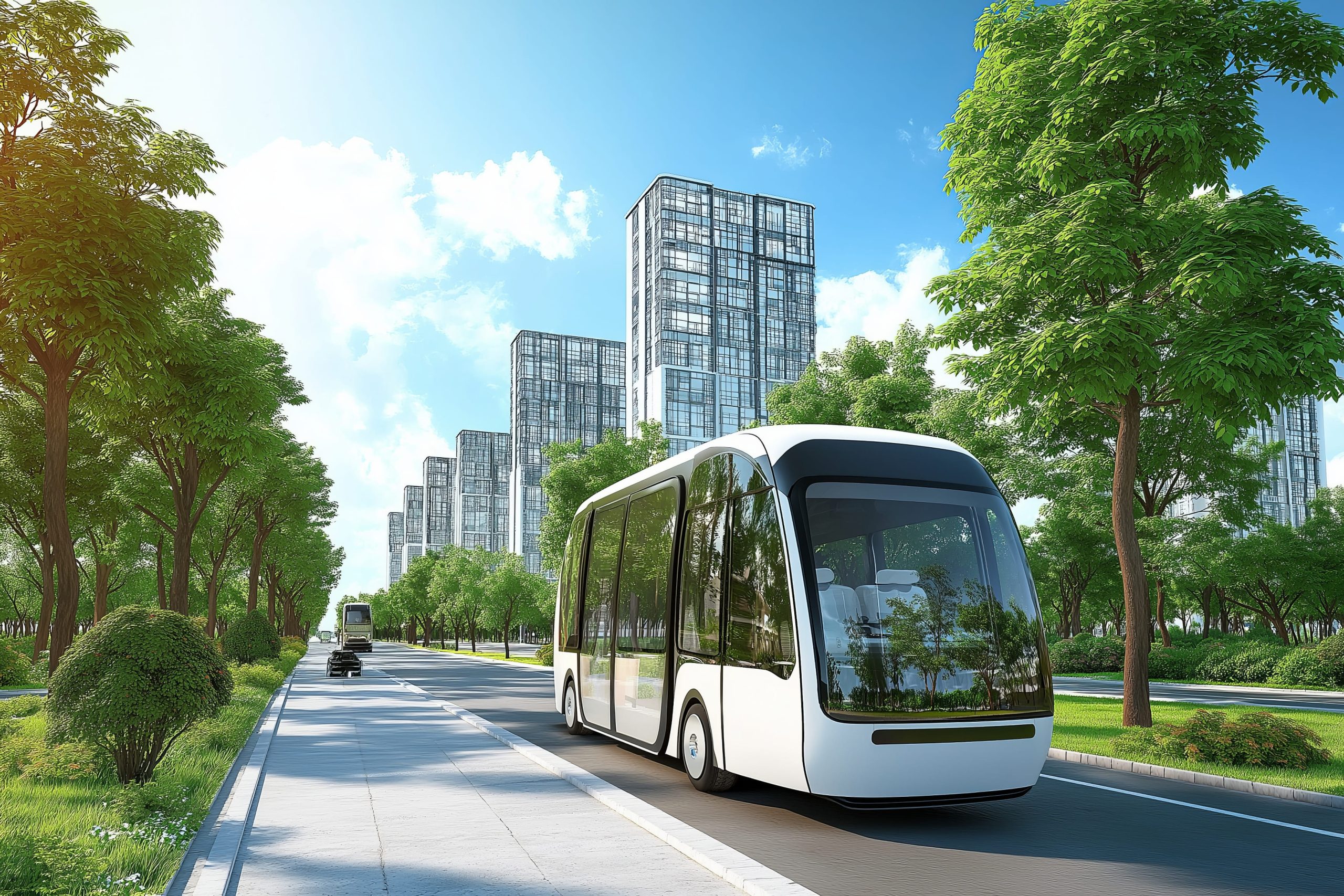
Singapore is moving into the next phase of public transport electrification, and buses are right at the center of that shift. The city state has long treated public transport as a policy priority rather than just an operational necessity, which gives it a clear advantage when rolling out cleaner fleets. Under the Singapore Green Plan 2030 and the Land Transport Master Plan 2040, the government has already laid out a practical path to replace diesel buses with cleaner alternatives over time. By 2030, electric buses are targeted to make up half of the public bus fleet. That matters not only from an emissions standpoint, but also because buses remain one of the most visible parts of daily urban mobility in Singapore. As of 2026, the market is still at a relatively early scale compared to where it could be by 2035, but the direction is no longer in doubt.
What’s Driving the Electric Bus Market in Singapore?
Policy Clarity and Structured Procurement
One of the biggest reasons this market is moving faster than many others in Southeast Asia comes down to policy clarity. Singapore does not leave transport transitions entirely to operators or private fleet economics. Once the Land Transport Authority sets a direction, procurement, infrastructure, and operating standards usually follow in a coordinated way. That reduces uncertainty for suppliers and gives manufacturers confidence to invest in long term participation.
Urban Suitability and Operational Practicality
At the same time, the economics are becoming harder to ignore. Electric buses cost more upfront, but in a dense city like Singapore, they make a lot of practical sense over the life of the vehicle. Routes are predictable, distances are manageable, and depots can be planned around charging schedules. In practice, that makes electric buses easier to integrate here than in countries with sprawling intercity routes or fragmented operators. The quieter ride and lower maintenance requirements are not just technical benefits. They matter in a city where commuter experience is closely watched.
Fleet Replacement Momentum
There is also a very visible fleet replacement cycle underway. In late 2025, Singapore awarded contracts for 660 electric buses, including both single deck and double deck models. That was a meaningful signal to the market. It showed that electrification is no longer being treated as a pilot exercise or a small scale experiment. The inclusion of double deck buses is particularly important because it reflects confidence that electric technology can now handle the heavier duty demands of high capacity urban routes.
Government-Led Initiatives Supporting Market Growth
The government is not only buying buses. It is also investing in the less glamorous but absolutely essential parts of the transition. Charging infrastructure at depots and transport hubs is now becoming just as important as vehicle procurement itself. That is where many markets stumble. Buying electric buses is relatively straightforward. Making sure they can run reliably every day is the harder part. Singapore has already moved ahead with tenders for charging systems across multiple depots and integrated transport hubs. That matters because charging downtime, route scheduling, and grid readiness can quickly become operational headaches if not planned properly. On the ground, the real test is not whether an electric bus can run one route. It is whether hundreds of them can run all day without disrupting service.
Market Competition
The competitive landscape remains fairly concentrated, which is not surprising given Singapore’s strict procurement standards. Key suppliers include BYD, Yutong, Zhongtong, and CRRC, supported by local engineering and distribution partners. Winning in this market is not only about offering a bus with decent battery range. Reliability, service support, charging compatibility, and local maintenance capability often matter just as much. That also means this is not an easy market for every electric vehicle manufacturer to crack. Singapore tends to reward suppliers who can demonstrate consistency rather than simply low pricing. For buyers, that is usually the right trade off.
Infrastructure and Cost Intensity
The biggest challenge remains cost and execution. Electric buses are still more expensive than diesel units at the point of purchase, and depot upgrades are not cheap either. Grid integration, charger installation, and technician training all add complexity. A common challenge is that the bus itself often gets the attention, while the supporting infrastructure quietly determines whether the transition actually works. Battery performance under heavy daily use is another issue worth watching. Urban stop and go traffic, air conditioning loads, and high passenger volumes can all affect operating efficiency more than headline range figures suggest.
Latest Developments in Singapore’s Electric Bus Market
A major recent development came in December 2025 when Singapore’s Land Transport Authority awarded contracts for 660 new electric buses, including 360 single deck and 300 double deck units, marking the country’s largest electric bus procurement so far and its first large scale purchase of electric double deckers. These buses are scheduled to enter passenger service progressively from the end of 2026, replacing aging diesel units. Around the same time, Singapore also began preparing trials for driverless public buses in Marina Bay and one north, indicating that the future of the market may increasingly combine electrification with transport automation.
Future Outlook
By 2035, Singapore will likely have one of the most mature electric bus systems in Southeast Asia, not because it is the largest market, but because it is one of the most organized. Adoption should continue steadily as diesel fleets age out and infrastructure expands in parallel. What will matter most over the next decade is not just how many electric buses are deployed, but how efficiently they are integrated into daily operations.
Consultants at Nexdigm, in their latest publication “Singapore Electric Bus Market Outlook to 2035”, analyzed the market by Bus Type (Single Deck, Double Deck), By Propulsion (Battery Electric, Hybrid), By End Use (Public Transport Operators, Private Shuttle Services), and By Charging Infrastructure (Depot Charging, Opportunity Charging). Nexdigm suggests that companies should focus on charging solutions, battery lifecycle management, and long term service partnerships as the market moves beyond initial adoption.
To take the next step, simply visit our Request a Consultation page and share your requirements with us.
Harsh Mittal
+91-8422857704