
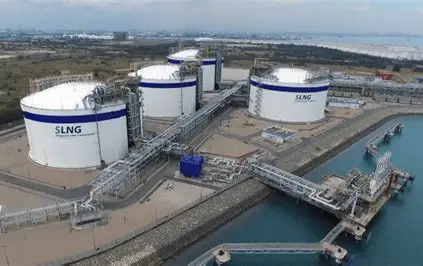
Singapore’s LNG Infrastructure Market plays a critical role in Asia-Pacific’s energy supply chain, supported by the country’s position as one of the world’s leading energy trading and bunkering hubs. Despite limited domestic energy resources, Singapore relies heavily on imported natural gas, which accounts for approximately 95% of its electricity generation. The country’s LNG ecosystem is anchored by the Singapore LNG (SLNG) Terminal on Jurong Island, which currently has regasification capacity of approximately 11 million tonnes per annum (MTPA). Growing regional LNG demand, energy security priorities, and LNG bunkering activities are driving continued investments in LNG terminals, storage facilities, and supporting infrastructure.
Key Market Drivers for Singapore’s LNG Infrastructure Market
LNG-Based Power Generation Strengthens Infrastructure Demand
Natural gas remains the backbone of Singapore’s power sector, supplying approximately 95% of electricity generation. As electricity demand rises due to digitalization, data center expansion, advanced manufacturing, and electrification trends, continued investments in LNG import and storage infrastructure are becoming essential to ensure stable fuel supply and energy security.
LNG Bunkering Leadership Creates New Growth Opportunities
Singapore is the world’s largest bunkering hub, supplying more than 50 million tonnes of marine fuel annually. As the maritime industry transitions toward lower-emission fuels, LNG is gaining importance as a cleaner alternative for shipping. Growing LNG bunkering demand is encouraging investments in storage facilities, fuel-transfer infrastructure, and LNG distribution systems.
Regional LNG Trading Hub Development Accelerates Investments
Singapore continues to strengthen its position as Asia’s LNG trading center through commodity trading, LNG portfolio management, and re-export activities. The presence of major energy companies, commodity traders, and LNG market participants is generating demand for advanced LNG storage, regasification, and logistical infrastructure.
Government Initiatives Supporting Singapore’s LNG Infrastructure Market
The Singapore government continues to strengthen LNG infrastructure through the Energy Market Authority (EMA) and national energy security programs. Natural gas currently supplies approximately 95% of Singapore’s electricity generation, making LNG infrastructure critical to the country’s energy resilience. The government has expanded the Singapore LNG (SLNG) Terminal on Jurong Island to a regasification capacity of approximately 11 MTPA, while also investing in energy diversification, grid reliability, and regional power connectivity initiatives. Additionally, Singapore’s strategy to become a leading LNG trading and bunkering hub is encouraging continued investments in LNG storage, reloading facilities, and maritime fuel infrastructure.
Competitive Landscape of Singapore’s LNG Infrastructure Market
Singapore’s LNG Infrastructure Market is highly competitive and supported by the presence of major global energy companies, commodity traders, and terminal operators. Competition is centered on LNG storage capacity, regasification efficiency, trading capabilities, bunkering infrastructure, and supply-chain optimization. Global firms including Shell, BP, TotalEnergies, ExxonMobil, and leading Asian LNG traders maintain significant LNG operations in Singapore. The market is further strengthened by Singapore’s status as the world’s largest marine bunkering hub, supplying more than 50 million tonnes of bunker fuel annually, and by the growing role of LNG as a marine fuel. Rising LNG trading activity, expanding bunkering demand, and increasing regional gas consumption are encouraging continuous investments in terminal infrastructure, storage expansion, and integrated LNG logistics solutions.
Major Challenges Facing Singapore’s LNG Infrastructure Market
Dependence on Imported LNG
Singapore relies almost entirely on imported natural gas and LNG supplies, making the country vulnerable to global price fluctuations, supply disruptions, and geopolitical uncertainties affecting LNG markets.
Land Constraints and Infrastructure Optimization
Limited land availability requires efficient utilization of LNG storage facilities and infrastructure assets. Expanding capacity while maintaining operational efficiency remains an important consideration for industry participants.
Future Outlook
Singapore’s LNG Infrastructure Market is expected to experience strong growth through 2035, supported by LNG regasification capacity of approximately 11 MTPA, natural gas accounting for around 95% of electricity generation, and its status as the world’s leading marine bunkering hub supplying more than 50 million tonnes of fuel annually. Rising LNG bunkering demand, increasing regional LNG trade flows, and growing electricity consumption from data centers and advanced manufacturing facilities will continue to strengthen infrastructure requirements. Additional opportunities are expected to emerge from LNG re-export activities, small-scale LNG distribution, and future low-carbon fuel integration. Companies investing in LNG storage expansion, bunkering infrastructure, and digital energy management solutions will be well-positioned to capitalize on Singapore’s role as a leading LNG hub in Asia.
Consultants at Nexdigm, in their latest publication “Singapore LNG Infrastructure Market to 2035,” analyse the sector By Infrastructure Type (Floating Storage Units, Regasification Process Skids and LNG Storage Tanks), By Operational User Category (Power Generation Utilities and Petrochemical and Industrial Refineries) and By Service Provider Tier (State-Owned Energy Enablers, International EPC Contractors and Maritime Logistics Service Providers).
Nexdigm suggests that businesses in Singapore’s LNG Infrastructure Industry prioritize LNG storage expansion, bunkering infrastructure development, regasification optimization, and integrated trading capabilities to capitalize on the country’s 11 MTPA LNG terminal capacity, 95% gas-based power generation, leadership in global marine bunkering, and growing role as a strategic LNG trading and distribution hub in Asia-Pacific.
To take the next step, simply visit our Request a Consultation page and share your requirements with us.
Harsh Mittal
+91-8422857704