

Procurement teams are operating in an environment where supplier availability, input costs, freight, tariffs, and geopolitical developments can quickly change sourcing economics. The World Bank’s Commodity Markets Outlook reported that global commodity prices were expected to decline by 5% in 2025 and 2% in 2026, but energy and commodity markets continued to show significant differences across products and regions. Meanwhile, global merchandise trade reached approximately $25 trillion in 2024, highlighting the scale of cross-border sourcing networks.
Supplier markets are also evolving as companies seek greater resilience and alternatives. These conditions make sourcing and procurement intelligence increasingly important for understanding supplier competitiveness, cost drivers, market alternatives, and the risks embedded within procurement decisions.
Supplier Availability Is Only One Part of Sourcing Economics
A supplier may offer a competitive quoted price but still carry higher landed costs because of freight, duties, energy exposure, currency movements, or raw-material dependence. Procurement teams therefore need to compare suppliers on a broader economic basis. Understanding production locations, input costs, trade routes, supplier concentration, and capacity can reveal differences that are not visible in supplier quotations alone.
Factors Procurement Teams Should Watch
Procurement intelligence becomes more useful when supplier information is connected to the factors influencing total sourcing cost.
- Cost Drivers: Changes in raw materials, energy, freight, tariffs, and currency conditions can materially alter supplier competitiveness.
- Supplier-Market Shifts: New capacity, changing export shares, production expansions, and emerging supplier countries can create alternatives to existing sourcing relationships.
Together, these signals provide a stronger basis for evaluating suppliers beyond quoted prices and understanding the economics behind sourcing decisions.
Nexdigm’s Market-Backed View of Supplier Economics
A supplier quotation shows the price available today, but it does not always explain why that price is changing or how sustainable it may be. Nexdigm helps procurement teams look beyond the quotation by assessing the external factors influencing supplier economics, including input markets, trade conditions, capacity, logistics, and competitive movements. This view can help procurement leaders determine whether a supplier’s position reflects a temporary market movement, a structural cost advantage, or a broader shift in the sourcing landscape.
How Nexdigm Assesses Sourcing Economics
Nexdigm evaluates procurement markets through sourcing and procurement intelligence to understand the relative attractiveness of suppliers and sourcing locations by conducting:
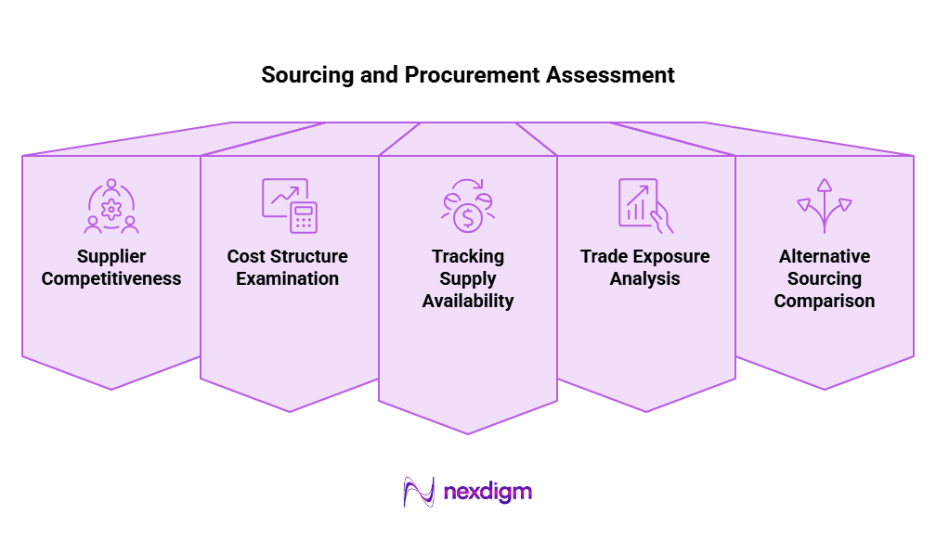
- Supplier Competitiveness: Assessment of supplier presence, capacity, export activity, market share, and production capabilities to understand relative supplier strength.
- Cost Structure: Examination of raw materials, energy, labor, logistics, duties, tariffs, and currency factors influencing supplier economics.
- Supply Availability: Tracking of capacity utilization, new investments, production expansions, and market concentration to identify potential availability constraints.
- Trade Exposure: Analysis of origin-destination flows, import dependencies, trade corridors, and policy changes that could affect sourcing costs or continuity.
- Alternative Sourcing: Comparison of emerging supplier markets based on capability, capacity, cost conditions, trade access, and supply reliability.
This assessment gives procurement teams a market-backed view of supplier economics, helping them evaluate sourcing options beyond quoted prices alone.
Why Market Visibility Matters in Procurement
Procurement decisions can become exposed when teams rely only on historical supplier performance or current quotations. External market visibility provides context on where costs are moving, where capacity is changing, and where alternative supply is developing. Nexdigm’s intelligence helps procurement teams incorporate these external signals into sourcing decisions, supporting stronger cost visibility, supplier resilience, and long-term procurement planning.
Nexdigm’s Procurement Intelligence Helping With Sourcing Decisions
The value of sourcing and procurement intelligence lies in translating market signals into practical sourcing choices. Nexdigm’s assessment can help procurement teams:
- Benchmark Supplier Markets: Compare supplier countries on cost drivers, capacity, trade activity, and competitive conditions to identify relative advantages.
- Identify Diversification Options: Find alternative sourcing markets that can reduce dependence on concentrated suppliers or regions without compromising capability.
- Anticipate Cost Changes: Monitor raw-material, energy, freight, tariff, and currency movements to identify factors that could influence future sourcing economics.
- Evaluate Supply Resilience: Assess capacity, production expansion, supplier concentration, and trade dependencies to understand potential continuity risks.
These insights enable procurement teams to make more informed supplier, negotiation, diversification, and regional sourcing decisions based on external market evidence.
Nexdigm’s Case
Nexdigm assessed 14 supplier markets across procurement categories, identifying seven markets with more than 12% export growth and four alternative sourcing clusters with expanding capacity. The analysis also identified 8 key cost drivers, helping the client evaluate supplier diversification, cost optimization, and procurement resilience.
To take the next step, simply visit our Request a Consultation page and share your requirements with us.
Harsh Mittal
+91-8422857704