
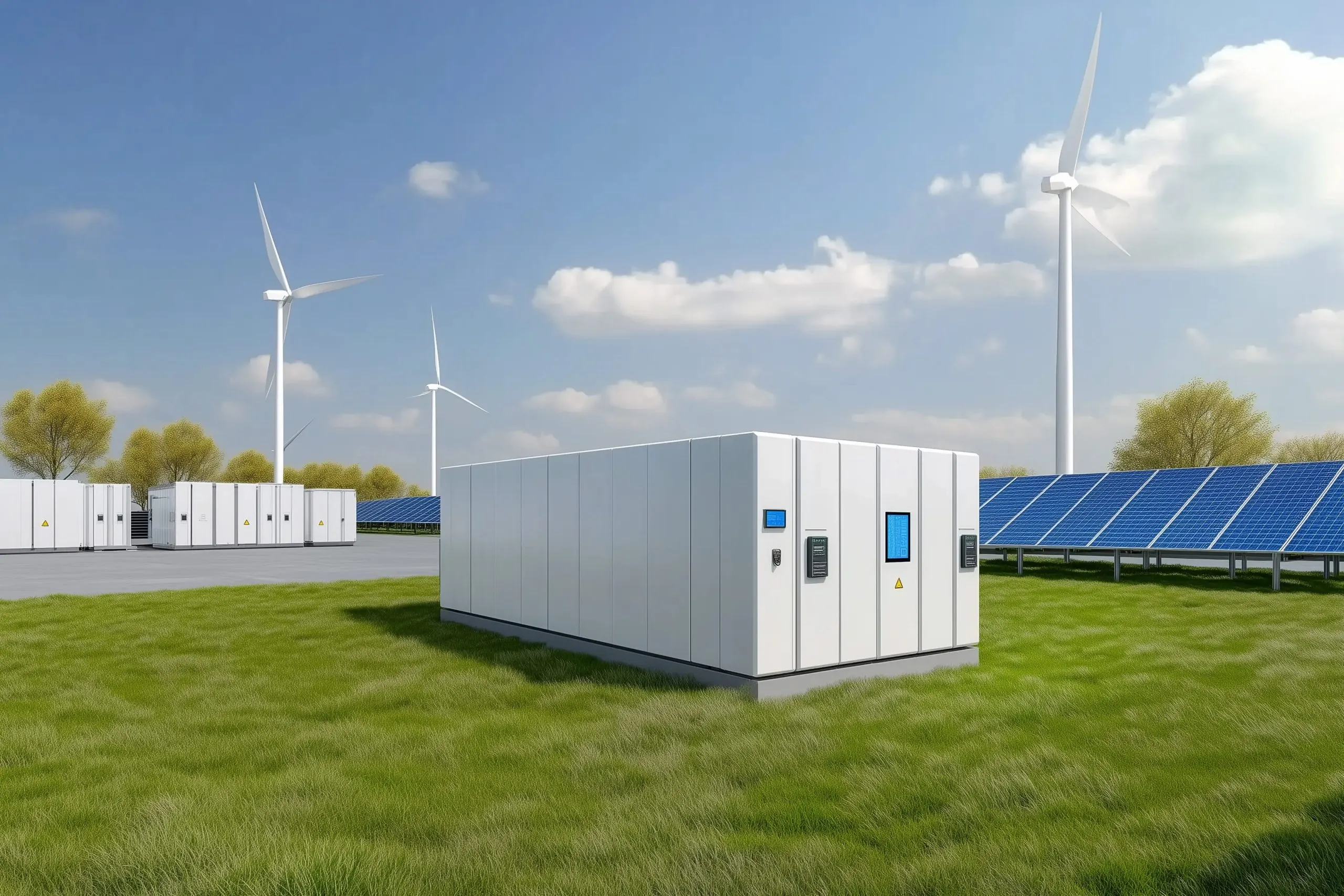
South Africa’s energy storage market has moved well beyond being a niche segment tied only to renewable energy projects. In 2026, battery storage has become part of a much larger conversation around energy reliability, business continuity, and the country’s long-running electricity shortages. With load-shedding still affecting industries and households, companies are no longer treating backup power as optional infrastructure. Storage systems are now being installed alongside solar projects at mines, factories, shopping centres, and even residential estates. At the same time, renewable energy development across the country continues to gather pace. Utility-scale solar and wind farms are adding capacity, but without storage, balancing supply during peak demand remains difficult. In practice, this has created a strong commercial case for battery systems that can store electricity during off-peak periods and release it when the grid comes under pressure. The market is no longer driven purely by sustainability goals. Reliability and economics are playing an equally important role.
What’s Driving the Energy Storage Market in South Africa?
Renewable Energy Expansion Needs Flexible Power Support
South Africa’s renewable energy pipeline has grown steadily through public procurement rounds and private sector investments. Solar projects across Northern Cape and Eastern Cape provinces are becoming larger and more sophisticated, yet intermittency remains a practical issue. A solar farm may generate excess electricity during the afternoon, while demand often spikes later in the evening. Battery storage helps bridge that mismatch. Utilities and independent power producers are increasingly pairing renewable projects with lithium-ion storage to stabilize supply and reduce curtailment losses. For developers, storage also creates a stronger revenue opportunity because electricity can be supplied during higher-priced peak periods rather than only when sunlight or wind conditions are favorable.
Load-Shedding Continues to Reshape Energy Decisions
Frequent power cuts have changed purchasing behavior across South Africa. Mining companies, manufacturing facilities, and retail chains are investing heavily in on-site energy systems because production downtime has become expensive and unpredictable. In many industrial zones, diesel generators were once the preferred backup solution. That approach is slowly becoming less attractive due to fuel costs, maintenance requirements, and environmental pressure. Battery systems combined with rooftop solar are increasingly viewed as a more stable long-term alternative. Residential demand is also growing, particularly among middle- and upper-income households looking to reduce dependence on Eskom’s grid. On the ground, installers report that customers are often willing to pay premium prices if it means avoiding repeated outages during working hours.
Falling Battery Prices Are Improving Adoption
A few years ago, battery storage economics remained difficult for many users outside large utility projects. That picture has changed considerably. Global manufacturing scale, particularly from Asian battery suppliers, has reduced lithium-ion battery costs over time. This has made commercial and small-scale systems more financially viable. Technology improvements are also helping. Modern battery management software allows businesses to monitor energy consumption in real time and optimize storage usage around tariff structures. While lithium-ion dominates the market today, interest in sodium-ion and flow battery technologies is beginning to emerge, especially for longer-duration storage applications where cost efficiency matters more than compact size.
Government-Led Initiatives Supporting Energy Storage
The South African government has taken a more active role in supporting battery deployment as part of broader electricity reforms. Eskom’s battery storage projects and renewable procurement programs have opened space for large-scale investment in grid infrastructure. Regulatory changes allowing private generation projects above previous licensing thresholds have also encouraged businesses to build captive power systems with integrated storage. International lenders and climate-focused financing institutions are contributing capital as well. This matters because one of the biggest barriers in South Africa remains project financing, particularly for medium-sized commercial installations.
Market Competition and Industry Landscape
Competition in the South Africa energy storage market has intensified over the past few years. Global companies such as Tesla, BYD, Huawei, and Sungrow are actively expanding partnerships with local installers and EPC firms. Chinese suppliers currently hold a strong pricing advantage, particularly in the commercial and residential segments. Still, competition is not purely about hardware pricing anymore. Buyers increasingly look for warranty support, system integration expertise, and after-sales maintenance capabilities. A common challenge in the market is that cheaper imported systems sometimes struggle with servicing and replacement parts after installation.
High Upfront Costs Remain a Key Challenge
Despite declining battery prices, storage systems still involve substantial upfront investment. For smaller businesses and households, financing remains a hurdle. Imported battery cells and exchange-rate volatility also create pricing uncertainty, especially when the South African rand weakens. In some cases, projects with strong long-term savings still face delays simply because access to affordable financing is limited.
Eskom and Private Developers Accelerate Large-Scale Battery Storage Expansion
South Africa’s battery energy storage sector witnessed major momentum in 2026 after several large-scale projects moved closer to commercial deployment. Eskom continued expanding its multi-phase Battery Energy Storage System program targeting 1,440MWh capacity nationwide, while independent power producers pushed forward with utility-scale projects in Northern Cape and Western Cape regions. One of the most notable developments came from the Red Sands project, a 612MWh standalone battery facility that recently achieved commercial close and is being described as one of Africa’s largest grid-scale storage projects. The growing pipeline highlights how battery systems are becoming central to South Africa’s renewable energy and grid stabilization plans.
Future Outlook
South Africa’s energy storage market is likely to expand significantly through 2035 as renewable energy capacity rises and pressure on the national grid continues. Battery systems will increasingly become standard infrastructure across commercial facilities, industrial operations, and residential solar installations rather than a specialized add-on product. The market may also shift toward localized assembly and regional supply chains over time. That would help reduce import dependence and shorten delivery timelines.
Consultants at Nexdigm, in their latest publication “South Africa Energy Storage Market Outlook to 2035,” believe companies that combine financing solutions, reliable servicing networks, and integrated solar-storage offerings will hold a stronger advantage as adoption widens across the country.
To take the next step, simply visit our Request a Consultation page and share your requirements with us.
Harsh Mittal
+91-8422857704