
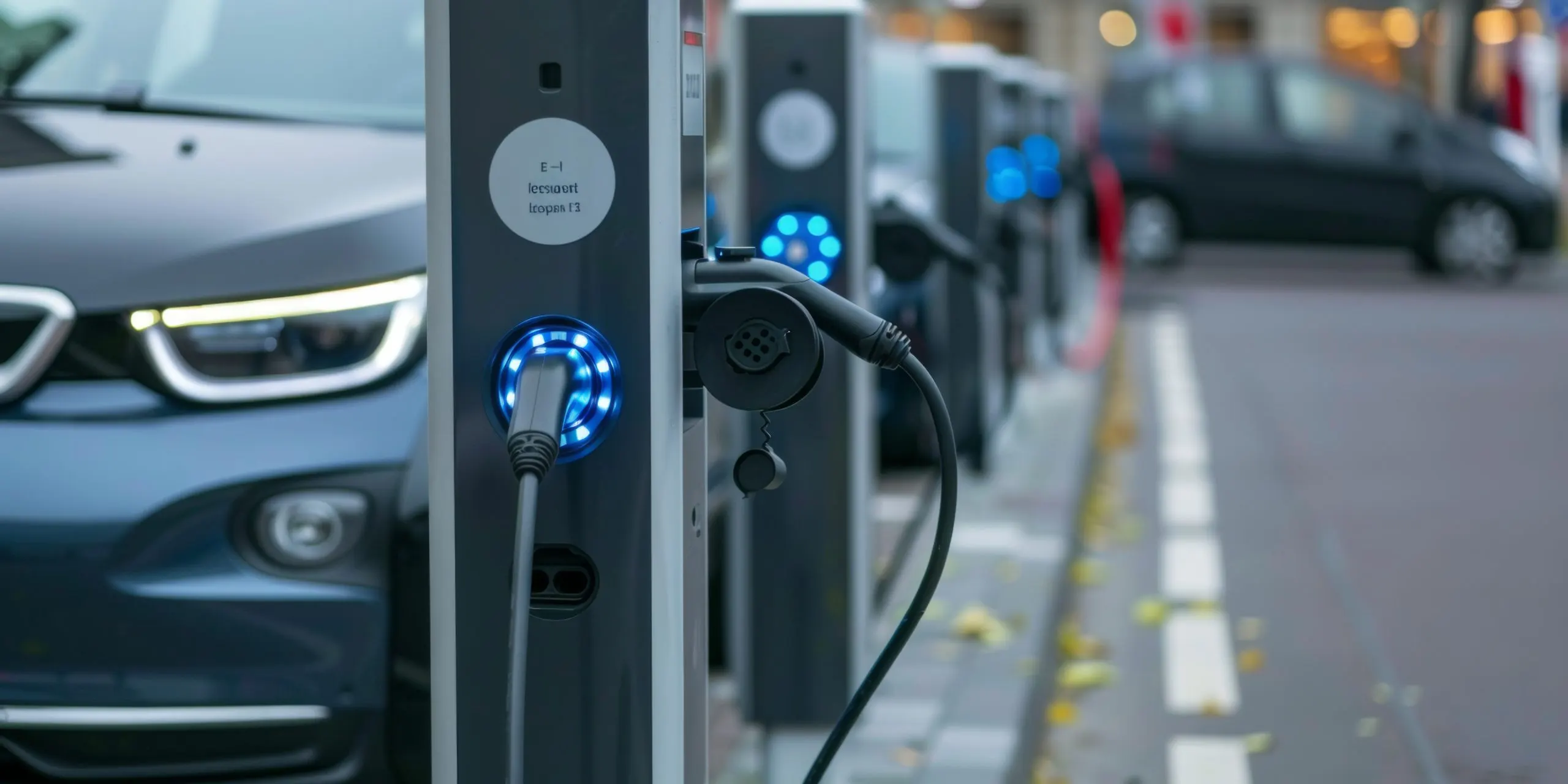
South Africa is emerging as a leading electric vehicle (EV) market in Africa, with charging infrastructure expanding steadily alongside early-stage EV adoption. As of 2025, the country had over 500–600 public charging stations and a market value of around USD 470 million, growing at over 26% annually. Despite relatively low EV penetration compared to global markets, South Africa’s infrastructure-to-vehicle ratio is comparatively strong, indicating proactive capacity development. With supportive policies, private investments, and rising environmental awareness, the EV charging ecosystem is poised for substantial growth through 2035.
Key Market Drivers Shaping the Growth of South Africa’s EV Charging Infrastructure Market
Rising EV Adoption and Market Expansion
Electric vehicle adoption, though still nascent, is gaining momentum. The EV market is projected to grow significantly, with strong CAGR forecasts exceeding 20% in the coming years. Charging infrastructure demand is directly linked to this growth, as increasing EV sales necessitate reliable and accessible charging networks. The charging infrastructure market itself is expected to grow at a CAGR of nearly 29% between 2025 and 2033, highlighting robust long-term demand.
Strong Private Sector Participation
Unlike many global markets, South Africa’s charging infrastructure expansion is largely driven by private companies investing in commercial locations such as malls, office parks, and highways. Companies are also exploring innovative models such as solar-powered and off-grid charging stations to mitigate power supply challenges. This private-led approach has accelerated deployment and improved accessibility in urban centers.
Urbanization and Environmental Awareness
Increasing urbanization in cities like Johannesburg, Cape Town, and Durban is driving demand for sustainable transport solutions. Growing awareness of carbon emissions and fuel cost savings is encouraging consumers and fleet operators to consider EVs. These trends are further supported by global decarbonization goals, positioning EV infrastructure as a critical component of South Africa’s energy transition.
Government Policies and Strategic Initiatives Supporting EV Infrastructure Development
The South African government is actively promoting EV adoption through policy frameworks such as the Electric Vehicles White Paper and planned incentives for local manufacturing. Authorities are also encouraging partnerships with private players and municipalities to expand charging networks and integrate renewable energy solutions. These initiatives aim to align EV infrastructure development with broader climate goals and attract investment into the domestic EV ecosystem.
Competitive Landscape and Key Players Driving Market Expansion
The market features a mix of local and international players, with companies such as Grid Cars and emerging global OEM-backed networks playing a key role. Automotive firms, including Chinese EV manufacturers, are also investing in charging infrastructure to support vehicle sales, with some planning hundreds of fast-charging stations. This combination of infrastructure providers and OEM-driven initiatives is intensifying competition and accelerating network expansion.
Key Challenges Impacting the Growth of South Africa’s EV Charging Infrastructure Market
Limited EV Adoption and Economic Constraints
South Africa’s EV market remains at an early stage, with relatively low sales volumes and high vehicle costs limiting widespread adoption.
Power Supply and Infrastructure Gaps
Frequent electricity supply issues and grid instability pose challenges for reliable charging infrastructure deployment. Addressing these issues, alongside expanding coverage beyond urban areas, remains critical for sustained growth.
Future Outlook
Looking ahead to 2035, South Africa’s EV charging infrastructure market is expected to witness exponential growth, driven by rising EV penetration, technological advancements, and increasing investment. The market is projected to reach over USD 750 million by 2033, with continued expansion thereafter. Innovations such as ultra-fast charging, renewable-powered stations, and integrated smart grid solutions will further enhance network efficiency. As policy support strengthens and consumer adoption improves, South Africa is likely to solidify its position as a regional leader in EV infrastructure, serving as a gateway for broader African electrification.
Consultants at Nexdigm, in their latest publication “South Africa EV Charging Infrastructure Market Outlook to 2035,” analyze the sector by System Type (AC Slow Charging Systems, DC Fast Charging Systems, Ultra-Fast Charging Systems, Wireless Inductive Charging Systems), By Platform Type (Public Charging Networks, Residential Charging Infrastructure, Commercial Workplace Charging), and By Fitment Type (New Installation Charging Systems, Retrofitted Charging Infrastructure, Integrated Charging with Renewable Energy Systems). Nexdigm suggests that businesses should align their strategies with evolving EV adoption trends, invest in scalable and energy-efficient charging solutions, and proactively collaborate with public and private stakeholders to build a resilient, future-ready charging infrastructure ecosystem in South Africa.
To take the next step, simply visit our Request a Consultation page and share your requirements with us.
Harsh Mittal
+91-8422857704