
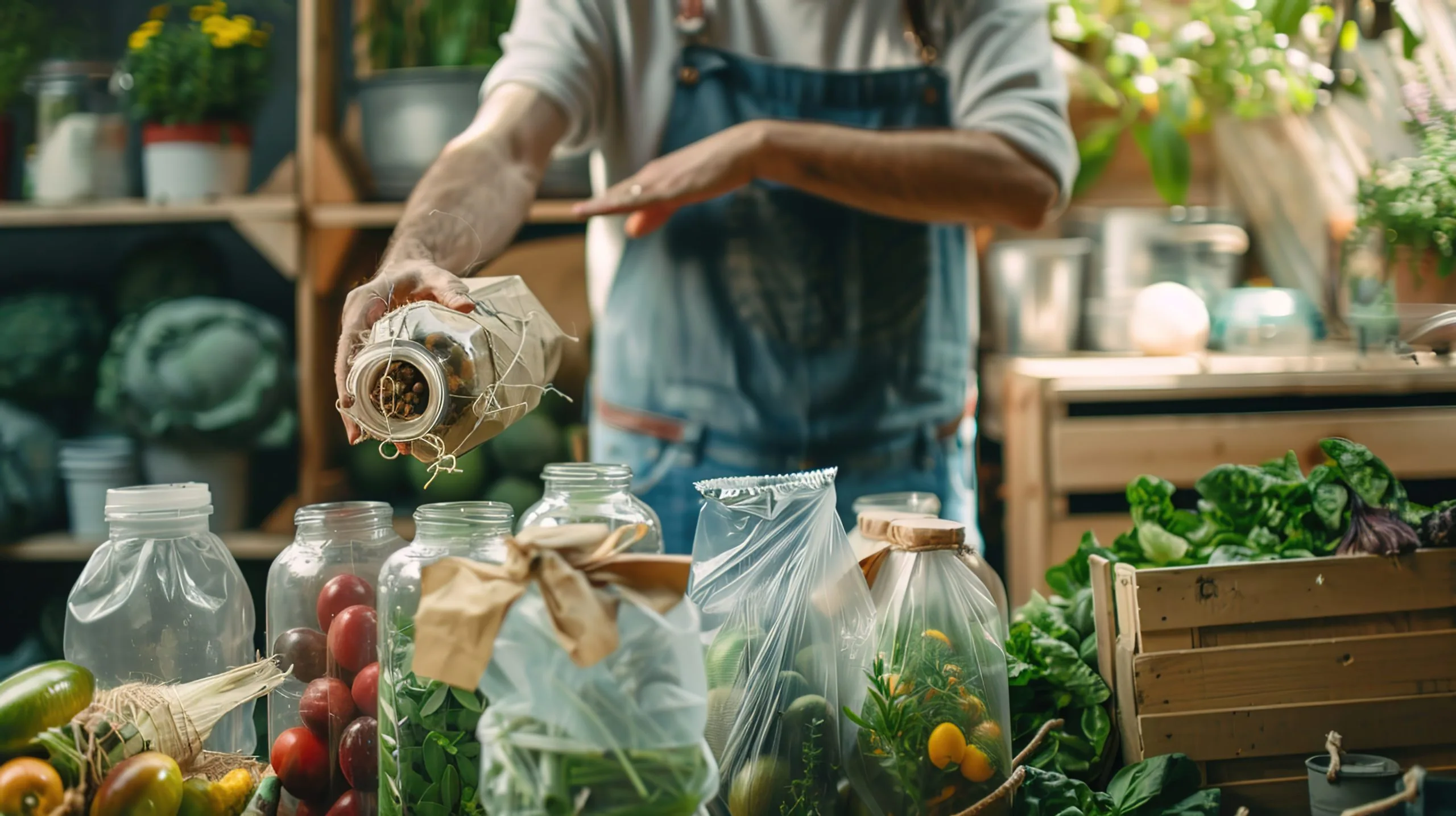
The South Africa zero waste grocery stores market is gaining relevance as consumers, retailers, and policymakers focus more on reducing plastic waste, food wastage, and unnecessary packaging. Zero waste grocery stores encourage bulk buying, refill stations, reusable containers, local sourcing, and packaging-light shopping formats. The opportunity is supported by South Africa’s large food and grocery retail base, which recorded USD 56.7 billion in revenue in 2024. As shoppers become more conscious of sustainability, affordability, and household waste, low-waste grocery models are becoming a practical part of responsible retail.
Key market drivers are strengthening zero waste grocery adoption in South Africa
Everyday grocery spending is creating a strong base for low-waste formats
Food remains a major part of South Africa’s retail economy, accounting for 75.6% of the food and grocery retail market value in 2024. This creates a strong foundation for zero waste grocery stores, as the model connects directly with everyday household purchases such as grains, pulses, spices, detergents, personal care refills, and fresh food items. Bulk and refill formats can help consumers buy only what they need, reduce packaging waste, and manage household budgets more carefully. As grocery spending remains essential, retailers that make low-waste shopping affordable and convenient can build repeat customer demand.
FMCG growth is supporting demand for practical retail alternatives
South African consumers spent nearly R683.3 billion on FMCG products in 2025, with value sales growing 5.7% and unit sales increasing 6.7%. This shows continued demand across daily-use products despite pressure on household budgets. Zero waste grocery stores can benefit from this demand by offering refillable household cleaners, pantry staples, personal care products, and locally sourced essentials. These formats appeal to consumers who want responsible shopping choices without compromising on value, hygiene, and product availability.
Online grocery and digital retail are improving market access
South Africa’s online retail market is expanding, with online sales projected to exceed R130 billion and approach 10% of the national retail market. This growth is supported partly by on-demand grocery platforms and digital retail adoption. For zero waste grocery stores, digital tools can support subscription refills, reusable delivery packaging, consumer education, and convenient reordering.
Government initiatives and EPR policies are supporting market development
South Africa’s regulatory environment is encouraging businesses to take greater responsibility for packaging waste. Extended Producer Responsibility regulations make EPR mandatory for producers and importers of packaging, pushing businesses to improve recycling, reporting, and waste management practices. These policies support the wider shift toward circular economy models and create incentives for retailers to reduce unnecessary packaging. For zero waste grocery stores, this strengthens the case for refill stations, reusable containers, recyclable packaging, and supplier partnerships that reduce waste across the value chain.
Competitive landscape is becoming more retail-led and sustainability focused
The South Africa zero waste grocery stores market includes independent refill stores, organic grocers, bulk food retailers, local supermarkets, informal traders, online grocery platforms, and major retail chains exploring sustainable packaging and delivery models. Competition is shaped by affordability, hygiene, accessibility, product range, location, supplier reliability, and trust in sustainability claims. Large retailers benefit from scale and digital reach, while smaller zero waste stores can build loyalty through community engagement, local sourcing, and personalized service. Refill stations and reusable packaging programs are becoming important differentiators.
Market challenges continue to affect adoption and scalability
Price sensitivity can slow mainstream adoption
Many consumers remain highly value-conscious, and sustainable or package-free products may appear more expensive than conventional grocery options. Retailers need to keep refill formats affordable and clearly communicate savings.
Convenience and hygiene expectations require strong execution
Consumers may hesitate to use bulk or refill systems if product labeling, weighing, storage, or hygiene practices are unclear. Store design, staff support, and transparent quality standards are essential.
Future outlook
The future outlook for the South Africa zero waste grocery stores market remains positive, supported by FMCG demand, online grocery growth, EPR regulations, and rising consumer awareness of packaging waste. Opportunities are expected across bulk staples, refillable household products, personal care refills, local food sourcing, reusable delivery systems, and sustainable packaging. As retailers balance affordability with environmental responsibility, businesses that combine convenience, hygiene, pricing discipline, digital access, and credible sustainability practices will be better positioned to capture long-term growth.
Consultants at Nexdigm, in their latest publication “South Africa zero waste grocery stores market outlook to 2035,” analyze the sector By Store Format (Standalone Zero Waste Grocery Stores, Bulk and Refill Stores, Cooperative and Community-based Stores), By Product Category (Food and Beverages, Household Cleaning Products, Reusable Packaging and Storage Products)
Nexdigm suggests that businesses in the South Africa zero waste grocery stores market should focus on refill formats, bulk staples, reusable packaging, and value-led product ranges to serve sustainability-conscious consumers.
To take the next step, simply visit our Request a Consultation page and share your requirements with us.
Harsh Mittal
+91-8422857704