
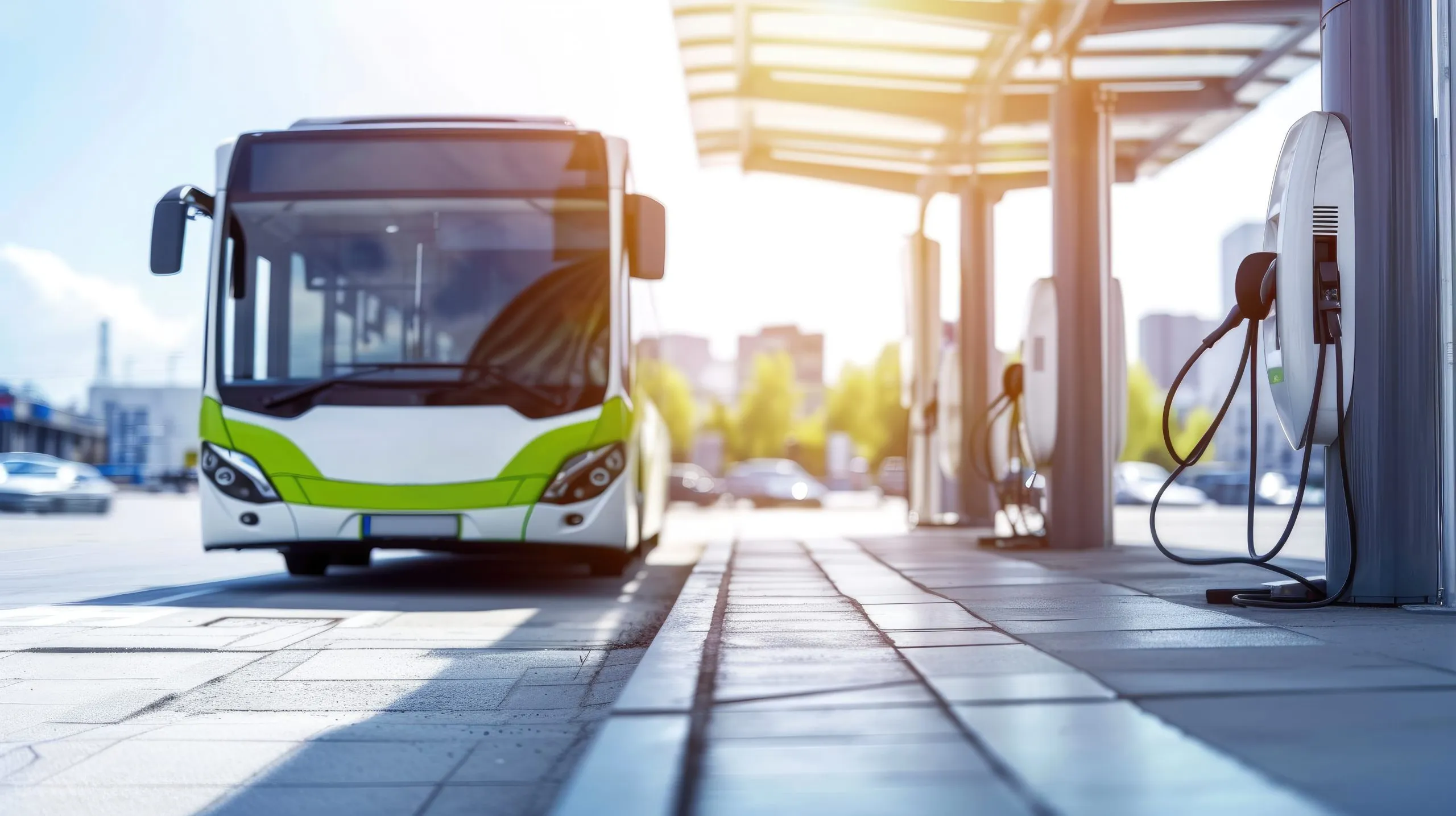
South Korea’s electric bus market is steadily moving from pilot projects to everyday public transport use. The market was valued at USD 1.11 billion earlier, is now projected to reach USD 2.53 billion, growing at a 14.67% CAGR. This growth reflects a wider shift in how Korean cities are thinking about mobility, air quality, and long-term transport planning. In the coming years, electric buses are expected to be a familiar part of daily commuting across major cities such as Seoul, Busan, Incheon, and Daegu. For passengers, the change will mean quieter rides, cleaner streets, and a more modern public transport experience.
Market Growth factors boosting South Korea’s Electric Bus Market
Cleaner Public Transport Is Becoming a Priority
One of the biggest reasons behind market growth is South Korea’s plan to electrify city buses. A study noted that the government aims to replace all 35,000 city buses operating as of last year with electric buses in the coming years. This creates a strong opportunity for electric bus manufacturers, battery suppliers, charging solution providers, and fleet management companies. City buses are especially suitable for electrification because they usually operate on fixed routes and return to depots, making charging easier to plan. For transport operators, this also helps reduce fuel dependency and improve long-term operating efficiency.
Cities Are Under Pressure to Cut Emissions
Electric buses are gaining attention because they can help reduce greenhouse gas emissions, particulate pollution, and road noise in busy urban areas. Research has also shown that emissions from a single bus can be far higher than those from a passenger car, which makes bus electrification a high-impact solution. In crowded cities, cleaner buses can directly improve the quality of life for commuters, pedestrians, and residents living near major roads. This is why electric buses are not just a transport investment; they are also part of South Korea’s public health and climate strategy. As cities grow denser, cleaner mass transit will become even more important.
A Stronger Installed Base Is Building Confidence
South Korea is already seeing meaningful electric bus deployment. Earlier, the country had 12,830 registered electric vans and buses, including 11,329 large electric buses, according to the Ministry of Environment. This growing fleet gives operators more real-world experience with battery performance, maintenance, charging schedules, and route planning. As more cities operate electric buses successfully, confidence in the technology is likely to rise. This will make future purchases easier, especially for municipalities and private fleet operators that were previously cautious.
How Government Policy Is Supporting Electric Bus Adoption in South Korea?
Government support remains one of the most important forces behind the market’s growth. South Korea has been encouraging electric bus adoption through public fleet electrification plans, subsidies, and investment in charging infrastructure. The government is also paying closer attention to the competitiveness of Korea-made electric city buses. This includes reviewing charging conditions, vehicle distribution, operational issues, and ways to strengthen domestic manufacturers. Over time, this support can help reduce dependence on imports and build a stronger local electric bus ecosystem.
Competitive Landscape of South Korea’s Electric Bus Market
The competitive landscape includes domestic bus makers, battery manufacturers, charging infrastructure companies, technology providers, and international electric bus brands. Competition is expected to become stronger as more public and private operators shift toward electric fleets. Manufacturers will need to compete on more than just vehicle price. Range, battery safety, charging speed, maintenance support, and total cost of ownership will all influence purchase decisions. Companies with reliable after-sales service and strong relationships with municipalities are likely to have an advantage.
Challenges affecting South Korea’s Electric Bus Market Growth
Charging Infrastructure Needs to Keep Pace
Electric bus growth depends on reliable depot charging, route-based charging, grid capacity, and well-planned infrastructure. Even if demand for electric buses is strong, deployment can slow if charging facilities are not ready on time. Fleet operators need charging systems that can support daily schedules without disrupting service. This requires coordination between transport agencies, utilities, charging companies, and city planners. If infrastructure planning falls behind vehicle procurement, operators may struggle with utilization and route reliability.
High Upfront Costs Remain a Concern
Electric buses usually cost more upfront than diesel or CNG buses, even though they may offer lower operating costs over time. For public transport operators, this makes subsidies and long-term financing support important. Beyond vehicle purchases, operators must also budget for chargers, depot upgrades, technician training, spare parts, and future battery replacement. Smaller fleet operators may find this transition more difficult than larger city transit agencies. Managing these costs will be critical for broader adoption.
Future Outlook
Looking ahead, South Korea’s electric bus market is expected to be more mature, competitive, and deeply connected to the country’s clean mobility goals. With the market already projected to grow at a 14.67% CAGR, the next decade could bring wider deployment across both large cities and smaller regional routes. The market is also likely to move beyond simple fleet replacement. Future growth may come from smart charging, battery upgrades, connected fleet management, vehicle-to-grid solutions, and more localized manufacturing. If infrastructure expansion and policy support continue, South Korea could become one of Asia’s more advanced electric bus markets in the coming years.
Consultants at Nexdigm, in their latest publication South Korea Electric Bus Market Outlook to 2035 analyzed the market by System Type (Battery Electric Buses, Plug in Hybrid Electric Buses, Fuel Cell Electric Buses), by Platform Type (City Transit Buses, Intercity, School Electric Buses and Airport Shuttle Electric Buses).
Nexdigm believes that businesses in South Korea should closely evaluate the electric bus market, as government support, fleet electrification targets, and infrastructure investments are creating strong opportunities for manufacturers, suppliers, and technology providers.
To take the next step, simply visit our Request a Consultation page and share your requirements with us.
Harsh Mittal
+91-8422857704