
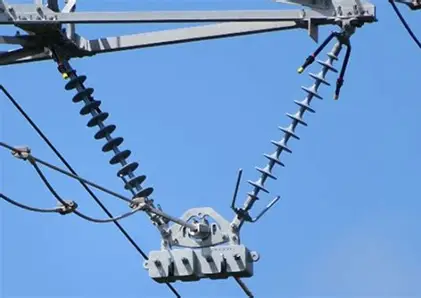
South Korea’s Electrical Insulators Market is witnessing strong growth, supported by grid modernization, renewable energy expansion, industrial electrification, and rising electricity demand from advanced manufacturing sectors. Electrical insulators are essential components in transmission lines, substations, transformers, and switchgear, ensuring safe and reliable power transmission. With installed power-generation capacity exceeding 150 GW, a population of approximately 52 million, and one of the world’s most advanced industrial economies, demand for high-performance ceramic, glass, and composite insulators is increasing. Growing investments in renewable energy, smart grids, and electric mobility infrastructure are further strengthening market opportunities.
Key Market Drivers for South Korea’s Electrical Insulators Market
Renewable Energy Expansion and Grid Modernization Accelerate Demand
South Korea is rapidly expanding renewable energy capacity to support its Carbon Neutrality 2050 objectives, with installed solar capacity exceeding 35 GW and wind power capacity approaching 3 GW. The government is also pursuing large-scale offshore wind developments, including projects exceeding 14 GW in the southwest region. Integrating these renewable resources into the national grid requires substantial investments in transmission lines, substations, and grid reinforcement infrastructure, driving demand for advanced composite and polymer insulators capable of supporting high-voltage operations and improving network reliability.
Semiconductor Manufacturing and Industrial Electrification Strengthen Market Growth
South Korea’s manufacturing sector contributes approximately 27% of GDP and is supported by globally leading semiconductor companies such as Samsung Electronics and SK Hynix. The country continues to invest hundreds of billions of dollars in semiconductor fabrication facilities, battery manufacturing plants, electric vehicle production, and industrial automation projects. These energy-intensive industries require highly reliable electricity infrastructure, increasing demand for transformers, switchgear, substations, and durable electrical insulation systems across industrial power networks.
Smart Grid Deployment and Electric Vehicle Infrastructure Create New Opportunities
South Korea is among the global leaders in smart-grid adoption and digital power infrastructure development. The country has deployed nationwide smart-metering programs and continues to expand electric vehicle charging networks as EV adoption accelerates. In addition, large-scale investments in battery energy storage systems (BESS), digital substations, and intelligent transmission networks are increasing demand for high-performance insulators capable of supporting advanced grid technologies. These developments are strengthening market opportunities for ceramic, glass, and composite insulators across utility, commercial, and industrial applications.
Government Initiatives Supporting South Korea’s Electrical Insulators Market
The South Korean government continues to promote power-sector modernization through the Carbon Neutrality 2050 Strategy, the Korean New Deal, and large-scale energy transition programs. Investments exceeding USD 400 billion are expected across renewable energy, grid modernization, smart infrastructure, hydrogen projects, and industrial electrification initiatives over the coming decades. Government support for transmission network upgrades, offshore wind development, battery storage deployment, and smart-grid technologies is creating favorable conditions for electrical infrastructure expansion and increasing demand for advanced insulation solutions.
Competitive Landscape of South Korea’s Electrical Insulators Market
South Korea’s Electrical Insulators Market is highly competitive and supported by strong demand from utilities, semiconductor facilities, industrial manufacturers, and renewable-energy developers. Competition is increasingly focused on high-voltage performance, contamination resistance, mechanical strength, smart-grid compatibility, and lifecycle efficiency. Major players such as LS Electric, Hyosung Heavy Industries, HD Hyundai Electric, Hitachi Energy, Siemens Energy, ABB, and Schneider Electric continue to expand product offerings for transmission, distribution, and renewable-energy applications. Manufacturers are increasingly investing in advanced composite insulators and smart-grid-compatible technologies tailored to South Korea’s evolving power infrastructure requirements.
Major Challenges Facing South Korea’s Electrical Insulators Market
High Infrastructure Modernization Costs
Expanding transmission systems, integrating renewable energy, and upgrading aging electrical infrastructure require significant capital investment. Utilities and infrastructure operators must balance modernization goals with cost efficiency and system reliability.
Harsh Coastal and Industrial Operating Conditions
Many transmission assets operate in coastal and industrial regions exposed to salt contamination, humidity, pollution, and extreme weather conditions. Utilities increasingly require corrosion-resistant and pollution-resistant insulation technologies to maintain long-term system performance.
Future Outlook
South Korea’s Electrical Insulators Market is expected to witness strong growth through 2035, supported by installed power-generation capacity exceeding 150 GW, expanding renewable-energy deployment, and increasing investments in smart-grid infrastructure. The country’s commitment to achieving carbon neutrality by 2050, alongside growing investments in offshore wind projects, battery energy storage systems, electric vehicle charging networks, and semiconductor manufacturing facilities, will continue to drive demand for advanced insulation solutions. Additionally, transmission network upgrades, digital substations, and industrial electrification initiatives are expected to create significant opportunities for composite, polymer, glass, and ceramic insulator manufacturers across South Korea’s evolving electricity infrastructure landscape.
Consultants at Nexdigm, in their latest publication “South Korea Electrical Insulators Market Outlook to 2035” analyse the sector By Insulator Mounting Technology (Pin Porcelain, Suspension Porcelain and Station Post Porcelain), By Supply Chain Channel (Direct Utility Procurement and Global OEM Partnerships) and By Installation Environment (Coastal High Salinity Zones, Mountains Overhead Terrain and Polluted Industrial Zone Sites).
Nexdigm suggests that businesses in South Korea’s Electrical Insulators Industry prioritize advanced composite insulators, smart-grid-compatible technologies, high-voltage transmission solutions, and renewable-energy-focused insulation products to capitalize on the country’s 150 GW+ power capacity, USD 400 billion+ energy transition investments, expanding semiconductor manufacturing sector, and growing demand for reliable electricity infrastructure across utility, industrial, and renewable-energy applications.
To take the next step, simply visit our Request a Consultation page and share your requirements with us.
Harsh Mittal
+91-8422857704