
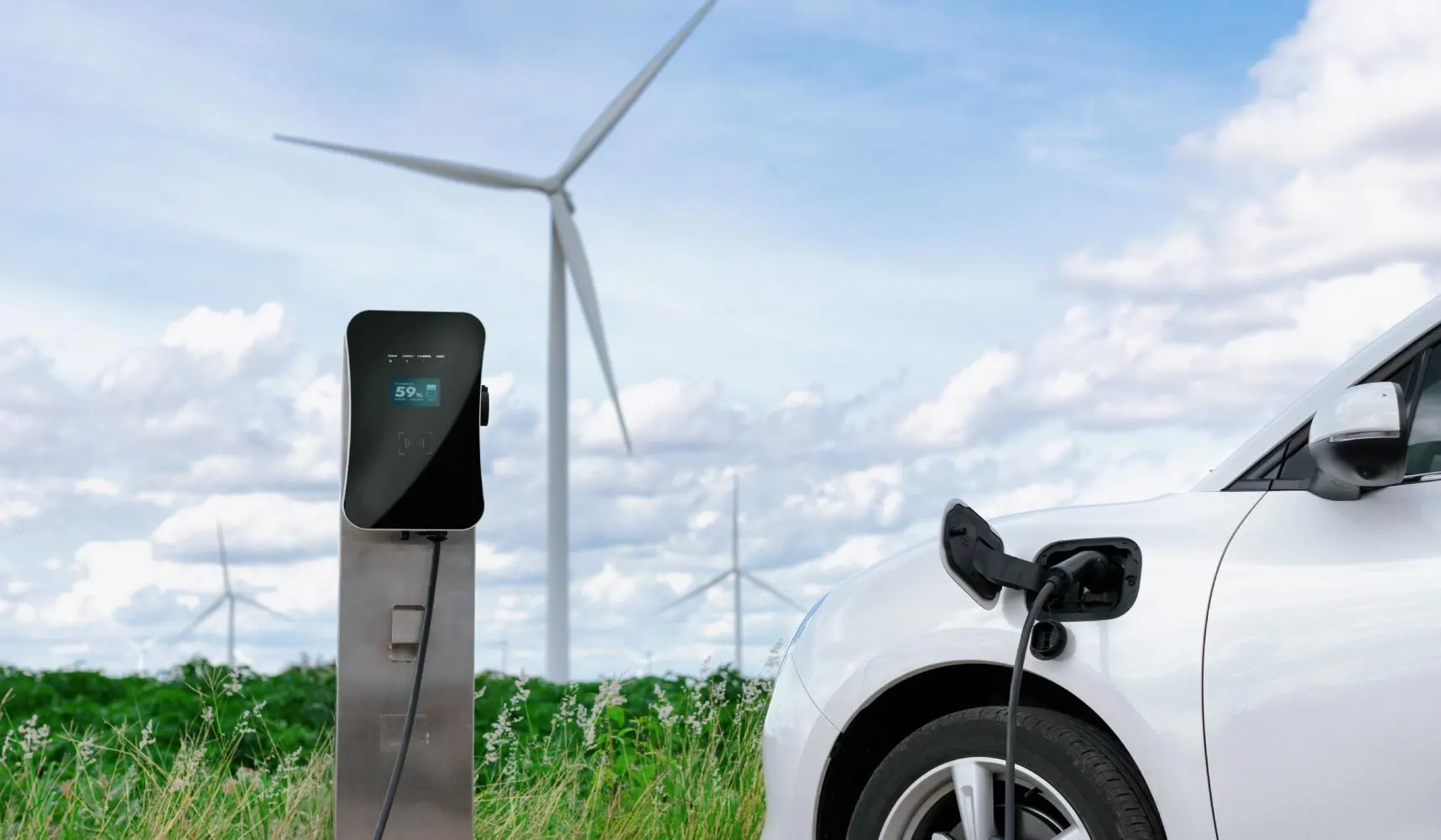
South Korea’s EV battery market is positioned for steady long-term growth through 2035, supported by global electrification, domestic manufacturing depth, and strong export-oriented battery champions. While near-term EV demand has softened in some markets, battery demand remains structurally positive: global EV battery demand exceeded 750 GWh in 2023, up about 40% year over year. In Asia Pacific, the EV battery market is projected to rise from USD 43.54 billion in 2025 to USD 138.18 billion by 2035, implying a 12.2% CAGR. South Korea is expected to remain a key supplier within this regional and global value chain.
Factors Accelerating EV Battery Demand in South Korea
Expansion of EV Adoption and Battery Demand
The largest demand driver is the continued shift from internal combustion vehicles to electric mobility. Passenger EVs account for the bulk of battery demand growth globally, and Korean battery makers are deeply embedded in supply chains for automakers in North America, Europe, and Asia. South Korea’s market benefits not only from domestic EV sales but also from overseas production and export-linked contracts. Hyundai Motor Group’s electrification strategy, combined with battery partnerships involving LG Energy Solution, SK On, and Samsung SDI, strengthens local industry visibility through 2035.
Global Manufacturing Scale-Up
South Korean battery companies are scaling capacity aggressively. SNE Research data cited by InvestKOREA indicates that LG Energy Solution’s EV battery production capacity was expected to rise from 173.5 GWh in 2021 to 505.5 GWh in 2025 and 1,079.5 GWh in 2030. SK On was projected to grow from 40.0 GWh in 2021 to 233.5 GWh in 2025, while Samsung SDI was expected to reach 156.0 GWh in 2025. This capacity expansion gives Korea a strong base for 2035 growth.
Technology Leadership in Premium Batteries
Korean firms remain competitive in high-nickel cathodes, pouch and prismatic formats, fast-charging systems, and safety-focused battery management. They are also investing in solid-state batteries, recycling, and next-generation chemistries. These technologies matter as automakers seek longer range, lower charging time, better thermal safety, and reduced dependence on critical minerals.
Government Policies and Initiatives Supporting South Korea’s EV Battery Industry
Government policy remains central to South Korea’s battery outlook. The 2030 K-Battery Development Strategy targets stronger supply-chain security, advanced technology leadership, and a healthier industrial ecosystem. InvestKOREA notes goals to lift Korea’s global battery market share to 40% by 2030 and attract more than KRW 50 trillion in domestic investment. Recent policy also emphasizes used-battery lifecycle management, recycling, and critical-mineral security to reduce exposure to supply disruptions.
Major Players Shaping South Korea’s EV Battery Market
The market is led by LG Energy Solution, Samsung SDI, and SK On, which compete with Chinese leaders such as CATL and BYD, as well as Panasonic and emerging regional suppliers. In 2024, SNE Research reported that the combined global EV battery usage share of LG Energy Solution, SK On, and Samsung SDI was 18.4%, down 4.7 percentage points year over year, showing both Korea’s scale and the pressure from Chinese competitors. LG Energy Solution ranked third globally with 96.3 GWh installed in 2024.
Key Challenges Affecting South Korea’s EV Battery Market Growth
Slower EV Demand and Margin Pressure
Near-term EV demand uncertainty is a major risk. Korean battery makers have faced weaker demand in North America and Europe, creating pressure on utilization rates and profitability. LG Energy Solution, for example, reported a first-quarter 2026 operating loss amid weaker North American EV demand.
Critical Mineral and China Exposure
Battery supply chains remain vulnerable to lithium, nickel, graphite, and precursor-material concentration. Korea is working to diversify mineral sourcing, but Chinese firms retain major cost advantages and control important parts of the upstream and midstream battery chain.
Future Outlook
By 2035, South Korea’s EV battery market is likely to be larger, more technology-intensive, and more integrated with recycling and energy-storage applications. Growth will depend on global EV adoption, successful commercialization of advanced chemistries, and Korean firms’ ability to defend market share against lower-cost Chinese competitors. The most attractive opportunities are expected in high-performance EV batteries, solid-state development, battery recycling, and localized supply chains for the U.S., Europe, and Southeast Asia. Overall, South Korea should remain a top-tier EV battery hub, though competitive intensity will rise substantially.
Consultants at Nexdigm, in their latest publication “South Korea EV Battery Market Outlook to 2035,” analyze the sector by System Type (Lithium-Ion Batteries, Solid-State Batteries, Nickel-Metal Hydride Batteries, Lead-Acid Batteries), By Platform Type (Passenger Vehicles, Commercial Vehicles, Electric Two-Wheelers), and By Fitment Type (OEM Batteries, Aftermarket Batteries, Battery Leasing Models). Nexdigm suggests that businesses should strengthen supply-chain resilience, invest in next-generation battery technologies, and align expansion strategies with government incentives, recycling regulations, and regional EV demand trends to capture long-term opportunities in South Korea’s EV battery market.
To take the next step, simply visit our Request a Consultation page and share your requirements with us.
Harsh Mittal
+91-8422857704