
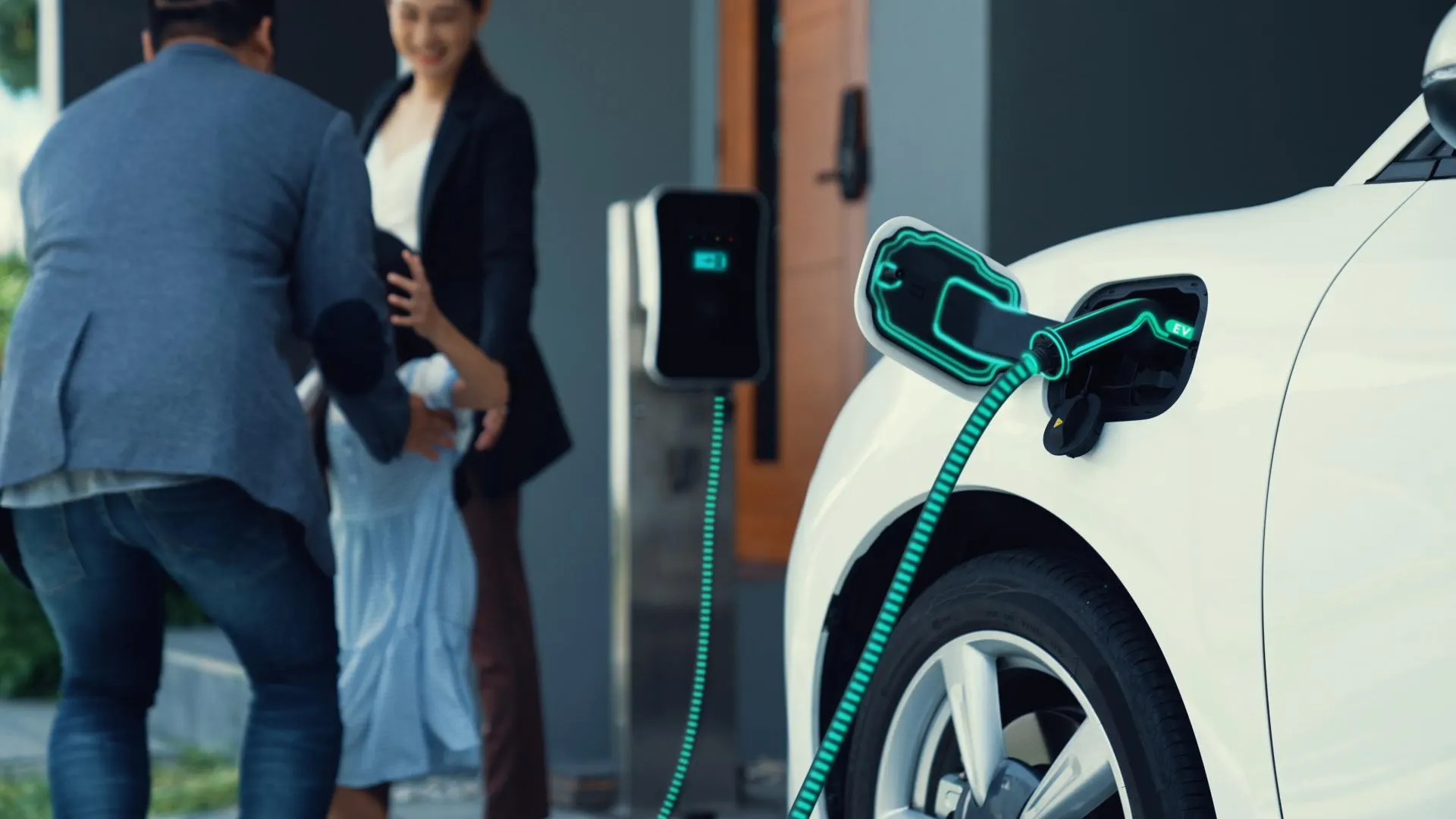
South Korea’s EV charging infrastructure market is entering a high-growth phase as the country accelerates transport electrification, expands public charging access, and upgrades charger safety standards. The market is supported by dense urbanization, strong domestic EV manufacturing, and active government policy. South Korea already has one of the world’s more developed charger networks: the Ministry of Environment reported around 240,000 EV chargers as of May 2023, including 25,000 fast chargers and 215,000 slow chargers. By 2035, the market is expected to shift from simple charger deployment toward faster, safer, smarter, and grid-integrated charging systems.
Key Market Drivers Shaping EV Charging Infrastructure Growth in South Korea
Rising EV Adoption and Charging Demand
Growing EV penetration is the most important demand driver. South Korea’s automotive sector is anchored by Hyundai, Kia, battery suppliers, and electronics companies, giving the country a strong domestic base for EV ecosystem development. As EV ownership expands, charging demand is rising in residential buildings, workplaces, public parking areas, highways, and retail locations. A 2024 industry assessment noted that South Korea aims for 4.2 million EVs by 2030 and around 1.2 million public and private charge points, indicating a major infrastructure scale-up this decade.
Expansion of Fast and Ultra-Fast Charging
The market is moving beyond basic AC to slow chargers toward DC fast and ultra-fast systems. This trend is especially relevant for highways, logistics fleets, taxis, buses, and convenience-based urban charging. Fast chargers reduce range anxiety and improve charger turnover, supporting commercial viability for operators. South Korea’s charger network has expanded rapidly: as of June 2024, there were reportedly about 350,000 public chargers, equal to 6.82 chargers per 1,000 people, a high level by global standards.
Smart Charging, Safety, and Energy Management
By 2035, growth will be shaped by software as much as hardware. Charger operators are increasingly focused on mobile apps, payment integration, charger availability of data, dynamic pricing, battery diagnostics, and grid load management. Safety has also become a stronger market driver following concerns around EV fires and underground parking. Recent government measures include plans to establish standard specifications for chargers in newly built multi-unit housing to improve infrastructure performance and avoid unnecessary replacement.
Government Policies and Investments Supporting EV Charger Deployment
Government policy remains central to the market outlook. South Korea’s Ministry of Environment has emphasized charger deployment as part of broader greenhouse-gas reduction goals and stated that the country aims to install 1.23 million chargers by 2030. Policy support includes charger subsidies, public-private deployment programs, apartment charging upgrades, and regulatory changes to ease installation. Research from the Korea Development Institute also indicates that investment in charging facilities can be more cost-effective than purchase subsidies for increasing battery EV adoption.
Competitive Dynamics Among EV Charging Network Operators and Technology Providers
The competitive landscape is fragmented but increasingly strategic. Domestic conglomerates, energy companies, charger manufacturers, mobility platforms, and automakers are all active. Key participants include Hyundai Motor Group-related charging initiatives, KEVCS, GS Charge, SK-related energy and charging businesses, Lotte, LG Electronics, and specialist charger companies such as Chaevi. Competition is shifting toward network reliability, fast-charging speed, site partnerships, software platforms, payment convenience, and maintenance of quality. Market consolidation is likely as operators seek scale, better utilization rates, and stronger relationships with real estate, fleet, and retail partners.
Key Barriers to South Korea’s EV Charging Infrastructure Growth
Low Utilization and Profitability Pressure
Despite strong charger deployment, utilization can remain uneven. Urban chargers, highway fast chargers, and fleet hubs may perform well, while some residential or low-traffic public chargers may generate weak returns. Operators face high installation costs, maintenance expenses, electricity demand charges, and pressure to keep prices affordable.
Grid, Safety, and Space Constraints
South Korea’s dense apartment-heavy housing structure creates installation complexity. Older buildings may lack sufficient electrical capacity, while underground parking raises safety and fire-risk concerns. Grid upgrades, smart load balancing, and clearer safety standards will be necessary for high-power charging expansion.
Future Outlook
Through 2035, South Korea’s EV charging infrastructure market is expected to grow rapidly, led by fast charging, smart charging software, apartment charging upgrades, and fleet electrification. One market estimate projects South Korea’s EV charging equipment market to grow at a 24.73% CAGR from 2025 to 2035, reaching about 2.77 million units by 2035. The next decade will likely favor operators that can combine hardware scale with reliability, safety compliance, digital platforms, and grid-aware energy management. South Korea is therefore positioned to remain one of Asia’s most advanced EV charging markets by 2035.
Consultants at Nexdigm, in their latest publication “South Korea EV Charging Infrastructure Market Outlook to 2035,” analyze the sector by System Type (Level 1 Charging Stations, Level 2 Charging Stations, DC Fast Charging Stations, Ultra-fast Charging Stations), By Platform Type (Public Charging Stations, Private Charging Stations, Workplace Charging Solutions), and By Fitment Type (Standalone Charging Units, Integrated Charging Units, Mobile Charging Solutions). Nexdigm suggests that businesses should prioritize scalable, safety-compliant, and digitally integrated EV charging solutions to capture long-term growth opportunities in South Korea’s rapidly evolving charging infrastructure market.
To take the next step, simply visit our Request a Consultation page and share your requirements with us.
Harsh Mittal
+91-8422857704