
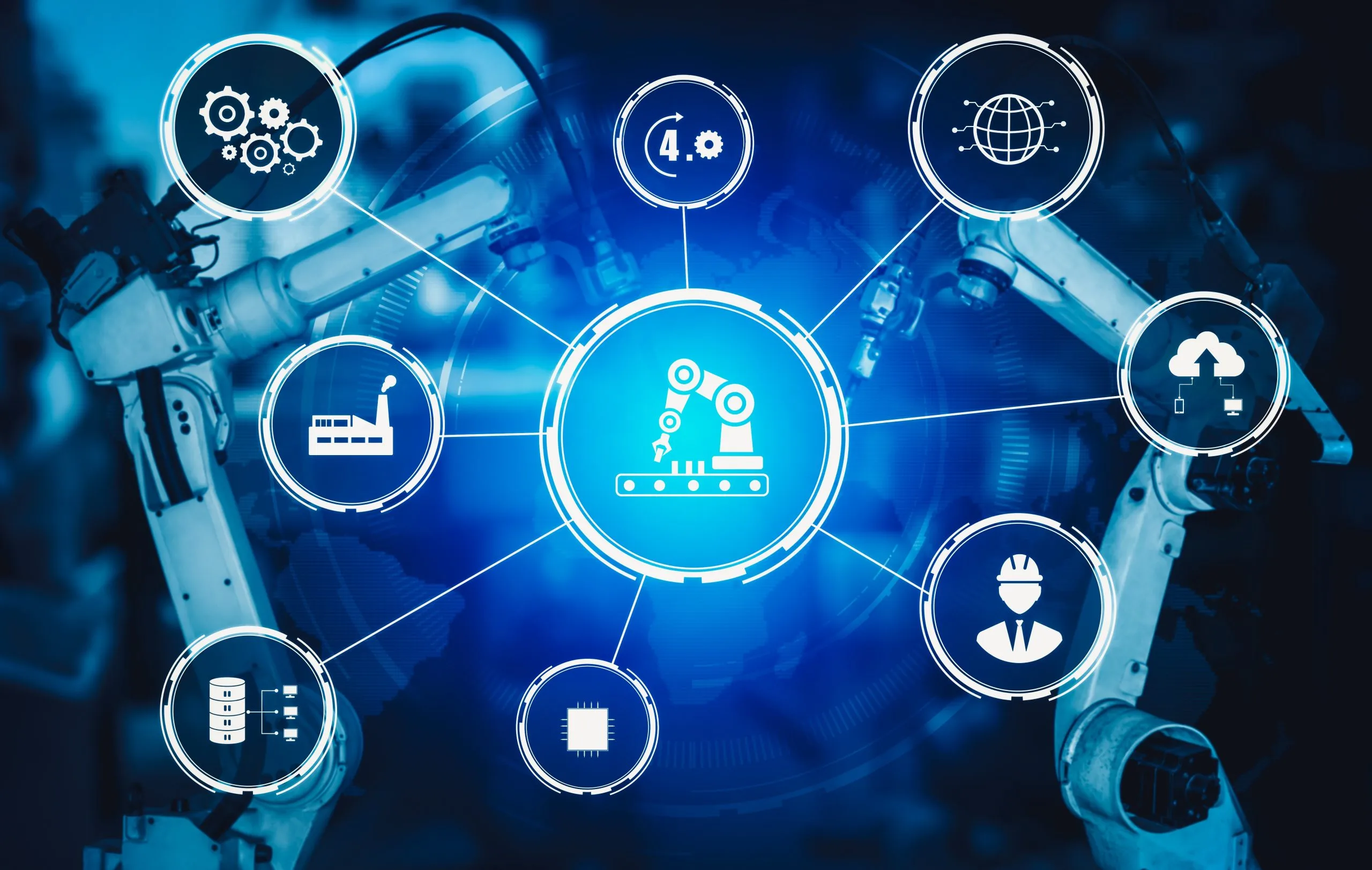
South Korea’s Industrial Internet of Things (IoT) market is emerging as a critical pillar of the country’s Industry 4.0 transformation. IoT integrates sensors, machines, and analytics platforms to enhance operational efficiency and productivity across manufacturing and industrial sectors. The market is witnessing steady expansion, with estimates indicating a valuation of over USD 12 billion in 2025 and continued growth driven by automation and digitalization. With strong industrial infrastructure and early adoption of advanced technologies, South Korea is well-positioned to remain a leading IoT hub in Asia through 2035.
Key Market Drivers Accelerating Industrial IoT Adoption in South Korea
Rapid Industrial Automation and Smart Manufacturing
South Korea’s manufacturing-heavy economy is a major catalyst for IoT adoption. Industries such as semiconductors, automotive, and electronics increasingly rely on connected devices to optimize production and reduce downtime. The need for improved efficiency and productivity is a primary growth driver, with the IoT market projected to grow at over 12% CAGR in the near term. Smart factories leverage real-time data analytics, predictive maintenance, and robotics, enabling companies to enhance output quality while lowering operational costs.
Advanced 5G and Digital Infrastructure
South Korea’s leadership in 5G deployment significantly accelerates IoT adoption. High-speed, low-latency connectivity enables seamless communication between industrial devices and systems. The country’s 5G IoT segment alone is expected to grow exponentially, from under USD 1 billion in 2025 to over USD 38 billion by 2034. This infrastructure supports real-time monitoring, remote operations, and edge computing—key components of IoT ecosystems.
Expanding IoT Ecosystem and Analytics Capabilities
The broader IoT ecosystem in South Korea is expanding rapidly, with the IoT integration market projected to reach over USD 100 billion by 2035. Growth in IoT analytics—expected to reach nearly USD 7 billion by 2035—enables industries to extract actionable insights from large datasets. This convergence of analytics, cloud, and IoT technologies strengthens the overall IoT value chain.
Government Policies and Strategic Initiatives Supporting Industrial IoT Expansion
The South Korean government actively promotes IoT adoption through digital transformation and smart factory initiatives. Policies emphasize Industry 4.0, AI integration, and advanced manufacturing. Large-scale investments in AI and innovation—such as multi-billion-dollar funding programs—are aimed at strengthening industrial competitiveness and technological leadership. Additionally, regulatory frameworks and incentives encourage enterprises to adopt IoT solutions, particularly in manufacturing and infrastructure sectors.
Competitive Landscape and Key Industry Participants Shaping the IoT Market
The IoT market in South Korea is moderately consolidated, with participation from global technology firms and domestic leaders. Key players include telecom providers, industrial automation companies, and cloud service providers. Companies such as Samsung SDS, LG CNS, and KT Cloud are prominent contributors to the broader digital ecosystem, leveraging cloud and analytics capabilities to support IoT deployments. Strategic partnerships and innovation in edge computing and AI are shaping competitive dynamics.
Key Challenges Impacting Industrial IoT Adoption and Market Growth
Cybersecurity and Data Privacy Risks
As IoT networks expand, cybersecurity concerns become increasingly significant. The rise in connected devices heightens vulnerability to cyberattacks, necessitating robust security frameworks. South Korea’s IoT security market is growing rapidly, reflecting the need for advanced protection solutions.
Integration Complexity
Integrating legacy systems with modern IoT platforms remains a challenge for many industries. High implementation costs and technical complexities can hinder adoption, particularly among small and medium-sized enterprises.
Future Outlook
Looking ahead to 2035, South Korea’s Industrial IoT market is expected to experience sustained growth, supported by continuous innovation in AI, robotics, and connectivity. The broader IoT market is forecast to grow at over 20% CAGR through 2035, reflecting strong demand across industries. Increasing adoption of smart factories, predictive maintenance, and autonomous systems will further drive IoT integration. As digital transformation accelerates, South Korea is likely to solidify its position as a global leader in advanced manufacturing and industrial connectivity.
Consultants at Nexdigm, in their latest publication “South Korea Industrial IoT Market Outlook to 2035,” analyze the sector by System Type (Sensor Systems, Connectivity Solutions, Data Analytics Platforms, Cloud-based Solutions), By Platform Type (Manufacturing Platforms, Logistics Platforms, Automotive Platforms), and By Fitment Type (On-premise Solutions, Cloud-based Solutions, Hybrid Solutions). Nexdigm suggests that businesses should align their Industrial IoT strategies with evolving market dynamics by investing in scalable digital infrastructure, strengthening cybersecurity frameworks, and leveraging advanced analytics for data-driven decision-making. Companies should also prioritize integration capabilities to bridge legacy systems with modern IoT platforms, while forming strategic partnerships to accelerate innovation. Additionally, focusing on workforce upskilling and compliance with regulatory standards will be essential to fully capitalize on South Korea’s rapidly advancing industrial ecosystem.
To take the next step, simply visit our Request a Consultation page and share your requirements with us.
Harsh Mittal
+91-8422857704