
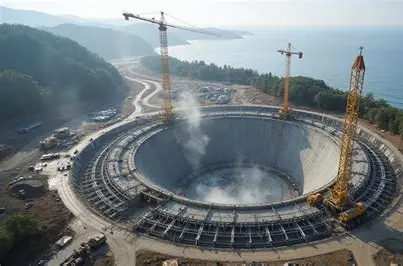
South Korea’s Nuclear Reactor Construction Market is witnessing renewed growth as the country reinforces nuclear energy’s role in ensuring energy security, industrial competitiveness, and carbon neutrality. South Korea operates 26 commercial nuclear reactors with approximately 26 GW of installed nuclear capacity, supplying nearly 30% of the nation’s electricity generation. As electricity demand increases due to semiconductor manufacturing, electric vehicle production, artificial intelligence infrastructure, and industrial electrification, the government is accelerating investments in new nuclear projects and reactor life-extension programs. Nuclear power remains a critical pillar of South Korea’s low-carbon energy strategy, supporting long-term expansion opportunities across engineering, construction, and technology development.
Key Market Drivers for South Korea’s Nuclear Reactor Construction Market
Expanding Nuclear Capacity Plans Drive New Construction Activity
South Korea continues to reinforce nuclear energy as a strategic pillar of its electricity system, operating 26 commercial reactors with approximately 26 GW of installed nuclear capacity. Nuclear power contributes nearly 30% of the country’s total electricity generation, providing reliable baseload power for residential, commercial, and industrial consumers. The government has announced plans to construct up to 13 additional nuclear reactors and extend the operational lifespan of existing units, creating substantial opportunities for reactor construction, engineering services, nuclear-grade equipment manufacturing, and supply chain development. These expansion plans are expected to generate billions of dollars in infrastructure investments over the coming decades.
Semiconductor Manufacturing and AI Infrastructure Fuel Electricity Demand
South Korea hosts one of the world’s largest semiconductor industries, accounting for a significant share of global memory chip production. The semiconductor, electronics, and battery manufacturing sectors require continuous, high-quality electricity supply to maintain operations. At the same time, investments in artificial intelligence, cloud computing, and hyperscale data centers are accelerating electricity consumption nationwide. Nuclear power plants typically operate at capacity factors exceeding 90%, making them a preferred source of reliable, round-the-clock power capable of supporting energy-intensive industrial operations and future digital infrastructure growth.
Carbon Neutrality and Energy Security Goals Strengthen Nuclear Investment
South Korea has committed to achieving net-zero carbon emissions by 2050, increasing the importance of low-carbon electricity generation technologies. Nuclear energy provides large-scale carbon-free electricity while reducing dependence on imported fossil fuels, which currently account for a substantial portion of the country’s energy supply. As part of its long-term energy strategy, the government aims to increase the share of nuclear power within the national electricity mix while complementing renewable energy deployment. Growing electrification of transportation, hydrogen production initiatives, and industrial decarbonization projects are expected to further strengthen demand for new reactor construction and advanced nuclear technologies.
Government Initiatives Supporting South Korea’s Nuclear Reactor Construction Market
The South Korean government continues to support nuclear development through long-term energy security strategies and carbon reduction policies. Under the country’s national energy roadmap, nuclear power is expected to maintain a major position in the electricity generation mix. The government has announced plans to build up to 13 new nuclear reactors by the late 2030s, while also extending the lifespan of existing facilities and investing in advanced reactor technologies. Additionally, significant funding is being directed toward reactor safety improvements, workforce development, and domestic nuclear supply chain enhancement, creating favorable conditions for future construction activities.
Competitive Landscape of South Korea’s Nuclear Reactor Construction Market
South Korea’s Nuclear Reactor Construction Market benefits from strong domestic engineering capabilities, advanced reactor technology expertise, and a highly developed manufacturing base. Competition is increasingly driven by construction efficiency, advanced reactor designs, safety standards, digital plant management systems, and modular construction methods. The country’s nuclear ecosystem supports reactor engineering, component manufacturing, fuel-cycle services, and plant operations, creating a highly integrated value chain. Growing investments in next-generation reactors and export-focused nuclear projects continue to strengthen market competitiveness.
Major Challenges Facing South Korea’s Nuclear Reactor Construction Market
High Capital Intensity and Long Project Development Cycles
Nuclear power projects require significant capital investment and lengthy approval processes. Managing financing requirements, construction schedules, and regulatory compliance remains critical for maintaining project viability and cost competitiveness.
Workforce and Supply Chain Sustainability
As reactor construction activity increases, ensuring the availability of skilled engineers, technical personnel, and nuclear-grade manufacturing capabilities remains essential. Continued investment in workforce training and supply chain resilience will be necessary to support future market growth.
Future Outlook
South Korea’s Nuclear Reactor Construction Market is expected to witness strong growth through 2035, supported by the country’s 26 GW+ operational nuclear capacity, plans to build up to 13 additional reactors, and increasing electricity demand from semiconductor manufacturing, AI data centers, electric vehicles, and hydrogen production. Nuclear power currently supplies nearly 30% of South Korea’s electricity generation, and its role is expected to expand as the country advances toward its net-zero emissions target. With reactor capacity factors typically exceeding 90%, nuclear energy will remain crucial for ensuring grid stability and industrial competitiveness. Additionally, growing investments in Small Modular Reactors (SMRs), advanced reactor technologies, and domestic nuclear supply chains are expected to create significant opportunities for engineering, construction, and equipment manufacturing companies across the nuclear value chain.
Consultants at Nexdigm, in their latest publication “South Korea Nuclear Reactor Construction Market Outlook to 2035,” analyse the sector By Reactor Technology Type (OPR1000 Standard Units, Apr1400 Gen III+ Reactors and APR1000 Export Variants), By Project Phase (Feasibility and Site Pressure Vessels and Control Rod Drive Mechanisms) and By Geographic Region (Gyeongju Site Cluster, Uljin County Cluster and Yeonggwang Cluster).
Nexdigm suggests that businesses in South Korea’s Nuclear Reactor Construction Industry prioritize advanced reactor technologies, modular construction methodologies, nuclear engineering expertise, and domestic supply chain development strategies to capitalize on the country’s 26 GW+ nuclear capacity, planned reactor expansion programs, growing electricity demand from semiconductors and AI infrastructure, and increasing need for reliable low-carbon baseload power generation.
To take the next step, simply visit our Request a Consultation page and share your requirements with us.
Harsh Mittal
+91-8422857704