
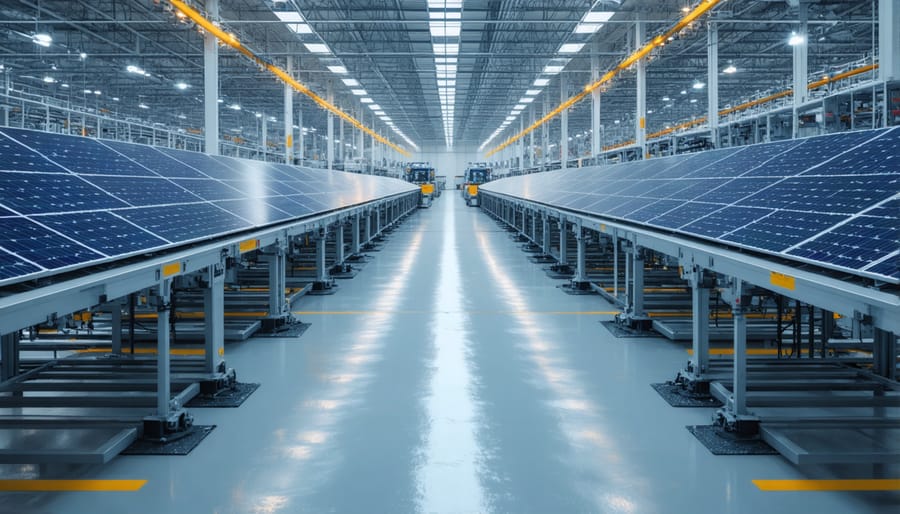
As South Korea accelerates its transition toward clean energy, an important question is emerging: what happens to solar panels once they reach the end of their useful life? While solar power has helped reduce dependence on fossil fuels, aging photovoltaic (PV) systems are creating a growing stream of solar waste that must be managed responsibly. With more than 30 GW of installed solar capacity and increasing focus on sustainability, the South Korea solar panel recycling industry is becoming a critical part of the country’s renewable energy journey. By recovering valuable materials such as glass, aluminum, and silicon, recyclers are helping create a more circular and resource-efficient energy ecosystem.
Market Drivers Advancing the South Korea’s Solar Panel Recycling Industry
Rising Volumes of End-of-Life Solar Panels
The biggest catalyst for market growth is the increasing number of solar panels approaching retirement. Most photovoltaic panels remain operational for approximately 25 to 30 years, meaning many of the systems installed during the country’s early solar expansion phase will soon require replacement. South Korea’s cumulative solar power capacity has surpassed 30 GW, creating a strong foundation for future recycling demand. As more panels reach the end of their lifecycle, recycling facilities will face a significant increase in incoming material volumes. This trend is encouraging investors and waste management firms to establish specialized recycling plants capable of handling large-scale photovoltaic waste while minimizing environmental impact.
South Korea’s Push Toward a Circular Economy
Solar panels contain highly recoverable materials. Glass typically represents around 70% to 75% of a panel’s composition, while aluminum accounts for roughly 10% to 15%. Instead of sending these materials to landfills, recycling allows them to be reused in manufacturing and construction applications. For South Korea, which actively promotes resource efficiency and waste reduction, solar panel recycling aligns perfectly with broader circular economy goals. The ability to recover valuable raw materials also reduces reliance on imported resources and supports sustainable industrial development.
Continued Expansion of Renewable Energy Projects
Solar energy remains a key pillar of South Korea’s clean energy strategy. New utility-scale, commercial, and residential solar projects continue to be deployed across the country. Every new installation contributes to the future recycling pipeline. As developers and asset owners become more aware of long-term waste management responsibilities, demand for specialized collection, dismantling, and recycling services is expected to increase steadily.
Government Initiatives Supporting the South Korea Solar Panel Recycling Industry
The South Korean government is strengthening efforts to promote responsible management of renewable energy waste. Resource circulation policies and environmental regulations are encouraging the recovery and reuse of materials from end-of-life solar modules. Broader carbon neutrality objectives and sustainability initiatives are also supporting investment in modern recycling infrastructure. As policymakers place greater emphasis on waste reduction and resource recovery, the industry is expected to benefit from a more favorable regulatory environment.
Competitive Landscape of the South Korea Solar Panel Recycling Sector
The market is gradually becoming more competitive as recycling specialists, waste management companies, renewable energy firms, and technology providers expand their capabilities. Many organizations are investing in advanced separation technologies that improve recovery rates of silicon, silver, aluminum, and glass. Strategic partnerships between solar developers and recycling operators are also becoming increasingly common as stakeholders prepare for higher volumes of photovoltaic waste in the coming years.
Challenges Facing South Korea’s Solar Panel Recycling Industry
High Processing and Recovery Costs
Despite its environmental benefits, solar panel recycling can still be more expensive than traditional disposal methods. Specialized equipment, labor-intensive processing, and material separation technologies contribute to higher operational costs. Until recycling volumes increase further, maintaining profitability may remain a challenge for some operators.
Collection and Logistics Barriers
Efficiently collecting and transporting retired solar panels from different regions of the country presents another obstacle. Solar modules vary in design and material composition, making standardized recycling processes difficult. Developing nationwide collection systems and expanding treatment capacity will be essential for handling future waste streams effectively.
Future Outlook
The outlook for South Korea’s solar panel recycling industry remains highly positive. As large numbers of solar panels gradually reach the end of their operational life, recycling will shift from a niche activity to an essential component of the renewable energy value chain. Advancements in material recovery technologies, stronger environmental regulations, and growing awareness of circular economy principles are expected to accelerate market development. With solar capacity continuing to expand and sustainability becoming a national priority, the industry is well positioned to transform solar waste into valuable resources while supporting South Korea’s long-term green growth ambitions.
Consultants at Nexdigm, in their latest publication “South Korea Solar Panel Recycling Market Outlook to 2035” analyze the sector By Material Recovery Output (High-Purity Silicon Recovery, Silver Paste Reclamation and Tempered Glass Recycling), By Recovery Process (Mechanical Separation, Thermal Declamation and Chemical Leading) and By End User Segment (Utility-Scale Solar Farms, Solar Off-Grid Microgrids and Government and Public Infrastructure).
Nexdigm suggests that businesses in “South Korea Solar Panel Recycling Industry” focusses on oilfield, desalination, construction, and industrial applications, strengthen local warehousing, develop application-specific grades, improve technical support, and build resilient sourcing networks to serve expanding energy, water, and manufacturing demand.
To take the next step, simply visit our Request a Consultation page and share your requirements with us.
Harsh Mittal
+91-8422857704