
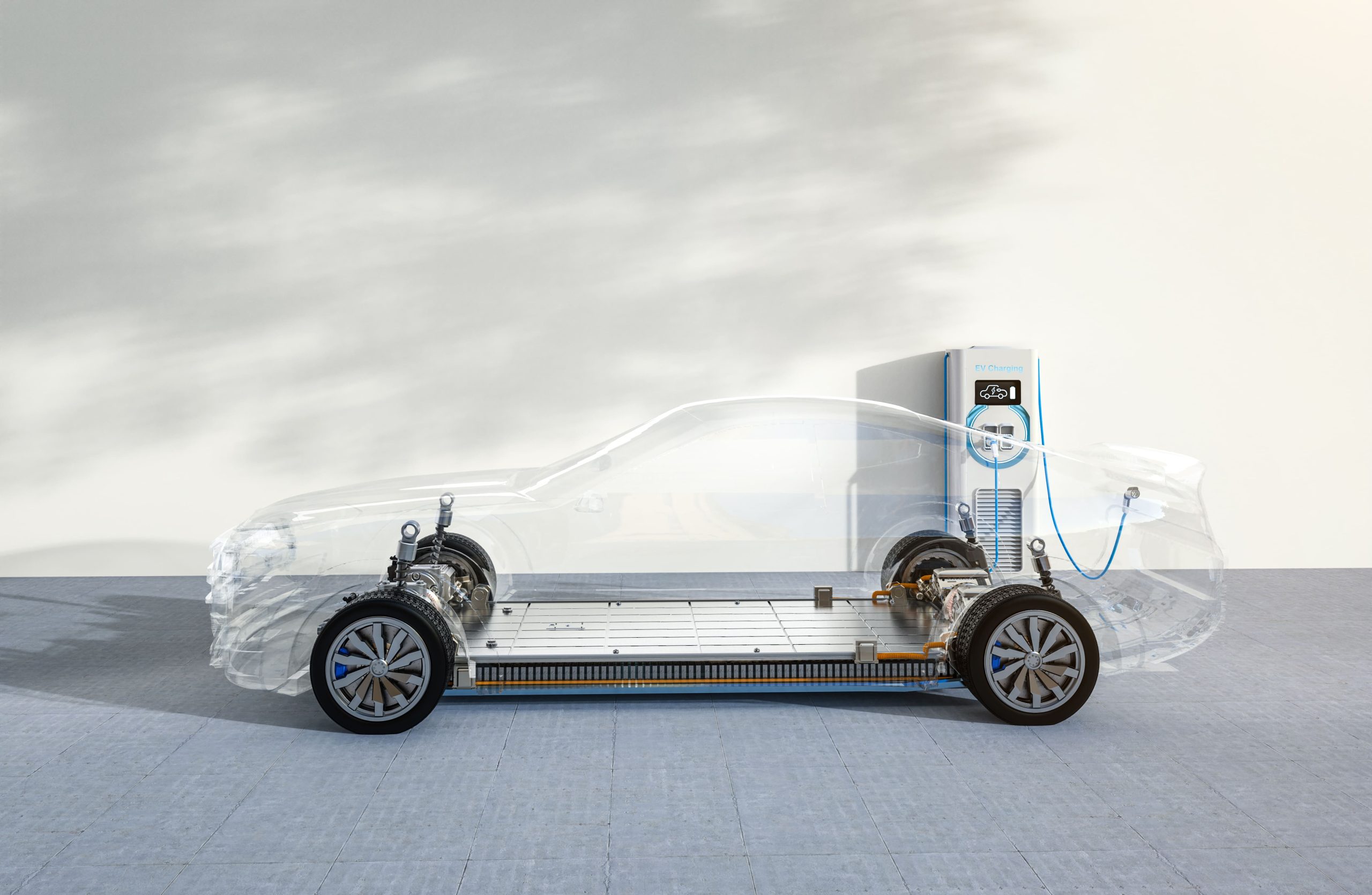
Spain’s EV battery market has moved from being a supporting piece of the European auto story to becoming one of its more closely watched segments. The reason is fairly simple: Spain already has a deep automotive manufacturing base, and as Europe shifts away from internal combustion engines, battery production is becoming just as important as vehicle assembly. Until recently, Spain depended heavily on imported battery cells and components, especially from Asia, even while producing vehicles for major European brands. That gap is now starting to narrow. Investments in local cell plants, stronger EU industrial policy, and a more serious push toward electrified transport are changing the economics of the market. By 2035, Spain could become one of Southern Europe’s most important battery manufacturing locations, though raw material dependence and cost competitiveness will still shape how far it can go.
What’s Driving the EV Battery Market in Spain?
Rising EV Production Across Spain’s Auto Base
Spain’s role as one of Europe’s largest vehicle manufacturing countries gives it a natural advantage in batteries. Carmakers with assembly operations in cities such as Zaragoza, Valencia, and Martorell are steadily shifting model lines toward electric vehicles. That matters because batteries are not a side component in EVs – they are the cost center, the performance differentiator, and often the deciding factor in supply chain planning. In practice, once EV production scales up locally, battery sourcing nearby becomes less of a preference and more of an operational necessity.
Gigafactory Investments Are Changing the Math
A few years ago, Spain was largely seen as an automotive assembly location. Now it is drawing attention for large battery manufacturing projects, especially in Valencia and other industrial corridors. These facilities are important not only for output, but for what they attract around them: cathode suppliers, pack assemblers, logistics providers, and recycling partners. That clustering effect tends to lower long-term costs. It also makes Spain more relevant in the broader European battery race, where Germany and France have traditionally captured more of the headlines.
EU Policy and Energy Transition Pressure
There is also a regulatory push behind the market. EU decarbonization targets, tighter fleet emission standards, and funding support for clean mobility have made battery investment more financially viable than it would have been five years ago. On the ground, this has translated into subsidies, industrial grants, and pressure on automakers to localize parts of their EV supply chains. Spain benefits here because it offers lower industrial operating costs than some Western European peers, which is a practical advantage when margins are under pressure.
Government-Led Initiatives
The Spanish government has played a visible role in accelerating the sector, particularly through the PERTE program for electric and connected vehicles. Public funding has been directed toward battery plants, EV assembly, charging infrastructure, and related R&D. That support matters because battery manufacturing is capital-intensive and difficult to justify on private investment alone in the early years. Spain has also benefited from EU-level industrial funding tied to energy transition and strategic manufacturing. The policy direction is clear: Europe wants more battery production inside the region, and Spain is one of the countries being actively backed to make that happen.
Market Competition
Competition in Spain’s EV battery market is becoming more serious and, frankly, more crowded. Global battery producers, automakers, and energy firms are all trying to secure a place in the value chain. Companies tied to Volkswagen, CATL, LG Energy Solution, and other major players have shaped the conversation around future capacity. At the same time, local and regional firms are trying to carve out roles in battery pack assembly, materials processing, and recycling. The market is still far from mature, but one thing is already clear: scale will matter, and smaller players without partnerships may struggle to stay relevant.
High Import Dependency and Supply Chain Risks
One of the biggest weak points in Spain’s battery story is that local manufacturing does not automatically mean local independence. Battery cells may increasingly be made in Spain, but critical materials such as lithium, nickel, cobalt, and processed graphite still rely heavily on global supply chains. A common challenge is that Europe wants battery security without fully controlling the upstream inputs required to achieve it. That leaves manufacturers exposed to pricing shocks, geopolitical disruption, and sourcing bottlenecks. Recycling will help over time, but it will not solve the raw material issue fast enough on its own.
Future Outlook
Looking ahead to 2035, Spain has a credible opportunity to become a major EV battery production center within Europe, especially if current factory announcements convert into stable commercial output. Local cell production, battery recycling, and next-generation chemistries such as solid-state are likely to shape the next phase of the market. Still, this is not guaranteed success. Spain has the industrial base and policy support, but long-term competitiveness will depend on electricity costs, execution speed, and whether manufacturers can secure enough upstream supply. In practical terms, the winners will be firms that treat Spain not just as a low-cost manufacturing location, but as a serious long-term battery production hub.
Consultants at Nexdigm, in their latest publication “Spain EV Battery Market Outlook to 2035”, analyze the market by Battery Type (Lithium-ion, Solid-State, Others), By Vehicle Type (Passenger Vehicles, Commercial Vehicles, Two-Wheelers), and By End Use (OEMs, Aftermarket, Energy Storage Systems). Nexdigm believes businesses should prioritize local supply partnerships, battery recycling capacity, and technology-led differentiation to stay competitive in Spain’s evolving EV battery market.
To take the next step, simply visit our Request a Consultation page and share your requirements with us.
Harsh Mittal
+91-8422857704