

For years, logistics procurement was largely driven by cost. Freight rates, warehouse costs, carrier capacity, and volume discounts dominated negotiations between businesses and their supply chain partners. That equation is changing.
Repeated disruptions have made continuity, flexibility, and delivery reliability more commercially important. Businesses are increasingly evaluating logistics providers on how well they can respond when a route is disrupted, a shipment is delayed, or inventory needs to be repositioned. The question is increasingly about the value a logistics partner can protect, not simply the rate it can offer.
The Procurement Brief Is Getting Broader
Enterprise shippers are looking beyond transportation capacity and warehouse space. They increasingly expect logistics partners to coordinate physical operations with technology and exception management.
Demand is emerging for capabilities such as:
- Multi-modal orchestration: Shifting freight between road, rail, sea, and air when conditions or economics change.
- Supply chain control towers: Bringing carrier, warehouse, and shipment data into a common operating view.
- Inventory orchestration: Positioning stock across facilities to balance service levels with working capital.
- Disruption monitoring: Identifying events such as port congestion, weather disruptions, labor strikes, or geopolitical risks and triggering alternate actions.
For logistics providers, this changes the basis of competition. Basic capacity can become increasingly commoditized, while integrated services can support longer contracts and stronger margins.
Reliability Is Becoming a Commercial Requirement
Speed alone does not determine logistics performance. For many businesses, consistency matters just as much.
Manufacturers operating with tightly coordinated production schedules can face significant costs when inbound shipments arrive late. Retailers can similarly incur chargebacks when deliveries miss specified windows. As a result, enterprise contracts increasingly measure performance through on-time pickup, transit milestones, appointment compliance, order accuracy, and OTIF performance.
Consistent lead times can also reduce the need for inventory buffers. A provider that can deliver reliably therefore creates value beyond transportation itself, giving customers a potential reason to pay for a higher service tier.
Visibility Only Matters When It Changes an Outcome
Real-time tracking has become increasingly common, but a shipment appearing on a map does not necessarily improve supply chain performance.
The greater commercial value lies in connecting tracking data to operational decisions. If a shipment is delayed at a port or customs checkpoint, the system should identify the downstream impact, recalculate the expected arrival, and initiate an appropriate response.
That could mean notifying a receiving facility, reallocating inventory, changing a delivery route, or securing alternative transport capacity. Logistics providers capable of turning visibility into intervention can occupy a more strategic position than those offering tracking alone.
Resilience Has to Be Priced
Resilience comes with a cost. Dual sourcing can reduce supplier concentration but may sacrifice volume discounts. Regional inventory buffers improve continuity but tie up working capital. Maintaining secondary carriers or additional facilities creates redundancy that a purely cost-optimized network would avoid.
The commercial question is therefore not whether businesses want resilience. It is which resilience capabilities they value enough to pay for.
This distinction matters for logistics providers deciding where to invest. A capability that customers consider essential but will not pay extra for may need to become part of the base offering. One that addresses a costly operational risk and commands a premium can become a differentiated service.
What Are Enterprise Buyers Willing to Pay For?
Nexdigm’s research illustrates this gap between basic capability and differentiated value. Among 104 enterprise shippers assessed, 73% considered passive GPS tracking a baseline requirement rather than a premium service.
The demand for proactive services was considerably stronger. 64% of respondents reported significant financial consequences from transport-related production stoppages and late-delivery chargebacks, while 58% indicated willingness to pay an 8%–12% premium for guaranteed OTIF delivery combined with proactive exception management.
The opportunity, therefore, lies in understanding which capabilities solve material business problems, and which have already become table stakes. This is where supply chain demand analysis can help logistics providers align their portfolios with actual enterprise buying priorities.
Nexdigm’s Approach to Measuring Supply Chain Demand
Nexdigm evaluates demand by connecting buyer expectations with operational capabilities and commercial value.
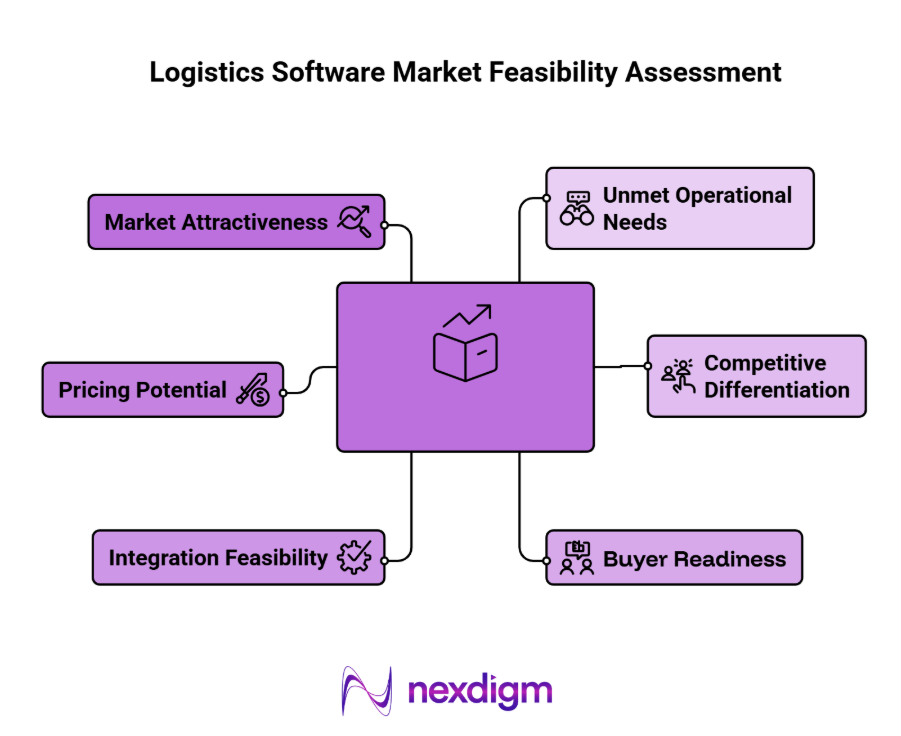
- Segment enterprise buyers: Classify customers by their emphasis on cost, service performance, and resilience.
- Identify capability gaps: Compare provider performance across OTIF, visibility, integration, and disruption response.
- Measure willingness to pay: Determine which services justify premiums and which are already considered standard.
- Benchmark competitors: Assess how competing providers package technology, infrastructure, and resilience capabilities.
- Prioritize demand: Identify sectors and customer groups with the strongest need and commercial potential.
- Redesign the portfolio: Translate the findings into service tiers, SLAs, pricing structures, and target-account priorities.
How Nexdigm Helped Turn Resilience into a Premium Service
A contract logistics provider serving major CPG, chemical, and automotive shippers faced declining margins and enterprise churn. Nexdigm interviewed 104 procurement and supply chain executives and found 58% willing to pay an 8%–12% premium for guaranteed OTIF and proactive exception management.
Following a portfolio redesign, enterprise conversion rose from 12% to 34%, retention from 79% to 92%, average contract value increased 26%, and operating margins improved by 340 basis points.
To take the next step, simply visit our Request a Consultation page and share your requirements with us.
Harsh Mittal
+91-8422857704