

Sustainability is becoming a significant consideration in agricultural procurement as businesses face growing expectations around environmental impact, responsible production, and supply chain transparency. India’s organic sector reflects this shift: during 2024–25, approximately 2.25 million hectares were under organic cultivation certification, while organic product exports reached 368,155 metric tonnes, valued at around USD 665.97 million.
The environmental implications are equally important. According to the FAO, global agrifood systems generated 18.5 billion tonnes of CO₂-equivalent emissions in 2024, accounting for 35% of total emissions. These developments highlight why procurement decisions must consider more than cost and availability. Sustainable agriculture sourcing research helps businesses examine input choices, supplier practices, and environmental considerations through a structured market-led approach.
Rethinking What Makes an Agricultural Input Sustainable
Sustainable sourcing requires businesses to look beyond product labels and assess the wider impact of agricultural inputs. Factors such as resource consumption, chemical use, production methods, packaging, and transportation influence the sustainability profile of a product. Evaluating these considerations together helps procurement teams distinguish credible alternatives from options that offer limited environmental or operational benefits.
What are the Factors that Shape Sustainable Sourcing Decisions
A practical sourcing assessment should connect environmental priorities with supplier suitability and procurement requirements. Three considerations are particularly relevant:
- Low-impact Input Selection: Assess inputs based on resource efficiency, environmental footprint, production methods, and suitability for the intended agricultural application.
- Responsible Vendor Practices: Examine supplier certifications, traceability systems, labour standards, waste management, and environmental policies to understand their sourcing practices.
- ESG Alignment and Transparency: Evaluate available sustainability disclosures, compliance records, and measurable indicators to determine whether suppliers support organizational ESG priorities.
Considering these factors together enables businesses to assess sustainability claims more carefully and prioritize sourcing options that meet both commercial and environmental expectations.
Nexdigm’s Role in Identifying Sustainable Agricultural Sourcing Opportunities
Our sustainable agriculture sourcing research combines market research, supplier intelligence, and commercial assessment to help businesses understand the availability and suitability of sustainable agricultural inputs. It focuses on the following areas:
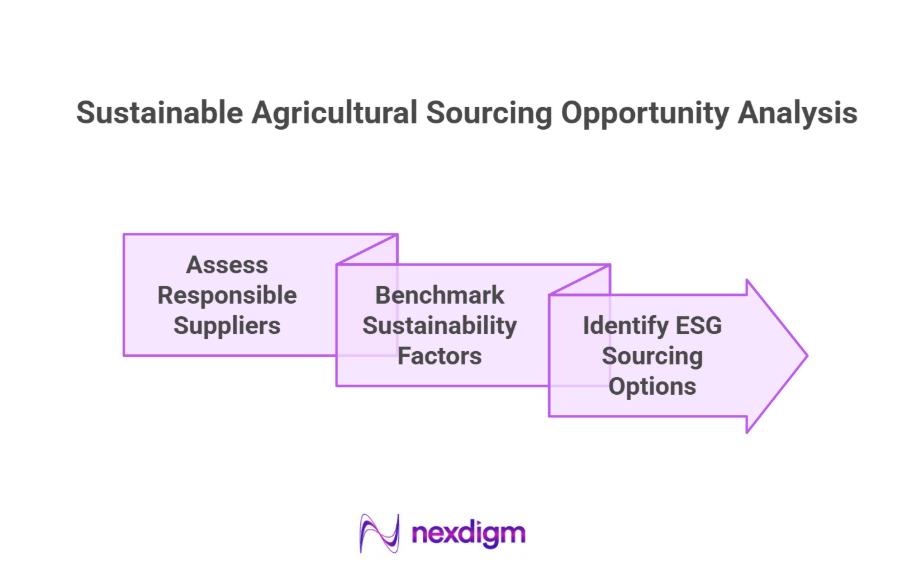
- Assessing Responsible Suppliers: Research vendors based on product portfolios, certifications, traceability practices, environmental initiatives, and available operational information.
- Benchmarking Sustainability and Commercial Factors: Compare supplier offerings across pricing, product specifications, availability, sustainability credentials, and other procurement considerations.
- Identifying ESG-Aligned Sourcing Options: Evaluate potential suppliers and input categories against relevant environmental, social, and governance priorities to support sourcing decisions.
This expert-led research enables procurement teams to make more structured decisions and integrate responsible sourcing practices into their longer-term agricultural procurement strategies.
How Nexdigm’s Research Answers Key Sustainable Sourcing Questions
Our research helps businesses address important questions before selecting sustainable agricultural inputs and suppliers:
- Which Sustainable Inputs Are Available in the Market? Identify organic, bio-based, and resource-efficient alternatives across relevant agricultural categories and assess their market availability.
- Which Suppliers Demonstrate Responsible Practices? Examine vendor certifications, traceability, environmental initiatives, product capabilities, and available sustainability information to evaluate supplier suitability.
- How Do Sustainable Options Compare Commercially? Benchmark pricing, product specifications, supply availability, and sustainability credentials to understand the practical feasibility of alternative sourcing options.
- Which Opportunities Align with ESG Priorities? Assess potential sourcing options against relevant environmental, social, and governance considerations to support procurement planning.
By answering these questions through market-led research, our experts help businesses turn sustainability objectives into clearer supplier evaluation criteria and actionable sourcing priorities.
Nexdigm’s Case
A food processing company engaged Nexdigm to identify sustainable sourcing alternatives for key agricultural inputs across three procurement markets. The assessment reviewed 24 suppliers and found that 29% had limited sustainability documentation, while 21% lacked clear product traceability information. Based on the findings, the company shortlisted 7 suppliers for further evaluation against its environmental and commercial sourcing requirements.
To take the next step, simply visit our Request a Consultation page and share your requirements with us.
Harsh Mittal
+91-8422857704