

Enterprise technology stacks are becoming increasingly complex as organizations combine cloud platforms, enterprise applications, infrastructure providers, cybersecurity solutions, data platforms, AI tools, and specialized technology vendors. The question is no longer only which technology performs best, but which vendors control strategic layers of the enterprise ecosystem.
Recent market trends highlight the scale of technology-platform adoption. Cloud infrastructure spending surpassed $300 billion globally in 2024, reflecting continued enterprise migration toward cloud-based technology ecosystems. Additionally, more than 70% of enterprises are increasing investments in AI capabilities, creating new demand for infrastructure providers, data platforms, software vendors, and technology partners.
As technology ecosystems expand, value creation is distributed across multiple players. Hyperscalers, software providers, system integrators, managed service providers, and niche specialists compete to influence enterprise technology decisions and long-term platform adoption.
For technology companies, software vendors, cloud providers, investors, CIOs, CTOs, and strategy teams, a Technology vendor ecosystem analysis helps evaluate vendor positioning, platform influence, partner networks, competitive dynamics, ecosystem control points, and commercial opportunities.
Understanding the Technology Vendor Ecosystem
Enterprise technology environments are built through a network of platforms, software vendors, service providers, integrators, and specialists. Rather than relying on a single technology provider, organizations combine multiple vendors that collectively influence architecture decisions, digital transformation initiatives, and long-term technology adoption. Key Ecosystem Participants include:
- Platform Providers: Cloud, enterprise software, data, and AI vendors that form the foundation of the technology stack.
- Technology Partners & ISVs: Vendors that extend platform capabilities through specialized applications and integrations.
- System Integrators: Consulting and implementation partners that guide technology selection, deployment, and transformation programs.
Why Ecosystem Analysis Matters
Technology vendor ecosystem analysis helps organizations identify which vendors control critical layers of the technology stack, understand how partner networks influence technology decisions, assess risks associated with vendor dependency, and uncover opportunities for partnerships, acquisitions, and growth.
As enterprise technology environments become increasingly interconnected, competitive advantage is increasingly determined not only by product capabilities but also by ecosystem strength, partner relationships, integration reach, and the ability to influence long-term technology adoption across the broader enterprise landscape
How Nexdigm Helps Navigate the Technology Vendor Ecosystem
As technology ecosystems become more complex, organizations need a structured approach to evaluate vendor influence, platform dependencies, partner networks, and emerging competitive dynamics.
Nexdigm’s Technology Vendor Ecosystem Analysis helps organizations understand the vendors, platforms, partners, and service providers shaping enterprise technology decisions. Through ecosystem mapping and market intelligence, Nexdigm helps the clients with:
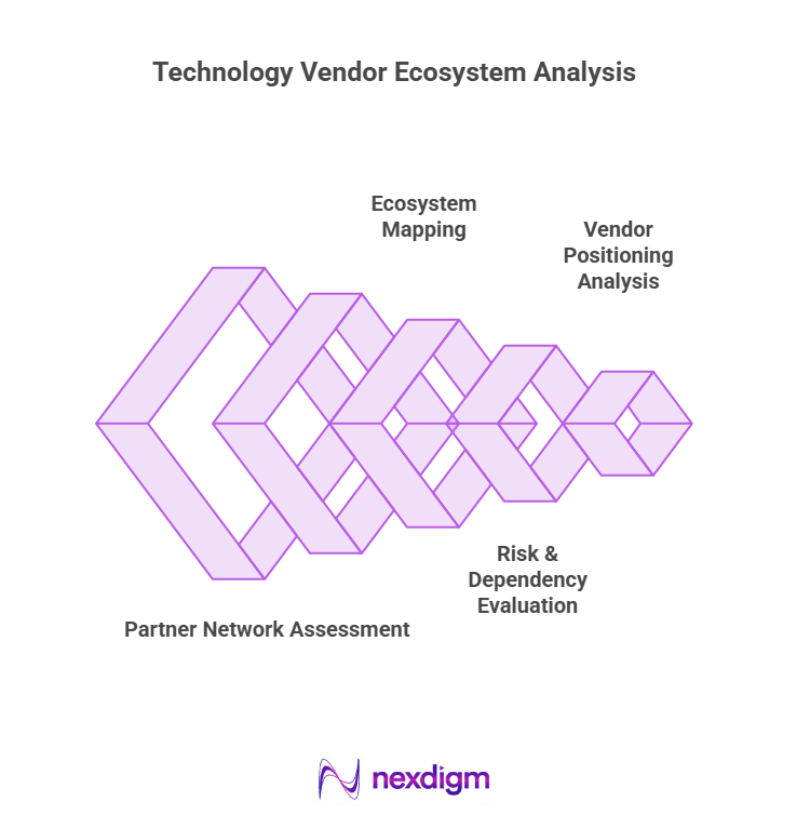
- Ecosystem Mapping: Identifying key technology vendors, partners, integrators, and specialists across the value chain to reveal influence, dependencies, and market relationships.
- Vendor Positioning Analysis: Evaluating market standing, competitive strengths, differentiation, and strategic importance within the broader technology ecosystem.
- Partner Network Assessment: Analyzing alliances, channel partners, and ecosystem relationships that drive technology adoption, customer reach, and market expansion.
- Risk & Dependency Evaluation: Identifying platform concentration risks, vendor dependencies, and ecosystem control points that may impact long-term business strategy.
As enterprise technology ecosystems grow more interconnected, Nexdigm’s structured Technology Vendor Ecosystem Analysis enables organizations to identify ecosystem leaders, assess strategic dependencies, uncover growth opportunities, and strengthen their competitive positioning in an evolving technology landscape.
Nexdigm in Assessing Potential Technology Vendors
To help clients identify the right technology partners and platforms, Nexdigm assesses vendors across multiple strategic and operational dimensions:
- Market Position & Influence: Evaluate vendor market presence, customer adoption, brand strength, and overall influence within the technology ecosystem.
- Platform & Technology Capabilities: Assess the breadth, scalability, innovation, and future readiness of technology offerings, including cloud, AI, data, and cybersecurity capabilities.
- Partner Ecosystem Strength: Analyze alliance networks, channel partnerships, and integration ecosystems that drive market reach and platform adoption.
- Competitive Differentiation: Identify unique strengths, value propositions, and competitive advantages relative to peer vendors.
- Customer & Industry Relevance: Examine customer base, industry specialization, use cases, and alignment with enterprise requirements.
This structured assessment helps clients gain a clear understanding of which vendors are best positioned to create value, influence technology decisions, and support long-term business objectives.
Nexdigm in Delivering Technology Vendor Ecosystem Insights
Nexdigm’s assessment approach helps clients understand not only who the key ecosystem players are, but also how vendor relationships, partnerships, and competitive dynamics influence technology adoption and market opportunities. Some key deliverables include:
- Technology Ecosystem Maps identifying platforms, partners, integrators, service providers, and specialist vendors.
- Vendor Landscape Assessments highlighting market leaders, challengers, emerging players, and niche specialists.
- Partner & Alliance Analysis evaluating ecosystem relationships and go-to-market influence.
- Competitive Intelligence Reports benchmarking vendors across strategic and operational dimensions.
- Opportunity & Risk Assessments identifying growth areas, ecosystem gaps, dependencies, and market entry opportunities.
This analysis enables organizations to develop a clearer understanding of ecosystem dynamics and make informed decisions that align technology investments with long-term business objectives.
Nexdigm’s Case
A global enterprise technology provider engaged Nexdigm to evaluate its vendor ecosystem, platform positioning, and partnership opportunities across cloud, software, and integration markets. The assessment benchmarked 50+ technology vendors, identified 8 strategic partnership opportunities, and improved ecosystem prioritization by 22%, supporting stronger market positioning, alliance decisions, and expansion planning.
To take the next step, simply visit our Request a Consultation page and share your requirements with us.
Harsh Mittal
+91-8422857704