

Temperature-controlled transport pricing varies across pharmaceuticals, food, and perishable goods because each sector carries different compliance, packaging, monitoring, transit, and product-risk requirements. Effective temperature controlled transport pricing benchmarking combines pricing analysis with temperature bands, shipment value, route duration, refrigeration intensity, energy consumption, carrier performance, and regulatory obligations.
This comparison helps businesses validate premium rates, identify cost gaps, negotiate stronger contracts, and align charges with service complexity. It also supports transparent cost recovery, improved margin control, lower excursion exposure, and reliable cold-chain performance across domestic and cross-border distribution networks sustainably today.
A 2026 optimization study across five anonymous cold-chain market sites reduced annualized costs by up to 15%, lowered battery capacity by 67%, cut total costs by 8%, and reduced thermal-storage capacity by 35%, demonstrating stronger transport pricing and infrastructure efficiency.
Commercial Pricing Analysis for Cold Chain Transportation Services
Commercial pricing analysis helps cold chain operators align transport rates with temperature requirements and service performance, improving profitability, transparency, resilience, and contract competitiveness across sectors. Structured steps for the analytical process are:
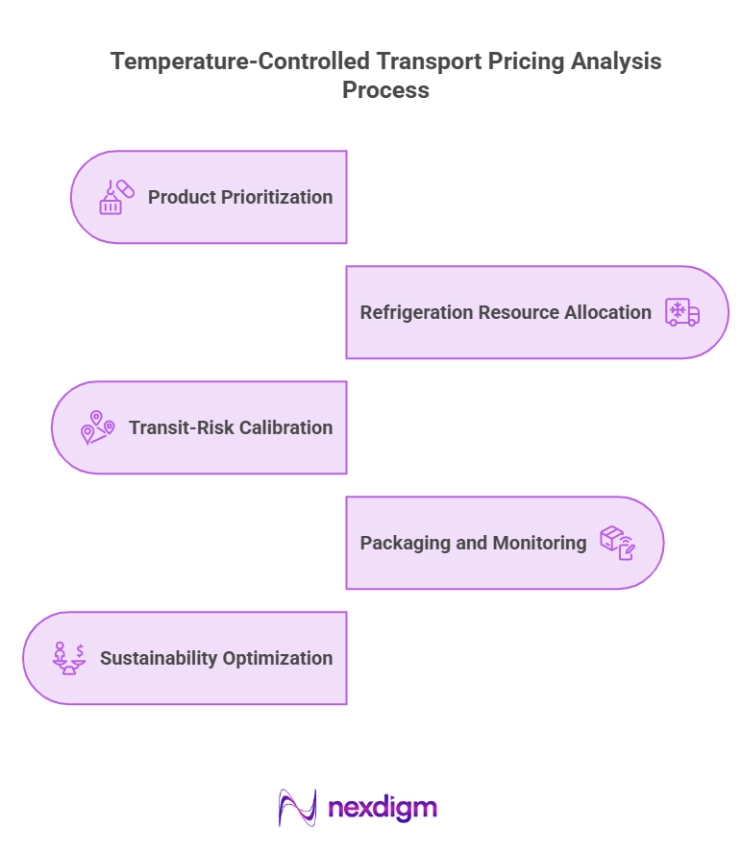
- Product Prioritization Step: Transport pricing is differentiated according to product value, shelf life, spoilage sensitivity, and replacement costs, ensuring critical pharmaceutical and perishable shipments receive commercially appropriate pricing treatment.
- Refrigeration Resource Allocation Step: Cooling equipment utilization, refrigeration cycles, fuel consumption, and storage dependencies are analyzed to distribute infrastructure costs accurately across temperature-controlled transportation services and routes.
- Transit-Risk Calibration Step: Climate exposure, border delays, infrastructure reliability, and temperature excursion probabilities are evaluated to establish risk-adjusted pricing structures for domestic and international cold-chain operations.
- Packaging and Monitoring Assessment Step: Insulated packaging, data loggers, IoT sensors, coolant requirements, and real-time tracking costs are incorporated into pricing to reflect shipment protection and compliance requirements.
- Sustainability Optimization Step: Pricing scenarios are tested against margins, customer demand, energy fluctuations, and carrier capabilities to create commercially sustainable transport models that balance profitability with service reliability.
Nexdigm’s Advisory Support for Cold Chain Transport Pricing Analysis
Nexdigm supports businesses with cold chain transport cost-to-serve analysis through pricing analysis, pricing intelligence, logistics cost benchmarking, and route economics assessment. By evaluating refrigeration expenses, carrier rates, compliance premiums, energy consumption, and shipment risks, Nexdigm helps optimize pricing strategies, improve margin visibility, strengthen contract negotiations, and build resilient, temperature-controlled transportation networks across industries across pharma, food, and perishable sectors globally.
Nexdigm’s Integrated Cold Chain Transport Pricing Intelligence Framework
Nexdigm’s integrated framework combines cost intelligence, lane benchmarking, compliance inputs, and carrier performance data to help businesses improve pricing accuracy across sectors sustainably. Some important features of the framework model are:
- Carrier Rate Benchmarking: Carrier quotations, surcharges, service reliability, excursion frequency, and capacity are compared across providers, enabling stronger negotiations and more commercially balanced refrigerated transport agreements.
- Compliance Cost Integration: Validation, documentation, audits, certifications, monitoring, and traceability expenses are incorporated into pricing models, helping businesses recover regulatory costs transparently across temperature-controlled transportation services.
- Performance-Linked Pricing Control: Commercial terms are connected to temperature stability, on-time delivery, documentation accuracy, and excursion rates, improving carrier accountability while protecting service quality and contract value.
- Pricing Governance Dashboard: Centralized dashboards allow lane costs, carrier rates, compliance metrics, service performance, and margin variances, supporting faster decisions and continuous cold chain pricing optimization.
Nexdigm’s Case
Nexdigm supported a global pharmaceutical company by benchmarking cold chain transport, strengthening temperature monitoring, and optimizing storage practices. The engagement reduced product spoilage by 20%, improved delivery reliability by 28%, and enhanced compliance, operational visibility, product integrity, and supply chain resilience.
To take the next step, simply visit our Request a Consultation page and share your requirements with us.
Harsh Mittal
+91-8422857704