
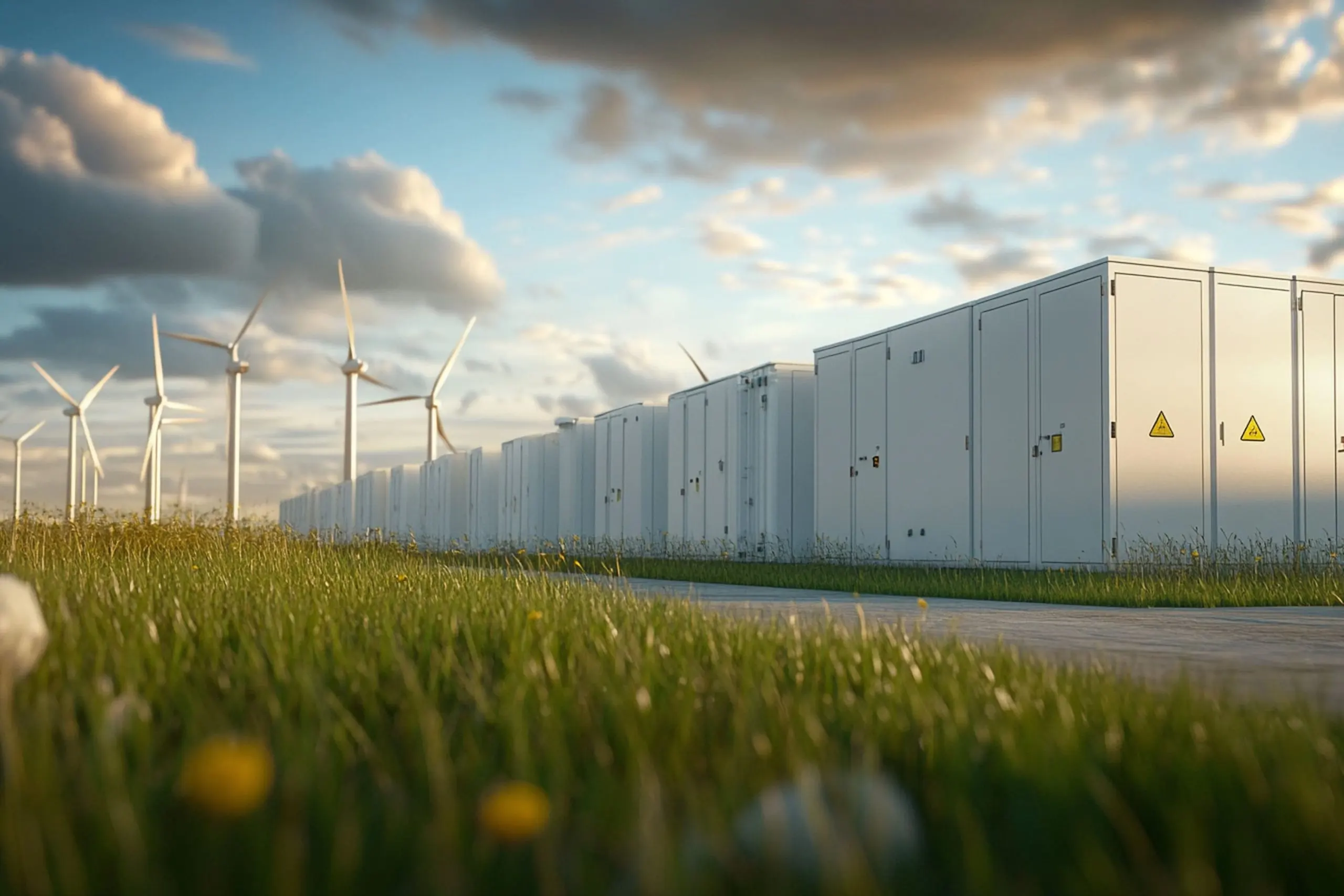
Thailand’s power sector is entering a very different phase from what it looked like a decade ago. Solar farms are spreading across industrial zones, electric vehicle production is gaining momentum, and manufacturers are paying closer attention to energy reliability than ever before. In that environment, energy storage has shifted from being a niche technology discussion to a practical necessity. As of 2026, Thailand remains one of Southeast Asia’s more active renewable energy markets, supported by long-term clean energy targets under the national Power Development Plan. Yet renewable expansion has also exposed a weakness in the grid. Solar power generation peaks during the daytime, while industrial electricity demand often stretches well into the evening. Battery energy storage systems are increasingly being viewed as the bridge between those two realities. The market is still developing, but momentum is clearly building across utilities, factories, and commercial facilities.
What’s Driving the Energy Storage Market in Thailand?
Renewable Energy Expansion and Grid Stability Concerns
Thailand has aggressively expanded solar installations over the past few years, particularly through utility-scale projects and rooftop solar programs. While this has reduced dependence on imported fossil fuels, it has also created balancing issues for grid operators. In practice, solar generation does not always align with consumption patterns. During periods of excess generation, energy storage systems help absorb unused electricity and release it later when demand rises. Large battery projects attached to solar farms are becoming more common because utilities are under pressure to maintain stable power quality. On the ground, this matters for industrial users who cannot afford sudden voltage fluctuations or outages. A common challenge is that renewable adoption moves faster than transmission upgrades, so storage often becomes the quicker short-term solution.
Industrial Energy Demand and Rising Electricity Costs
Thailand’s industrial base plays a major role in the country’s economy, especially sectors such as automotive manufacturing, electronics, and food processing. These facilities consume large amounts of electricity and are becoming increasingly sensitive to energy costs. Many factories are now combining rooftop solar with battery storage to lower peak-hour electricity expenses and maintain backup power during disruptions. There is also growing interest from companies tied to export markets. Manufacturers supplying global brands are under pressure to improve sustainability metrics, particularly carbon reduction targets. Energy storage helps firms manage renewable energy usage more effectively while reducing reliance on diesel generators, which remain common in some industrial areas.
Battery Technology Improvements and EV Momentum
Five years ago, battery storage economics looked far less attractive in Thailand. That situation has changed noticeably. Lithium-ion battery prices have declined, and battery performance has improved enough to make commercial deployment more realistic for both utilities and private businesses. Thailand’s ambitions in electric vehicle manufacturing are also influencing the storage sector. The country has attracted investments from companies such as BYD and CATL, largely because Southeast Asia is becoming an important EV production base. As battery manufacturing capacity expands locally, the spillover effect on stationary energy storage could become significant. Cheaper regional supply chains may eventually reduce project costs for Thai developers and industrial users.
Government-Led Initiatives Supporting Energy Storage
The Thai government has gradually shifted from simply promoting renewable power generation to supporting broader grid modernization efforts. Policies linked to the Alternative Energy Development Plan and national EV roadmap are encouraging investment in battery manufacturing, charging infrastructure, and smart energy systems. State-backed utilities have also started pilot battery projects to test large-scale storage integration. What stands out is that Thailand is taking a relatively practical approach compared to some neighboring markets. Instead of rushing into massive storage deployment targets, policymakers appear more focused on phased implementation tied to actual grid needs and industrial demand. That could help avoid oversupply problems that some renewable-heavy markets have experienced elsewhere.
Market Competition and Industry Landscape
The Thailand energy storage market remains moderately competitive, with international battery manufacturers competing alongside local energy firms and engineering companies. Major participants include Tesla Energy, BYD Company, Fluence Energy, CATL, and Sungrow Power Supply. Several Thai utilities and industrial groups have entered joint ventures to secure technology partnerships and improve local deployment capabilities. The market still lacks full standardization, especially in project financing and long-term maintenance frameworks. Some buyers remain cautious because battery replacement costs and recycling infrastructure are not yet fully mature in the country.
High Capital Costs and Infrastructure Gaps
Despite falling battery prices, upfront investment remains one of the biggest barriers for wider adoption. Large-scale storage projects require substantial spending not only on batteries but also on grid integration systems, cooling technology, and software management tools. Smaller businesses often struggle to justify these costs without government incentives or long-term electricity savings visibility. Battery recycling is another issue that receives less attention than it should. Thailand’s storage market may expand rapidly through 2035, but disposal and recycling infrastructure still trails behind future demand projections. Without proper planning, this could become both an environmental and economic concern later in the decade.
Future Outlook
Thailand’s energy storage market will likely become far more commercially mature over the next decade as renewable power capacity expands and electricity demand becomes more decentralized. Utility-scale batteries are expected to play a bigger role in balancing solar-heavy grids, while factories and commercial buildings continue adopting storage for cost control and energy reliability. By 2035, Thailand could emerge as one of Southeast Asia’s more established battery and energy storage markets, particularly if EV manufacturing investments continue at the current pace. Consultants at Nexdigm, in their latest publication “Thailand Energy Storage Market Outlook to 2035,” believe businesses should focus on localized supply chains, utility partnerships, and smarter energy management systems rather than relying purely on battery capacity expansion alone.
Consultants at Nexdigm, in their latest publication “Thailand Energy Storage Market Outlook to 2035”, analyzed the market by Technology (Lithium-Ion Batteries, Flow Batteries, Lead-Acid Batteries, Sodium-Ion Batteries), By Application (Utility-Scale Storage, Commercial & Industrial, Residential, EV Charging Infrastructure), and By End User (Utilities, Manufacturing, Commercial Buildings, Residential Consumers). Nexdigm believes that businesses should prioritize localized battery supply chains, strategic partnerships with utilities, and integration of AI-enabled energy management systems while leveraging Thailand’s EV manufacturing ambitions and renewable energy expansion as long-term growth drivers in the energy storage sector.
To take the next step, simply visit our Request a Consultation page and share your requirements with us.
Harsh Mittal
+91-8422857704