
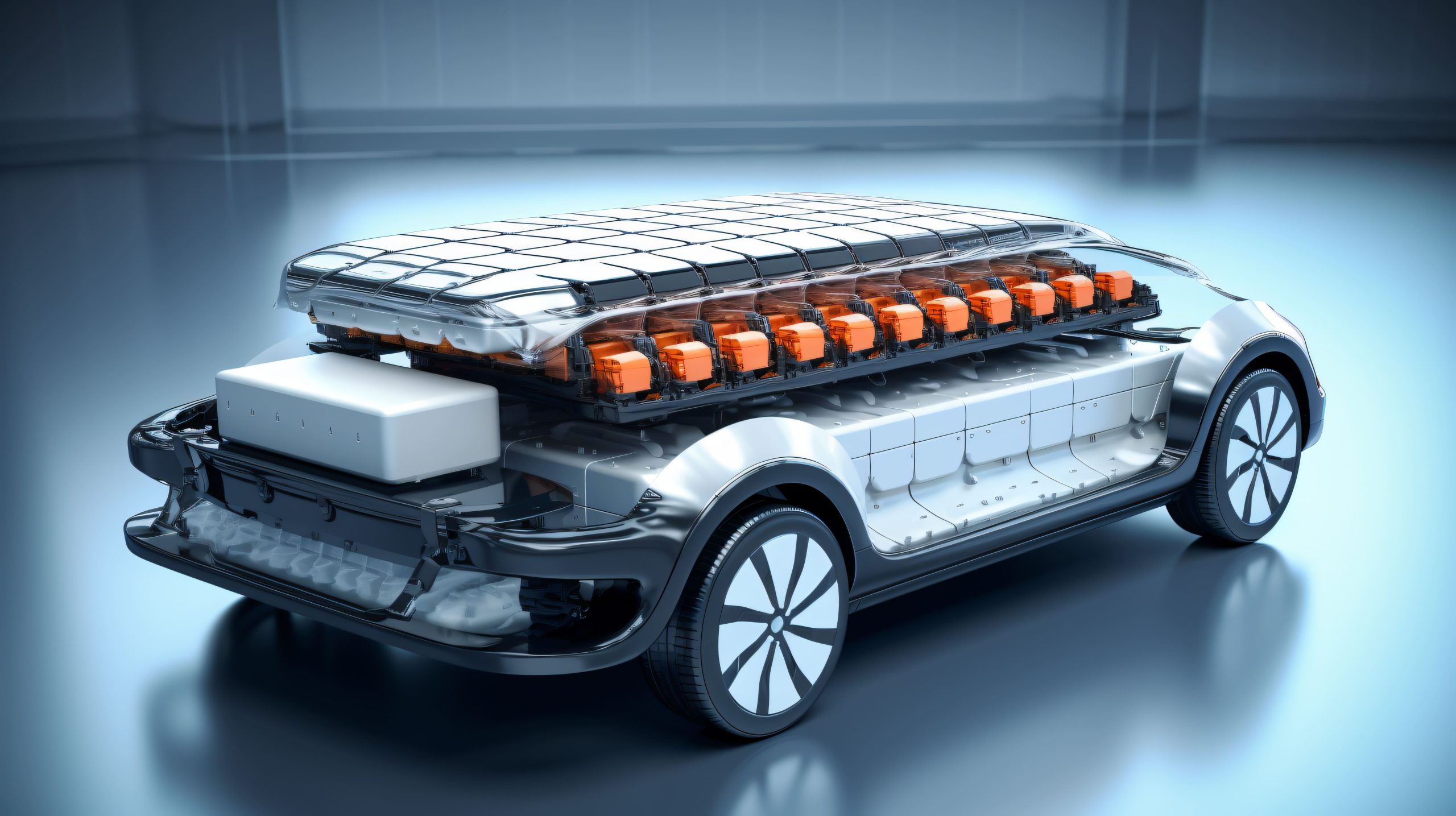
Thailand’s EV battery market is entering a much more serious phase than it was even three or four years ago. Earlier, the country’s electric vehicle story was largely about attracting EV assembly and offering incentives to automakers. By 2026, that conversation has shifted toward something more industrial and more valuable – battery manufacturing, pack assembly, local supplier development, and eventually cell production. That shift matters because batteries are where much of the value in the EV chain actually sits. Thailand has one clear advantage that many emerging EV markets do not: it already knows how to build vehicles at scale. The country has long served as a manufacturing base for Japanese and global automakers, so it is not starting from scratch. That existing automotive depth gives battery investors more confidence. Still, the road to 2035 will not be straightforward. Thailand has momentum, but it also has some hard bottlenecks that cannot be solved with subsidies alone.
What’s Driving the EV Battery Market in Thailand?
Passenger EV Production Is Translating Into Battery Demand
The strongest tailwind comes from passenger EV production. Once electric car assembly began expanding in Thailand, battery demand naturally followed. Every locally assembled EV needs not only a battery pack but also modules, cooling systems, battery management software, connectors, and a range of supporting electronics. In other words, battery demand does not show up as a single product line – it creates work across multiple industrial layers. What makes this more durable is that Thailand is not relying only on imported EVs to create demand. Local production creates better visibility for suppliers and gives manufacturers a reason to invest in nearby facilities. That is usually where markets start to become commercially meaningful rather than policy-dependent.
Battery Cell Manufacturing Is Becoming the Real Inflection Point
For a while, Thailand’s battery market was mostly centered around pack assembly using imported cells. That was useful, but not especially transformative. The more important development now is the arrival of planned large-scale battery cell production. This is where Thailand starts moving beyond being a final assembly destination and begins taking on higher-value manufacturing. That said, cell manufacturing is difficult business. It requires scale, process discipline, chemistry expertise, and tight quality control. It is not unusual for facilities to take time before they operate efficiently. So while new investments are encouraging, the real measure of success will be whether these plants can produce competitively and consistently over the long term.
Commercial EVs and Energy Storage Could Become Bigger Than Many Assume
Passenger vehicles tend to dominate headlines, but commercial use cases may quietly become one of the more reliable sources of battery demand. Electric buses, urban delivery vans, warehouse mobility, and energy storage applications all create practical demand that is often less sensitive to consumer sentiment. Fleet buyers usually care about economics first, which can make adoption more rational and less cyclical. On the ground, this matters because logistics operators and commercial users often adopt electric platforms when route predictability, charging access, and maintenance savings make financial sense. Thailand’s dense urban corridors and industrial zones could make that transition more realistic than many assume.
Government-Led Initiatives Supporting Battery Investments
Thailand’s government has played a central role in pushing the battery market forward. Incentive programs tied to local EV production have encouraged automakers and suppliers to build more inside the country rather than simply import finished units. This is a much smarter industrial approach than subsidizing demand without building local manufacturing capacity behind it. Tax incentives, Board of Investment support, and targeted promotion of advanced manufacturing have also helped reduce investor hesitation. In practice, investors rarely need perfect policy – they need policy that is credible and reasonably consistent. Thailand has done a decent job on that front, though maintaining that confidence through the next decade will be essential.
Market Competition and Supply Chain Landscape
The Thailand EV battery market remains relatively concentrated, with much of the early movement coming from large Asian battery manufacturers and EV-linked industrial groups. That is not surprising. Battery manufacturing is capital-intensive, technologically demanding, and not especially forgiving to smaller entrants. What is more interesting is the supporting supplier base beginning to form around packs, enclosures, wiring systems, battery cooling, and power electronics. That layer often gets overlooked, but it is where industrial depth actually gets built. A country does not become a strong manufacturing hub only because one or two big factories open – it happens when the surrounding supplier network becomes reliable enough to support scale.
Dependence on Imported Upstream Inputs
One major challenge remains difficult to ignore: Thailand still relies heavily on imported raw materials, battery cells, advanced chemistries, and certain critical technologies. That creates exposure to global price swings, supply chain disruptions, and foreign dependency at precisely the point where local manufacturers want more control. A common challenge is that downstream assembly grows faster than upstream capability. Building battery packs is one thing; developing a robust supply base for cathode materials, separators, and high-value components is another. That gap could limit how much value Thailand ultimately retains unless upstream investment catches up.
Future Outlook
Looking ahead, Thailand has a credible path toward becoming one of Southeast Asia’s more important EV battery manufacturing markets by 2035. The ingredients are there: automotive experience, policy support, rising EV output, and improving supplier depth. If execution remains disciplined, the country could become a serious production base for both domestic use and regional exports. There is also a second chapter coming that deserves more attention – battery recycling, repurposing, and second-life applications. As EV fleets mature, that segment will become commercially relevant. In my view, the winners in this market will not just be those who build volume fastest, but those who secure supply, manage costs intelligently, and build around practical industrial demand rather than hype.
Consultants at Nexdigm, in their latest publication “Thailand EV Battery Market Outlook to 2035”, analyze the market by Battery Type (Lithium Iron Phosphate, Nickel Manganese Cobalt, Others), By Vehicle Type (Passenger EVs, Commercial EVs, Two-Wheelers, Energy Storage Systems), By Battery Form (Cell, Module, Pack), and By End Use (OEMs, Aftermarket, Fleet Operators, Energy Applications). Nexdigm believes that businesses should prioritize upstream localization, strategic battery partnerships, and circular economy capabilities such as recycling and second-life battery deployment to build long-term competitiveness in Thailand’s evolving EV battery ecosystem.
To take the next step, simply visit our Request a Consultation page and share your requirements with us.
Harsh Mittal
+91-8422857704