
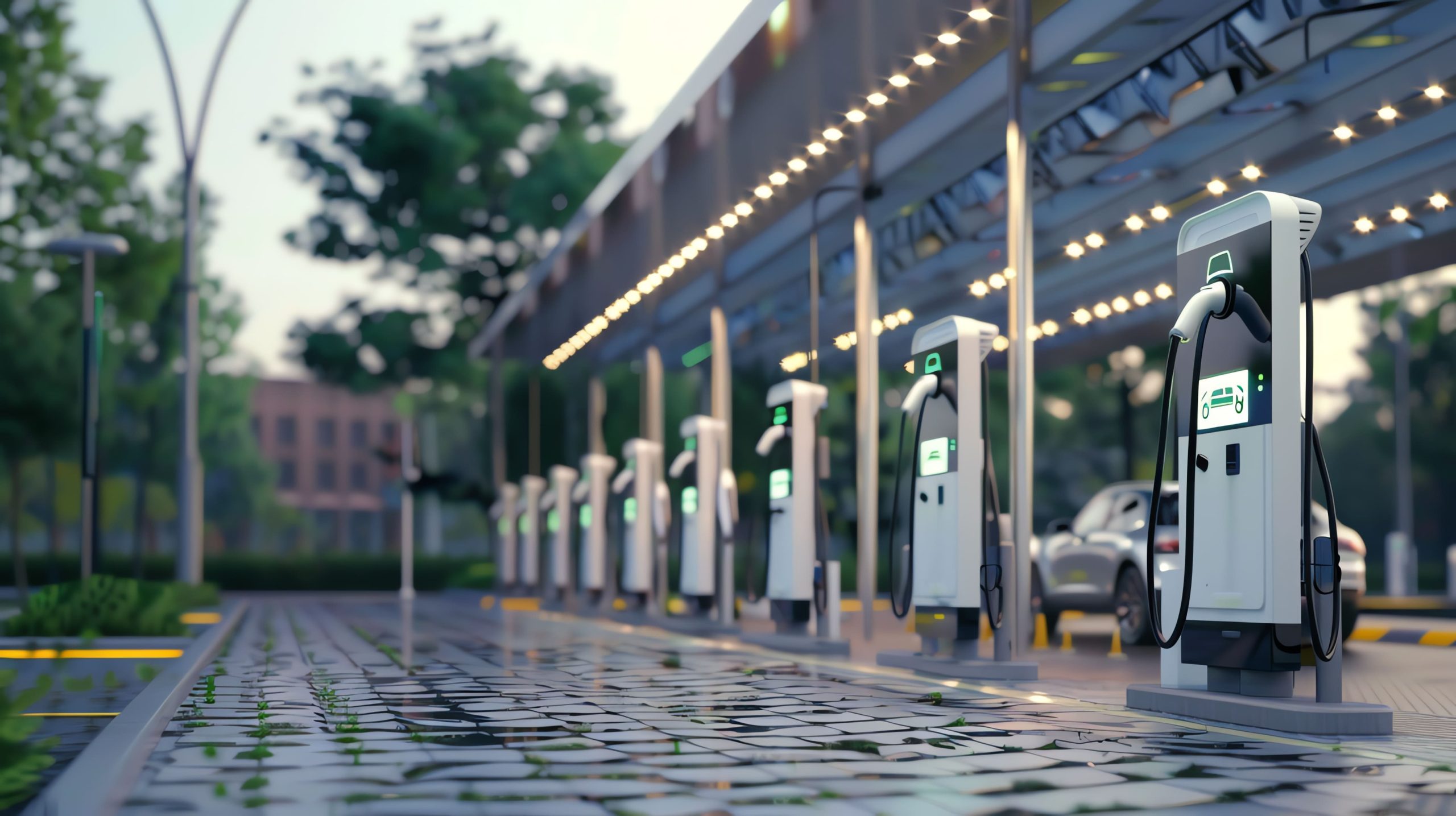
Thailand’s electric vehicle (EV) ecosystem is entering a rapid growth phase as the government intensifies its push toward transportation electrification and carbon reduction. As of 2026, Thailand has emerged as Southeast Asia’s leading EV manufacturing and adoption hub, supported by policy incentives, foreign investment, and expanding charging infrastructure. The country’s EV30@30 policy targets 30% of total domestic vehicle production to be electric by 2030, creating strong demand for nationwide charging networks. Although EV adoption is accelerating, the availability and accessibility of public charging infrastructure remain uneven, particularly outside major urban centers. To support long-term EV penetration, Thailand is focusing on expanding fast-charging networks along highways, urban hubs, and commercial zones, shaping the EV charging infrastructure market outlook toward 2035.
What’s Driving the EV Charging Infrastructure Market in Thailand?
Rapid Growth in EV Adoption
Thailand’s EV market has witnessed significant growth as global automakers and Chinese EV manufacturers expand operations in the country. Subsidies for EV purchases, reduced import duties, and tax incentives have made electric cars more affordable for consumers. As EV ownership rises, demand for accessible charging infrastructure across residential areas, workplaces, and public spaces is increasing. This trend is encouraging both public and private players to invest in fast-charging stations and smart charging networks.
Expansion of Urban Charging Networks
Urban centers such as Bangkok, Chiang Mai, and Chonburi are witnessing rapid deployment of charging stations in shopping malls, office complexes, residential developments, and parking facilities. Real estate developers and commercial property owners are integrating EV chargers as part of smart building infrastructure. The growth of ride-hailing fleets and electric taxis is also creating demand for fast-charging hubs in densely populated urban areas.
Growing Investments from Energy Companies and Utilities
Energy companies and utilities in Thailand are actively investing in EV charging infrastructure to diversify their energy portfolios. Oil and gas companies are transforming traditional fuel stations into multi-energy hubs equipped with fast EV chargers. Meanwhile, electricity providers are developing smart charging networks that integrate renewable energy and digital payment platforms. These investments are strengthening the charging ecosystem and improving accessibility for EV users.
Government-Led Initiatives Supporting Infrastructure Development
The Thai government has introduced several policies to accelerate EV infrastructure development as part of its national electrification strategy. Under the EV30@30 roadmap, authorities aim to establish thousands of public charging stations across highways, urban corridors, and logistics routes. Incentives such as investment tax breaks, infrastructure subsidies, and regulatory support are encouraging private companies to deploy charging networks. Additionally, public agencies are collaborating with energy companies and automotive manufacturers to expand fast-charging corridors connecting major cities and economic zones. These initiatives aim to reduce range anxiety among consumers and enable long-distance EV travel across the country.
Market Competition and Industry Participation
The Thailand EV charging infrastructure market is moderately competitive with participation from energy companies, utilities, automotive manufacturers, and technology providers. Major players include Energy Absolute, PTT Group, EGAT, and global charging technology providers entering through partnerships and joint ventures. Energy Absolute has developed a growing network of fast-charging stations under its EA Anywhere platform, focusing on urban mobility and commercial fleets. Meanwhile, PTT Group is expanding EV charging points across its nationwide fuel station network as part of its transition toward cleaner energy solutions. Automotive manufacturers are also collaborating with charging providers to ensure seamless charging access for EV customers.
Uneven Distribution of Charging Infrastructure Across Regions
One of the key challenges in Thailand’s EV charging infrastructure market is the uneven distribution of charging stations across the country. While major urban centers such as Bangkok and key economic corridors have seen significant deployment of public and fast chargers, many secondary cities and rural regions still face limited access to charging facilities. This imbalance creates range anxiety among potential EV buyers and slows adoption outside metropolitan areas. Expanding charging networks along highways and in smaller cities will be essential to support nationwide EV mobility.
Future Outlook
Thailand’s EV charging infrastructure market is expected to witness strong expansion through 2035 as EV adoption accelerates and government electrification targets gain momentum. The deployment of ultra-fast charging stations along highways, expansion of residential charging solutions, and integration of renewable energy into charging networks are expected to reshape the market landscape. By 2035, Thailand is likely to develop a more extensive and interconnected charging ecosystem, enabling seamless EV travel across urban and intercity routes. Smart charging technologies, vehicle-to-grid integration, and digital platforms for charging management are expected to enhance efficiency and user convenience. As Thailand strengthens its position as Southeast Asia’s EV manufacturing hub, a robust charging infrastructure network will play a critical role in sustaining long-term EV growth.
Consultants at Nexdigm, in their latest publication “Thailand EV Charging Infrastructure Market Outlook to 2035”, analyzed the market by Charger Type (AC Chargers, DC Fast Chargers, Ultra-Fast Chargers), By Charging Location (Public Charging Stations, Residential Charging, Workplace Charging, Highway Charging), and By End User (Passenger Vehicles, Commercial Vehicles, Fleet Operators). Nexdigm believes that businesses should prioritize fast-charging deployment along highway corridors, partnerships with real estate developers for urban charging hubs, and integration of renewable energy and smart grid technologies to build a scalable and sustainable EV charging ecosystem in Thailand.
To take the next step, simply visit our Request a Consultation page and share your requirements with us.
Harsh Mittal
+91-8422857704