
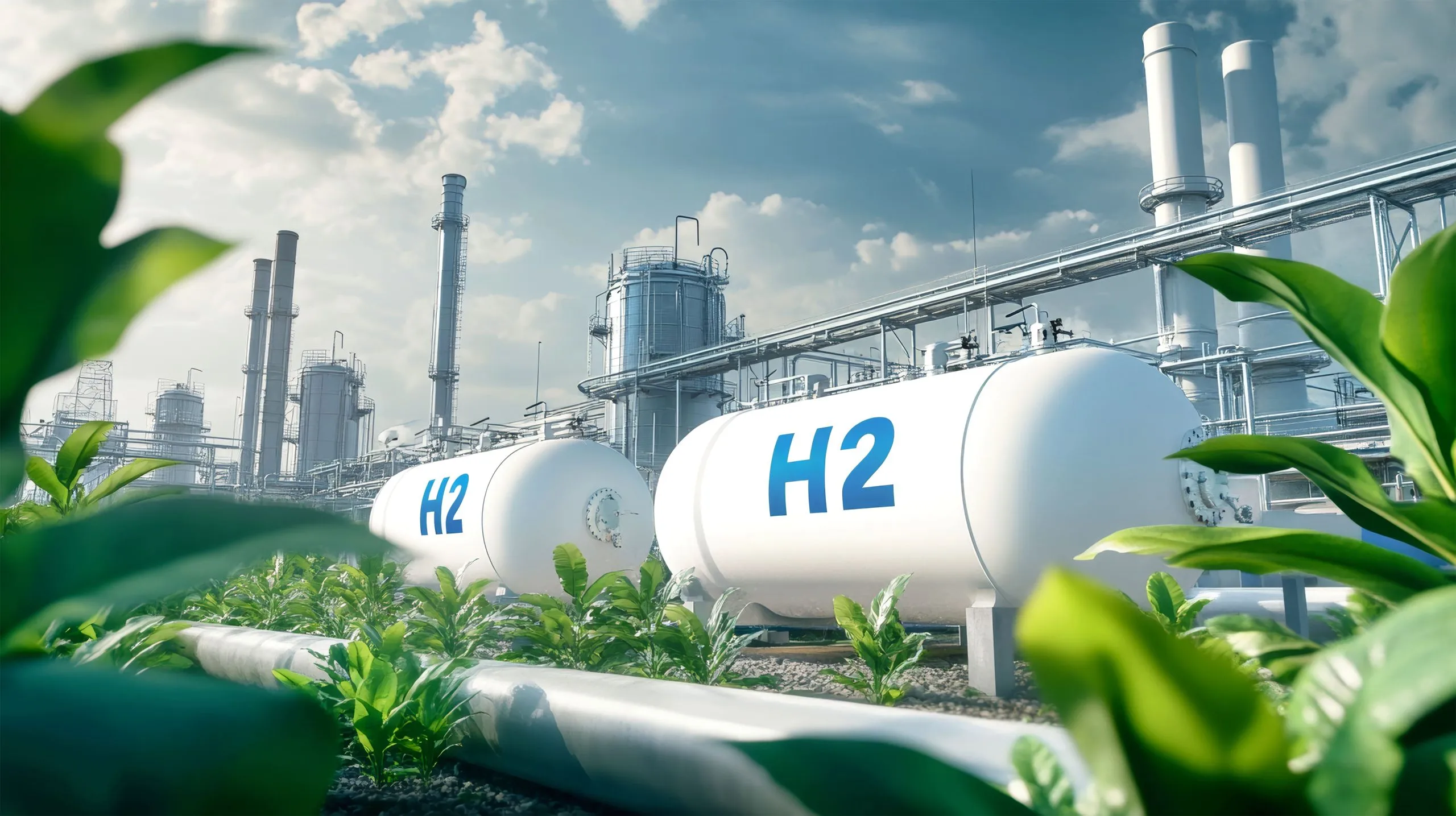
Thailand’s energy transition has started moving beyond solar rooftops and electric vehicles. Green hydrogen, once treated as a distant concept in Southeast Asia, is now finding a place in the country’s long-term industrial and clean energy plans. The shift is still early, but momentum is visible. Large energy companies, industrial manufacturers, and transport operators are beginning to test where hydrogen can realistically fit into Thailand’s economy. As of 2026, most hydrogen-related activity in Thailand remains tied to pilot projects and feasibility studies rather than large-scale commercial deployment. Yet the direction is becoming clearer. The country wants to lower dependence on imported fossil fuels while reducing emissions from heavy industries that cannot easily run on electricity alone. In practice, green hydrogen is being viewed less as a replacement for renewables and more as a supporting fuel for sectors where solar and batteries have limitations.
What’s Driving the Green Hydrogen Market in Thailand?
Expansion of Renewable Power Capacity
Thailand has steadily expanded solar and wind installations over the past few years, especially across industrial zones and utility-scale projects. That matters because green hydrogen production depends heavily on access to renewable electricity. During periods of excess renewable generation, electrolysis plants can convert surplus power into hydrogen rather than letting energy go unused. This approach has become increasingly attractive for power producers facing grid balancing challenges. Some energy firms are already studying whether hydrogen storage could help stabilize intermittent renewable supply during peak demand periods. On the ground, this creates a practical use case rather than hydrogen remaining just another clean-energy talking point.
Pressure on Industrial Manufacturers to Cut Emissions
Thai manufacturers are under growing pressure from export markets in Europe and East Asia to reduce carbon intensity. Industries such as petrochemicals, refining, and fertilizer production have limited options when it comes to deep decarbonization. Green hydrogen offers one of the few workable alternatives for processes that still rely heavily on fossil fuels. A common challenge is cost. Grey hydrogen produced from natural gas remains far cheaper today. Still, some large industrial players appear willing to absorb higher costs in exchange for long-term compliance with international sustainability standards. That trade-off may become unavoidable as carbon border taxes and stricter ESG requirements expand globally.
Hydrogen Mobility and Heavy Transport Applications
Thailand has already built a strong reputation as an automotive manufacturing base in Southeast Asia, so interest in hydrogen-powered mobility is not surprising. While battery EVs dominate passenger vehicles, hydrogen fuel cells are receiving attention in buses, logistics fleets, and long-haul trucking where charging downtime can become impractical. Pilot hydrogen refueling stations have started appearing through partnerships involving Japanese and Korean firms. The technology still faces skepticism due to infrastructure costs, and many analysts believe battery-powered transport will remain dominant for urban mobility. Even so, hydrogen could carve out a niche in commercial transport where range and operational uptime matter more than vehicle price.
Government-Led Initiatives Supporting Green Hydrogen Development
Thailand’s government has folded hydrogen into broader clean-energy planning through policies linked to the Alternative Energy Development Plan and the Bio-Circular-Green economic framework. State-backed energy companies are working with international technology providers to test electrolyzers, hydrogen blending, and storage solutions. What stands out is the government’s cautious approach. Unlike some countries that announced massive hydrogen ambitions before infrastructure existed, Thailand appears to be prioritizing pilot-scale learning first. That slower rollout may actually reduce the risk of stranded investments later.
Market Competition and Emerging Partnerships
The Thailand green hydrogen market remains relatively concentrated among large energy and industrial players. Companies such as PTT Public Company Limited and Electricity Generating Authority of Thailand are actively exploring hydrogen production and storage opportunities. International firms including Toyota Motor Corporation and Mitsubishi Heavy Industries have also entered collaborative projects tied to mobility and infrastructure development. Many of these partnerships focus less on immediate profits and more on technology learning. Companies understand that the commercial market may still take years to mature fully.
High Production Costs and Infrastructure Limitations
The biggest obstacle for Thailand’s green hydrogen ambitions remains economics. Producing hydrogen through renewable-powered electrolysis still costs substantially more than conventional fossil-fuel-based methods. Electrolyzers, storage systems, and transport infrastructure require major upfront investment, while domestic hydrogen demand is still relatively small. Infrastructure gaps create another complication. Thailand currently lacks large-scale hydrogen pipelines, widespread refueling networks, and standardized regulatory frameworks. In reality, this means even companies interested in hydrogen adoption often struggle to identify reliable supply chains or long-term pricing certainty.
Future Outlook
Thailand’s green hydrogen market will likely develop gradually rather than through sudden large-scale expansion. Industrial applications are expected to lead adoption first, particularly in refining, chemicals, and heavy manufacturing where electrification remains difficult. Commercial transport and power storage could follow later as infrastructure improves and production costs decline. By 2035, Thailand may not emerge as one of the world’s largest hydrogen producers, but it could become an important regional participant in Southeast Asia’s clean fuel trade. Much will depend on how quickly renewable electricity prices fall and whether industrial users see hydrogen as commercially practical rather than simply environmentally necessary.
Consultants at Nexdigm, in their latest publication “Thailand Green Hydrogen Market Outlook to 2035,” analyzed the market by Technology (Alkaline Electrolysis, PEM Electrolysis, Solid Oxide Electrolysis), By Application (Industrial Feedstock, Power Generation, Mobility, Energy Storage), and By End User (Refineries, Chemicals, Utilities, Transportation, Heavy Industries). Nexdigm believes businesses should focus on renewable integration, localized hydrogen infrastructure, and long-term industrial supply agreements while carefully balancing commercial viability with sustainability commitments.
To take the next step, simply visit our Request a Consultation page and share your requirements with us.
Harsh Mittal
+91-8422857704