
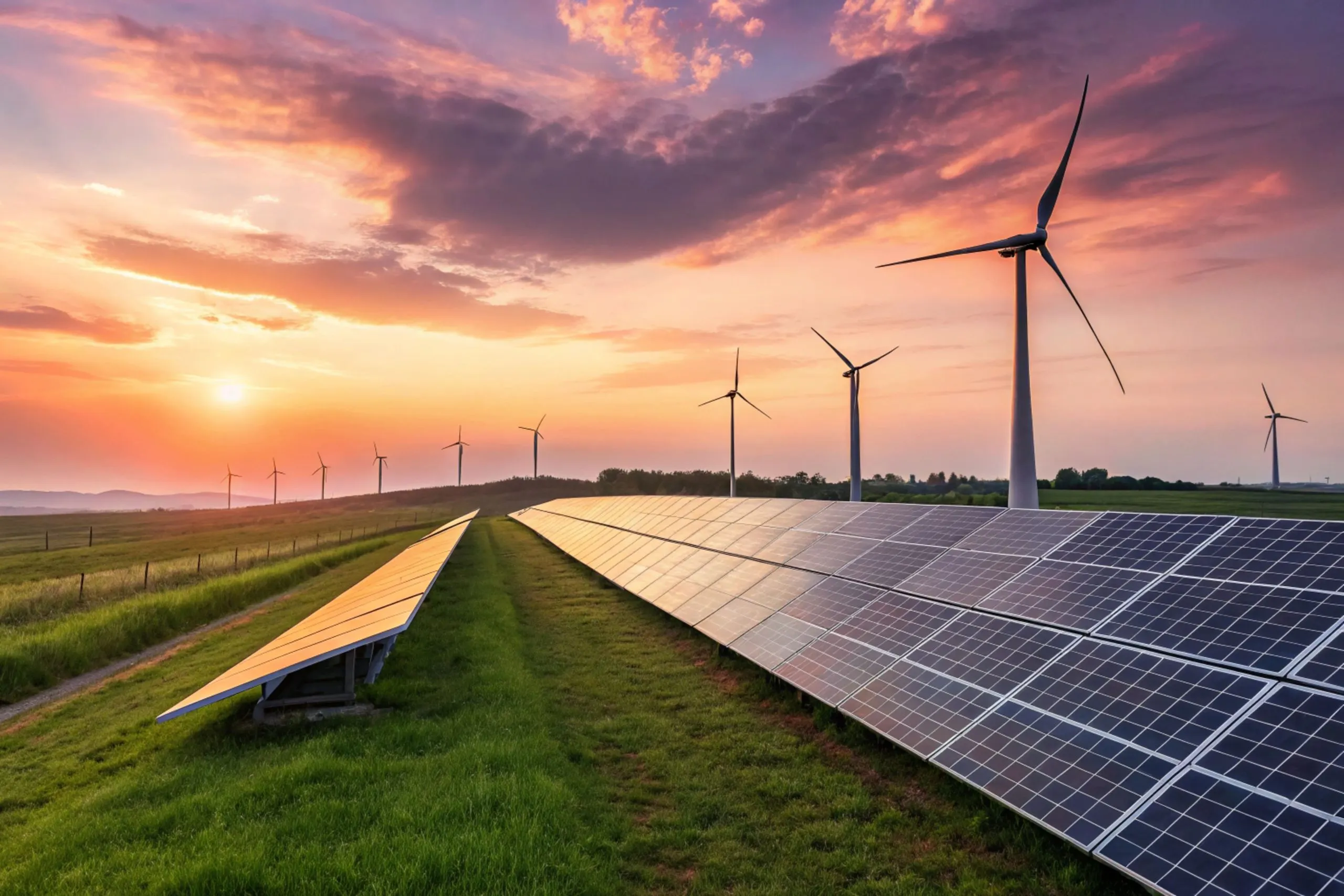
Thailand’s renewable energy sector has moved well beyond the early adoption phase and is now becoming a practical necessity for the country’s long-term energy planning. Rising fuel import costs, pressure from global manufacturers to reduce emissions, and stronger regional climate commitments are all reshaping the electricity market. As of 2026, renewable sources account for a steadily expanding share of Thailand’s power mix, with solar and biomass leading most new capacity additions. The shift is not only about sustainability. For many industrial operators, especially exporters, renewable energy has become closely tied to operating costs and international compliance requirements. Thailand’s industrial corridors, tourism infrastructure, and growing EV manufacturing ambitions are all pushing the country toward cleaner electricity solutions faster than many expected five years ago.
What’s Driving the Renewable Energy Market in Thailand?
Industrial Power Demand and Energy Import Risks
Thailand’s manufacturing sector remains heavily dependent on stable electricity supply, particularly industries such as electronics, automotive production, and food processing. The challenge is that the country still imports a large share of its natural gas. When global fuel prices spike, electricity generation costs rise almost immediately. That pressure has encouraged both government agencies and private firms to look more seriously at renewable alternatives. In practice, many factories are no longer installing rooftop solar purely for environmental branding. The economics have started making sense. Industrial parks around Chonburi and Rayong increasingly use hybrid systems that combine solar generation with battery storage to offset peak-hour electricity expenses. Energy resilience has quietly become just as important as sustainability targets.
Solar Expansion Beyond Utility Projects
Solar power has become the most visible part of Thailand’s clean energy transition, though the market looks very different from a decade ago. Earlier investment cycles focused mainly on utility-scale farms. Now, commercial rooftops, floating solar installations, and localized microgrids are attracting more attention. One reason is land availability. Large-scale solar projects often face delays due to permitting and land acquisition concerns. Floating solar farms on reservoirs offer a practical workaround, particularly for state utilities managing hydropower assets. Some of Thailand’s newer floating projects have already gained regional attention because they combine hydroelectric generation with solar output, helping stabilize electricity supply during seasonal fluctuations.
Biomass Remains a Quiet Strength
While solar receives most of the headlines, biomass continues to play a surprisingly important role in Thailand’s renewable mix. The country’s agricultural sector produces significant waste from sugarcane, rice, and palm oil processing, much of which can be converted into electricity or biofuels. For rural provinces, biomass projects often bring more immediate economic benefits than large solar developments. Farmers gain additional revenue streams from agricultural residue that would otherwise be discarded or burned. Still, feedstock supply can become inconsistent during weaker harvest seasons, and smaller operators occasionally struggle with financing. That unevenness tends to receive less attention than high-profile solar investments, even though biomass contributes reliable baseload power to the grid.
Government-Led Renewable Energy Initiatives
Thailand’s energy transition has been shaped heavily by state policy, particularly through the Alternative Energy Development Plan and the Bio-Circular-Green economic framework. Incentives such as feed-in tariffs, tax exemptions, and investment privileges through the Board of Investment have attracted developers from Japan, China, and Europe. At the same time, the government faces a balancing act. Renewable expansion sounds straightforward on paper, but electricity affordability remains politically sensitive. Authorities must encourage clean energy investment without placing excessive cost burdens on consumers or industrial users. That trade-off has slowed certain regulatory decisions, especially around power purchasing agreements and transmission upgrades. Thailand’s carbon neutrality target for 2050 has also started influencing corporate behavior. Export-focused manufacturers increasingly face pressure from overseas buyers who want lower-carbon supply chains. For many companies, renewable procurement is becoming less of a public relations exercise and more of a commercial requirement.
Market Competition
The Thailand renewable energy market remains moderately concentrated, with large domestic firms leading most utility-scale projects. Key participants include Gulf Energy Development, B.Grimm Power, Energy Absolute, and Banpu NEXT. These companies have expanded beyond traditional power generation into battery storage, EV charging infrastructure, and smart energy management solutions. Competition is becoming more interesting in the commercial and industrial segment, where smaller developers now compete aggressively for long-term corporate power contracts. On the ground, financing capability and grid connectivity often matter more than technology itself.
Grid Integration Challenges
One persistent challenge for Thailand’s renewable sector involves grid modernization. Solar and wind generation fluctuate throughout the day, and the country’s transmission infrastructure was originally designed around centralized fossil-fuel power plants. Integrating large volumes of intermittent electricity creates operational pressure for grid operators. Battery storage helps, but costs remain relatively high for large deployments. A common challenge is that smaller renewable developers can secure project approvals yet still face delays connecting to transmission networks. Without major upgrades in grid flexibility and storage capacity, renewable adoption could progress unevenly despite strong investor interest.
Future Outlook
Thailand’s renewable energy market is likely to look far more diversified by 2035 than it does today. Solar will continue dominating new installations, though biomass, waste-to-energy, and storage technologies should gain larger shares of investment over time. The country is also emerging as a regional manufacturing base for EVs, which could indirectly raise demand for renewable electricity even further. What stands out most is that Thailand’s clean energy transition no longer feels experimental. Businesses now treat renewable power as part of long-term operational planning rather than a secondary sustainability initiative.
Consultants at Nexdigm, in their latest publication “Thailand Renewable Energy Market Outlook to 2035”, analyzed the market by Energy Source (Solar, Wind, Biomass, Hydropower, Waste-to-Energy, Biofuels), By Application (Utility-Scale Power Generation, Commercial & Industrial, Residential, Transportation), and By End User (Utilities, Industrial Sector, Commercial Establishments, Government Infrastructure). Nexdigm believes that businesses should prioritize solar-storage integration, corporate renewable PPAs, and localized biomass supply chains while leveraging Thailand’s regional clean energy ambitions and decarbonization policies as long-term growth opportunities.
To take the next step, simply visit our Request a Consultation page and share your requirements with us.
Harsh Mittal
+91-8422857704