
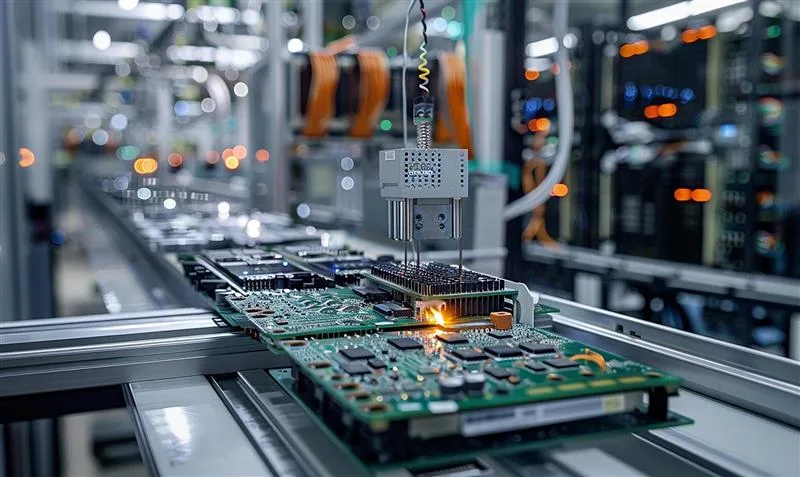
Thailand’s semiconductor manufacturing market is gaining strong momentum as the country’s industrial base evolves and diversifies. While historically more focused on assembly, testing, and packaging, the country is now making strides in higher‑end semiconductor production. With semiconductor demand from industries like automotive, electronics, and energy systems rising globally, Thailand is poised to become a key player in Southeast Asia’s chip supply chain.
The semiconductor sector is crucial not only for meeting domestic demand but also for playing a pivotal role in global technology ecosystems. Thailand’s well-established electronics industry and strong supply chains position it uniquely to serve both local needs and international markets. With increasing interest from global investors, the market is set to experience significant growth, providing an exciting opportunity for both local and international players.
Key Market Drivers Fueling Thailand’s Semiconductor industry
Rising Global Demand for Advanced Chips
The global semiconductor market is growing rapidly, and Thailand is positioned to benefit from this rapid growth. As demand for advanced semiconductors continues to rise, especially in consumer electronics, automotive, and industrial applications, Thailand’s role in assembly, testing, and packaging is more critical than ever. In addition to its competitive pricing, Thailand offers proximity to other key Southeast Asian markets, making it an attractive hub for semiconductor manufacturing. While most semiconductor fabrication is centered in countries like Taiwan and South Korea, Thailand’s market is rapidly growing in response to global demand.
Technology Adoption in Manufacturing
Thailand’s transition is another key driver of the semiconductor market. Smart manufacturing technologies like automation, artificial intelligence, and advanced robotics are becoming more common in factories across the country. These innovations not only improve production efficiency but also enhance the capabilities required to produce cutting‑edge semiconductors. As global industries demand more complex and powerful chips, manufacturers in Thailand are upgrading their processes to meet these evolving needs.
Expanding Foreign Investment and Strategic Partnerships
Thailand’s semiconductor market is benefiting from increasing foreign investments, as global semiconductor giants seek to diversify their production locations. Thailand offers a strong industrial base, robust logistics infrastructure, and a strategic location within ASEAN. These advantages make it an attractive destination for companies looking to expand their footprint in the region. Local players are also forming strategic alliances with global leaders to enhance technological capabilities, improve product offerings, and integrate into the global semiconductor ecosystem.
Government Support to enhance Thailand’s Semiconductor Manufacturing Sector
The Thai government is actively pushing for a technological upgrade in its manufacturing sector through meaningful initiatives. This policy roadmap focuses on enhancing innovation, automation, and digitalization, all of which directly benefit the semiconductor industry. The government’s Board of Investment (BOI) offers various incentives to attract foreign investment, particularly in high‑tech industries like semiconductors. These efforts to support industrial transformation through infrastructure development, research, and digital adoption are crucial in helping Thailand rise to prominence in the global semiconductor value chain.
Competitive landscape of Thailand’s Semi-conductor sector
Thailand’s semiconductor manufacturing sector is home to a blend of local firms and global players. Multinational corporations, including Intel, Samsung, and TSMC, are setting up operations and forming partnerships with Thai companies to meet regional semiconductor needs. Local companies like Thai Microelectronics and Siam Semiconductor are expanding their operations by integrating cutting‑edge technologies and enhancing their production capabilities. These players are focused on improving their product offerings and creating stronger ties with international clients, which helps build a competitive advantage in the market. As competition intensifies, Thailand’s ability to offer high‑quality, cost‑effective solutions will play a key role in attracting more investments, securing a larger market share, and elevating the country’s position in the global semiconductor supply chain.
Market Challenges Faced by Thailand’s Semiconductor Sector
High Capital Expenditures and Investment Requirements
One of the biggest challenges Thailand faces in scaling its semiconductor manufacturing capacity is the high cost of setting up and maintaining advanced fabrication plants. These facilities require significant capital investment, which can be a hurdle, especially for small and medium‑sized enterprises (SMEs) looking to enter the sector.
Talent Shortage and Technical Expertise
Another significant challenge is the shortage of highly skilled professionals in semiconductor fabrication. As the industry becomes more sophisticated, the demand for skilled engineers and technicians grows. Thailand needs to focus on developing educational programs that align with the needs of the semiconductor sector and on attracting talent from global markets.
Future Outlook
Thailand is on track to become a more prominent player in the semiconductor manufacturing market. With consistent investment in infrastructure, technology, and skilled labor, Thailand’s semiconductor industry has a potential to grow rapidly. The country will increasingly be recognized not only for assembly and testing but also for advanced manufacturing capabilities in chip production. By capitalizing on its strategic position in Southeast Asia, Thailand is set to become a key manufacturing hub, attracting more global semiconductor players while simultaneously fostering a robust domestic ecosystem. As global semiconductor demand grows, Thailand’s investment in smart manufacturing and Industry technologies will enable it to meet the demands of an ever‑evolving industry, positioning itself as a critical player in the semiconductor supply chain.
Consultants at Nexdigm, in their latest publication Thailand Semiconductor Manufacturing Market Outlook to 2035, analyze the sector by System Type (Fabrication Equipment, Test Equipment, Assembly and Packaging Equipment and Wafer Manufacturing Equipment), by Fitment Type (On-premises Solution, Cloud Solutions, Hybrid Solutions and Integrated Solutions).
Nexdigm suggests that businesses should adopt a proactive approach, focusing on operational agility and embracing digital transformation. By staying aligned with evolving market trends and leveraging local insights, companies can effectively navigate uncertainty and foster sustainable growth, ensuring long-term success in an ever-changing business landscape.
To take the next step, simply visit our Request a Consultation page and share your requirements with us.
Harsh Mittal
+91-8422857704