
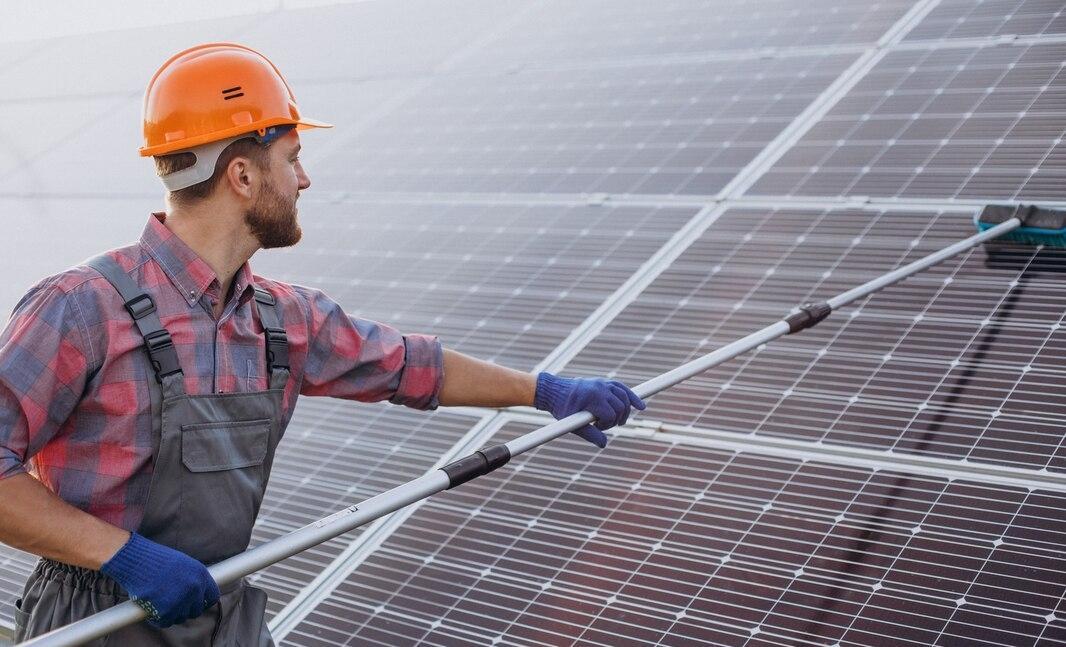
Thailand’s expanding renewable energy infrastructure is creating increasing demand for efficient solar panel cleaning systems and maintenance services. Rising solar installations across industrial facilities, commercial rooftops, and utility-scale projects are making regular panel maintenance essential for maintaining electricity generation efficiency. According to the industry report, Thailand’s solar panel cleaning systems and services sector was valued at USD 184.2 million in 2025, with projected growth of 8.4% CAGR between 2025 and 2035. Increasing automation, water-efficient cleaning technologies, and renewable energy investments are further shaping industry development.
Market Drivers Advancing Thailand’s Solar Panel Cleaning Growth
Expanding Solar Energy Installations Across Industrial Facilities
Thailand’s growing adoption of solar power is creating substantial demand for professional cleaning equipment and maintenance services. Industrial estates, manufacturing facilities, warehouses, and utility-scale solar farms require consistent panel maintenance to maintain energy output. According to the International Energy Agency Photovoltaic Power Systems Programme (IEA PVPS), Thailand recorded approximately 9,942 MWp of cumulative installed solar photovoltaic capacity in 2024. This expanding installation base increases the requirement for specialized cleaning solutions, particularly in industrial regions such as Rayong and the Eastern Economic Corridor, where large-scale facilities are adopting renewable electricity generation.
Rising Adoption of Automated and Robotic Cleaning Technologies
The increasing preference for automated solar panel cleaning systems is another important growth driver. Traditional manual cleaning methods require substantial labour, consume water, and can become operationally challenging across large solar installations. Consequently, solar operators are exploring robotic cleaners, autonomous dry-brushing equipment, and AI-enabled predictive maintenance solutions. These technologies help improve cleaning consistency, reduce operational downtime, and optimize maintenance schedules. Waterless robotic systems are particularly attractive in locations experiencing limited water availability or high dust accumulation.
Industrial Energy Efficiency and Maintenance Requirements
Manufacturers and infrastructure operators are increasingly prioritizing energy efficiency to reduce electricity expenses and improve sustainability performance. Dust, bird droppings, and environmental pollutants can accumulate on photovoltaic surfaces, reducing sunlight absorption and electricity generation. Regular cleaning therefore becomes an essential maintenance activity. The growing integration of solar installations into industrial operations is encouraging businesses to adopt professional cleaning contracts, automated monitoring, and preventive maintenance solutions to protect long-term equipment performance.
Government Initiatives Supporting Thailand’s Solar Energy Sector
Thailand’s government is promoting solar energy adoption through the National Energy Plan, Power Development Plan, and Alternative Energy Development Plan (AEDP). The draft AEDP 2024 targets 37% renewable energy in total final energy consumption by 2037, alongside approximately 38,974 MWp of solar installation capacity. Additionally, regulatory reforms have simplified rooftop solar installation requirements for factories by removing the previous 1,000 kW capacity limit for factory permits. These initiatives are encouraging solar investments and indirectly strengthening demand for cleaning and maintenance services.
Competitive Landscape of Thailand’s Solar Panel Cleaning Industry
Thailand’s competitive environment includes specialized cleaning service providers, equipment suppliers, robotic technology developers, and industrial maintenance companies. Companies are increasingly differentiating themselves through automated cleaning equipment, waterless technologies, and predictive maintenance capabilities. SolarCare Thailand represents an example of a local service provider utilizing autonomous dry-brushing technology. Competition is expected to intensify as solar operators prioritize cost efficiency, equipment reliability, and environmentally sustainable cleaning solutions.
Challenges Impacting Thailand’s Solar Panel Cleaning Industry
High Initial Investment and Technology Costs
Advanced robotic cleaning systems and automated maintenance equipment require significant upfront investment. Smaller solar operators may prefer conventional manual cleaning services because of lower initial costs, limiting the adoption of sophisticated technologies.
Environmental and Operational Constraints
Dust accumulation, humidity, heavy rainfall, and industrial pollutants create varying cleaning requirements across Thailand. Additionally, water availability, equipment maintenance expenses, and the need for skilled technical personnel can complicate service delivery and operational efficiency.
Future Outlook
Increasing Demand for Automated Maintenance Solutions
Thailand’s solar cleaning industry is expected to experience sustained expansion as renewable energy installations increase across industrial and commercial sectors. The projected 8.4% CAGR from 2025 to 2035 highlights the growing commercial opportunity for cleaning equipment manufacturers and service providers.
Technology Innovation and Sustainable Growth
Robotic cleaning systems, AI-based performance monitoring, waterless technologies, and predictive maintenance are expected to gain wider acceptance. Furthermore, government-backed renewable energy initiatives and industrial decarbonization commitments will encourage investment in solar infrastructure. Companies offering affordable, efficient, and environmentally responsible maintenance solutions are likely to strengthen their competitive positions over the coming decade.
Consultants at Nexdigm, in their latest publication “Thailand Solar Panel Cleaning Systems and Services Market Outlook to 2035,” analyze the sector By (Definition of Cleaning Scope, Solar Installed Base Assessment, Top-Down Market Sizing, Bottom-Up Revenue Calculation, Primary Stakeholder Interview Cycles, Supply y).
Nexdigm suggests that businesses in the Thailand Solar Panel Cleaning Systems and Services Industry focus on adopting AI-powered robotic cleaning technologies, water-efficient maintenance solutions, and environmentally compliant practices. Companies that enhance operational efficiency, reduce maintenance costs, and support expanding utility-scale solar installations can strengthen their competitive position and capitalize on the industry’s strong growth potential.
To take the next step, simply visit our Request a Consultation page and share your requirements with us.
Harsh Mittal
+91-8422857704