

Global supply chains are entering a period where disruption can emerge faster than traditional risk reviews can capture it. Global trade volumes increased by nearly 5% in 2025, yet geopolitical tensions, changing trade relationships, and supply-chain disruptions continue to reshape sourcing and logistics networks. In Q2 2026, procurement leaders continued to report elevated supply-chain risk, with Middle East tensions, the war in Ukraine, and cyber risks among the leading concerns.
Trade itself is also becoming more geographically fluid. WTO forecasts cited in October 2026 indicate global merchandise trade could grow 3.9% in 2026, while geopolitical disruption is encouraging businesses to diversify sourcing and alter established trade routes.
Against this backdrop, companies cannot rely only on internal supplier performance reports or annual market reviews. Changes in shipment frequency, supplier concentration, import origins, unit prices, trade corridors, and competitor sourcing can provide earlier signals of emerging vulnerabilities.
For manufacturers, procurement teams, distributors, investors, and supply-chain leaders, trade intelligence in supply chain risk management can therefore provide an external early-warning layer helping identify risks while there is still time to diversify suppliers, reroute logistics, adjust inventory, or revise procurement strategies.
Identifying Early Signals of Supply Chain Vulnerability
Trade intelligence helps organizations move beyond reactive risk management by monitoring external trade activity signs of disruption before operational performance is affected. Tracking the following indicators enable businesses to assess exposure earlier and make informed sourcing decisions before disruptions escalate:
- Supplier Concentration Trends: Identifies overreliance on specific suppliers, regions, or trade corridors that could amplify disruption risks.
- Trade Flow Changes: Monitors shifts in shipment frequency, import origins, and logistics routes that may signal emerging supply constraints.
By transforming trade data into actionable risk signals, organizations can strengthen supply-chain resilience and improve preparedness for changing market conditions.
Strengthening Supply Chain Resilience Through Proactive Decisions
Once risks are identified, trade intelligence supports more effective mitigation strategies by providing visibility into alternative suppliers, sourcing geographies, and evolving market dynamics. This broader market perspective helps organizations evaluate contingency options before disruptions affect production schedules, inventory availability, or customer commitments. As supply networks become increasingly complex, timely intelligence enables faster and more confident decision-making.
Nexdigm’s Role in Building Resilient Supply Chain
As supply-chain risks become more dynamic and interconnected, businesses need more than visibility into current operations. They require actionable market intelligence that helps anticipate disruptions, evaluate sourcing alternatives, and strengthen procurement strategies.
Nexdigm supports organizations by combining offering trade intelligence in supply chain risk management to help identify emerging risks and make informed decisions that improve resilience, continuity, and long-term operational stability.
Nexdigm’s Approach to Supply Chain Risk Mitigation
Effective supply-chain resilience requires more than identifying risks. Organizations must understand how market developments, supplier dynamics, and trade patterns can influence future supply continuity. Nexdigm helps businesses translate trade intelligence into practical risk mitigation strategies through:
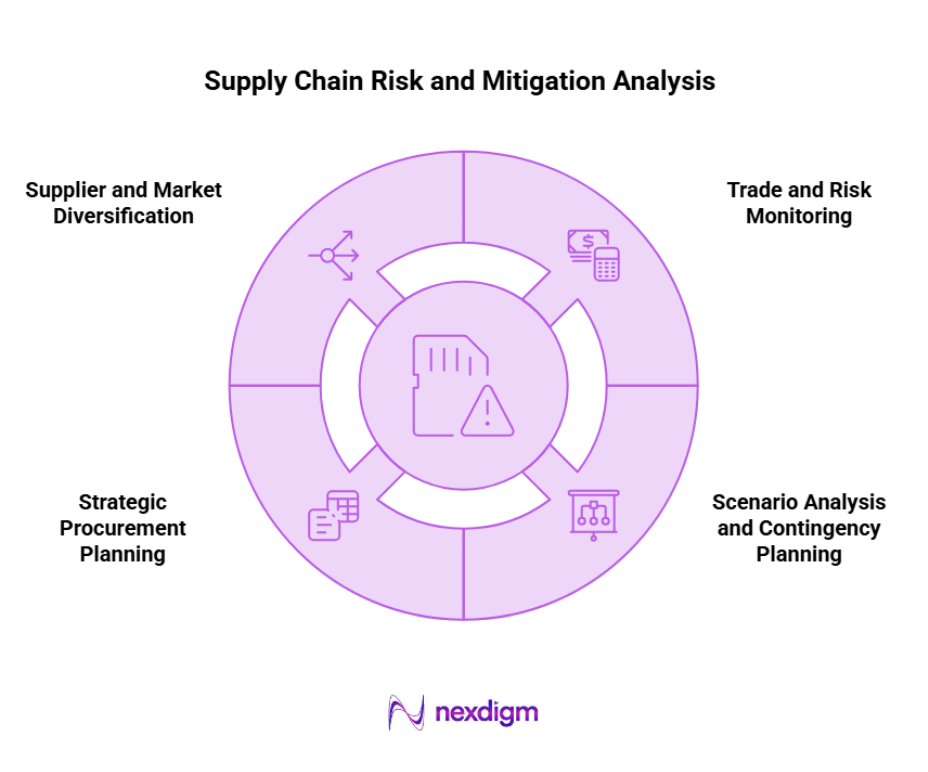
- Supplier and Market Diversification: Evaluation of alternative suppliers, sourcing locations, and market opportunities to reduce dependency risks and strengthen supply continuity.
- Trade and Risk Monitoring: Tracking evolving trade flows, import-export activity, pricing movements, and geopolitical developments that may impact supply-chain performance.
- Strategic Procurement Planning: Helping organizations align sourcing strategies with market realities, enabling proactive procurement decisions and improved resilience against disruptions.
- Scenario Analysis and Contingency Planning: Assessing potential supply-chain disruption scenarios and their business impact, enabling organizations to develop mitigation plans, evaluate response options, and improve preparedness for market, geopolitical, or logistics-related uncertainties.
With this strategic analysis, Nexdigm enables businesses to anticipate challenges, reduce vulnerabilities, and build supply chains that are better equipped to navigate an increasingly uncertain global trade environment.
How Nexdigm’s Approach Helps Navigate an Increasingly Uncertain Global Trade Environment
Organizations must balance risk mitigation with operational efficiency and growth objectives. Nexdigm’s trade intelligence-led approach helps businesses gain insights into:
- Early Risk Identification: Detect emerging vulnerabilities through analysis of trade flows, supplier dependencies, pricing trends, and shifting sourcing patterns before they impact operations.
- Data-Driven Sourcing Decisions: Support the evaluation of alternative suppliers, markets, and trade corridors to reduce concentration risks and improve supply continuity.
- Proactive Scenario Planning: Assess potential disruption scenarios and their implications, enabling organizations to prepare contingency strategies and strengthen business readiness.
- Enhanced Market and Trade Visibility: Provide ongoing intelligence on market developments, competitive sourcing activity, and global trade dynamics to support timely decision-making.
These insights enable organizations to navigate uncertainty with greater confidence, build more resilient supply networks, and maintain operational stability in an increasingly complex global trade environment.
Nexdigm’s Case
Nexdigm analysed product-wise import-export data for an India-based industrial-products company to understand demand, pricing, and competitor activity across key markets. The resulting insights increased qualified export opportunities by 27% and improved price realization by 8%, demonstrating how granular trade intelligence can support both commercial growth and more informed market prioritization.
To take the next step, simply visit our Request a Consultation page and share your requirements with us.
Harsh Mittal
+91-8422857704