
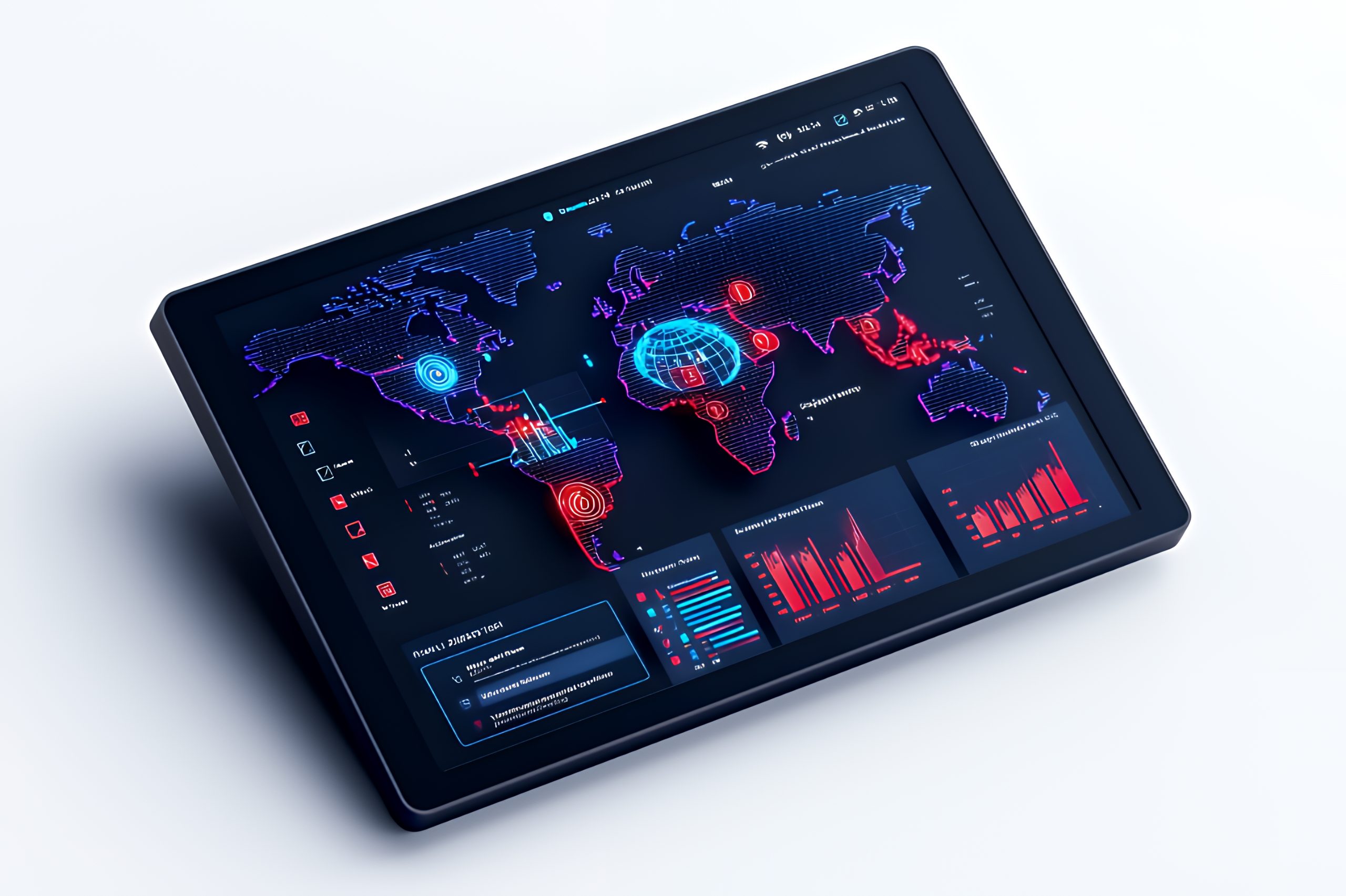
Global trade is expanding, but the underlying trade map is becoming more complex. The WTO now expects world merchandise trade volume to grow 3.9% in 2026 and 4.1% in 2027, following stronger-than-expected performance in the first half of 2026. AI-related investment has become a major contributor, with AI-enabling goods accounting for 47% of global merchandise trade growth in value terms during the first half of 2026.
UN Trade and Development estimates that global goods trade reached approximately US$13.7 trillion in the first half of 2026, up 12.5% year-on-year. However, higher prices, geopolitical disruptions, changing supply chains, and regulatory uncertainty mean that headline growth figures do not necessarily indicate where the strongest commercial opportunities lie.
For companies, this creates a need for more access to shipment records. A useful trade intelligence platform should help decisionmakers connect products, companies, countries, prices, suppliers, buyers, trade corridors, and market movements and translate those signals into decisions around growth, sourcing, competition, and risk.
Why Businesses Need More Than Trade Data
International trade generates enormous volumes of information, but raw records rarely provide an immediate strategic answer. Businesses need to connect shipments with products, suppliers, buyers, prices, markets, and competitors to understand what is changing. The challenge is therefore not data availability, but converting fragmented trade information into insights that support timely commercial decisions.
From Historical Records to Forward-Looking Intelligence
Trade databases are often used to understand what happened in the past. Their greater value comes from identifying patterns that may influence future decisions. Changes in import volumes, supplier shares, sourcing countries, shipment frequency, and pricing can signal emerging opportunities or risks, helping organizations adjust market, procurement, and competitive strategies before conditions change significantly.
Nexdigm’s Role in Converting Trade Records into Forward-Looking Intelligence
Nexdigm combines trade data, market research, competitive intelligence, and primary research to move beyond historical reporting. Our Trade Analysis examines products, SKUs, brands, companies, countries, regions, ports, and trade corridors to identify meaningful shifts in demand, sourcing, pricing, and competition.
By combining quantitative trade movements with market-level validation, Nexdigm can help businesses distinguish temporary fluctuations from commercially significant trends. This approach supports decisions around market expansion, supplier selection, buyer identification, pricing, procurement, competitive positioning, and supply-chain strategy, giving decision-makers a more forward-looking view of international trade.
How a Trade Intelligence Platform Supports Better Decisions
A trade intelligence platform becomes valuable when it connects fragmented trade signals with the business questions decision-makers need to answer. Rather than viewing shipments, suppliers, buyers, prices, and markets separately, businesses can examine these variables together to identify relationships, trends, and opportunities.
Nexdigm’s approach enables organizations to use trade intelligence for market assessment, supplier and buyer identification, competitive benchmarking, pricing analysis, sourcing decisions, trade-flow evaluation, and market-entry planning. This creates a structured path from historical trade records to actionable commercial intelligence.
Nexdigm’s Trade Intelligence Platform Assessment
For a trade intelligence platform to support strategic decisions, it must connect data depth with commercial relevance. Nexdigm can assess trade intelligence across the following dimensions:
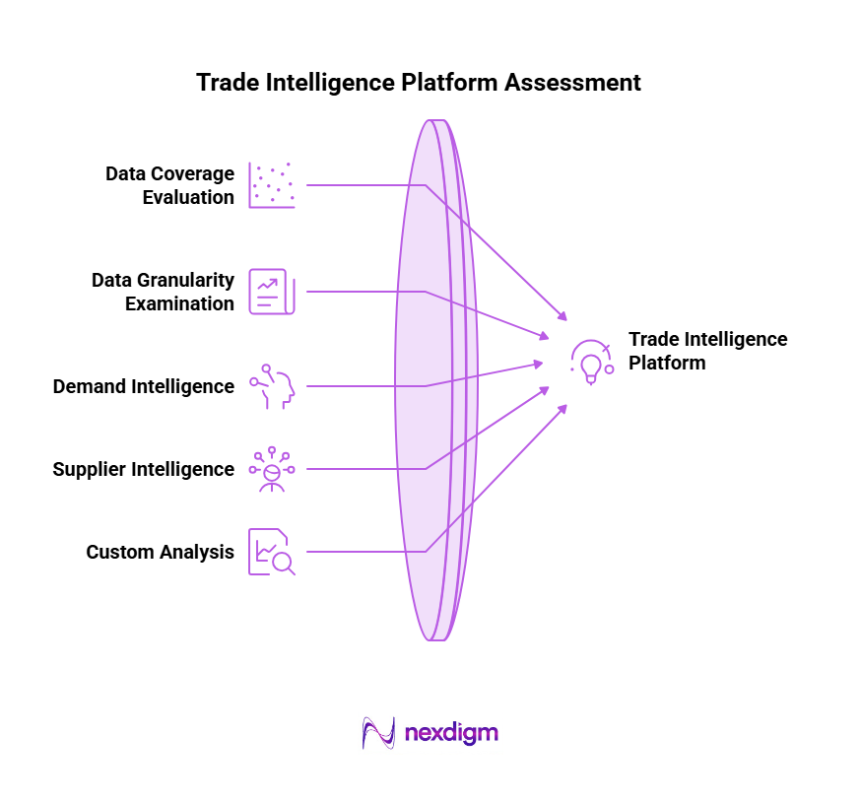
- Data Coverage: Nexdigm evaluates the breadth of products, companies, countries, markets, and trade flows available for analysis and decision-making.
- Data Granularity: Examination of data that can be analysed at product, SKU, company, country, port, and trade-corridor levels for precise insights.
- Demand Intelligence: Nexdigm analyzes import volumes, shipment activity, growth patterns, and destination markets to identify emerging and established demand signals.
- Supplier Intelligence: Mapping suppliers, sourcing countries, and supplier shares to identify procurement alternatives and supply concentration.
- Custom Analysis: Structured analysis around specific business objectives, enabling companies to investigate selected products, companies, markets, countries, and strategic questions.
By evaluating trade intelligence platforms across data coverage and analytical flexibility, Nexdigm helps organizations maximize the value of trade data allowing them to uncover actionable insights, strengthen decision-making and respond more effectively to evolving global trade dynamics.
Strategic Benefits of Nexdigm’s Trade Intelligence Platform Assessment
A robust trade intelligence platform delivers value beyond data access by transforming trade information into actionable business insights. Nexdigm’s Trade Intelliegence approach helps organizations with:
- Enhanced Market Visibility: Gain deeper insights into demand trends, trade flows, buyer activity, and emerging market opportunities.
- Improved Supplier and Customer Identification: Identify reliable suppliers, potential buyers, and strategic trade partners based on actual trading activity.
- Faster and More Informed Decision-Making: Support sourcing, market-entry, and investment decisions with data-driven insights and objective market intelligence.
- Stronger Competitive Positioning: Monitor market developments, competitor activity, and changing trade patterns to identify opportunities and risks early.
- Greater Strategic Agility: Respond more effectively to shifts in demand, supply chains, trade policies, and global market conditions.
These benefits enable businesses to make smarter decisions, reduce uncertainty, and unlock sustainable growth opportunities across global markets.
Nexdigm’s Case
Nexdigm supported an India-based industrial-products company through product-wise import-export analysis across key markets. The resulting insights contributed to a 27% increase in qualified export opportunities and 8% improvement in price realization, while helping sharpen product prioritization. The results represent the value of combining product-level trade visibility with commercial interpretation when evaluating international growth opportunities.
To take the next step, simply visit our Request a Consultation page and share your requirements with us.
Harsh Mittal
+91-8422857704