

Shipping patterns influence more than delivery schedules. They affect which suppliers can reach a market reliably, how much inventory businesses need to hold, and whether a product remains competitive after transport costs. Changes in vessel routes, port connectivity, transit times and shipping frequency can reshape sourcing decisions even when demand remains stable.
For exporters and importers, understanding these patterns helps explain why two suppliers offering similar products may deliver very different commercial outcomes.
How Shipping Routes Shape Trade
Maritime transport carries around 80% of the volume of international trade in goods, making shipping connectivity central to global supply chains. However, access to a major shipping network does not guarantee predictable transit or competitive costs. Route disruptions, port congestion, vessel availability and carrier schedules can alter the reliability of established trade corridors.
The Red Sea disruptions illustrate the commercial consequences. Rerouting vessels around the Cape of Good Hope lengthened voyages, increased fuel use and reduced the effective capacity available to move cargo. UN Trade and Development reported that maritime ton-miles grew by nearly 6% in 2024 as ships travelled farther.
These changes affect businesses differently. A high-value product with flexible delivery schedules may absorb longer transit times more easily than a perishable product or a manufacturer dependent on frequent component replenishment.
What Shipping Data Reveals About Sourcing
Trade and shipment records can help companies understand where goods originate, which ports handle them, how frequently suppliers ship and whether established routes are changing. For trade shipping decisions, the important question is whether a route provides a dependable commercial connection, not simply whether cargo has moved through it before.
Businesses should examine:
- Route Dependence: Identify products relying on a single port, corridor or transshipment hub.
- Supplier Connectivity: Compare shipping frequency, direct services and practical alternative routes.
- Transit Reliability: Measure actual delivery times against planned schedules and identify recurring delays.
- Cost Exposure: Track freight, insurance, handling and delay-related charges.
- Market Access: Check whether transport schedules support customer requirements, product shelf life and inventory plans.
Shipping records have limits. A country listed as the exporter may not be the original manufacturing location, and a change in route does not necessarily indicate a change in supplier. Trade records should be checked against supplier information, customs declarations and operational shipment data.
Linking Route Conditions to Commercial Decisions
A route that appears inexpensive on a freight quotation may become costly when longer transit times require additional inventory or when missed schedules disrupt production. Conversely, a more expensive direct service may reduce total cost by improving predictability and avoiding repeated handling.
Companies should compare sourcing alternatives using total delivered cost, transit variability, minimum shipment requirements and the cost of interruption. They should also consider market access requirements, including customs procedures, product documentation and the ability to maintain consistent delivery windows.
Nexdigm’s Shipping Route Competitiveness Framework
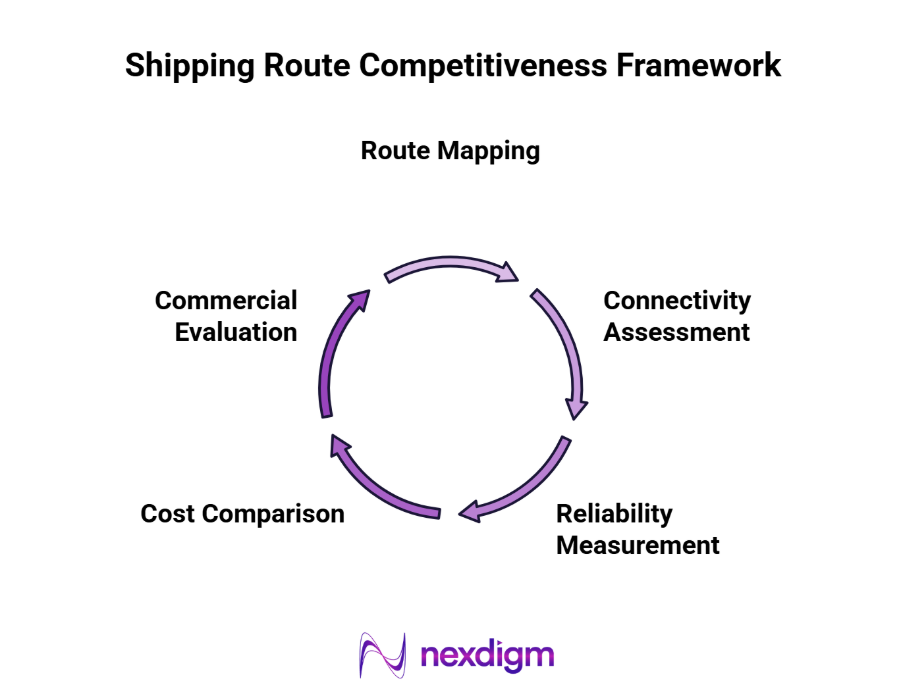
- Route Mapping: Identify origin and destination ports, transshipment points and inland connections.
- Connectivity Assessment: Compare service frequency, direct connections and viable alternatives.
- Reliability Measurement: Evaluate actual transit times, delays and schedule variation.
- Cost Comparison: Calculate freight, handling, inventory and disruption-related costs.
- Commercial Evaluation: Select routes and sourcing options that support the required service level and margin.
Nexdigm’s Case Study: Reviewing an Import Route
An industrial importer compared three routes for a production-critical component. The review found that the lowest quoted freight option had greater transit variability and additional handling charges. The company shifted part of its volume to a more predictable route and introduced a review of total delivered cost.
To take the next step, simply visit our Request a Consultation page and share your requirements with us.
Harsh Mittal
+91-8422857704